
GIZ Mexico held the launch event “Co-benefits: Climate Action for Sustainable Development in Mexico” to present the main results of two co-benefits studies and discuss national and regional opportunities to quantify co-benefits with a sustainable development perspective.

On the one hand, the 2030 Agenda Initiative team, together with the Office of the Presidency of the Republic, presented the study Doing the Numbers: Quantifying the Co-benefits of Climate Action for Sustainable Development in Mexico that explores synergies between the Paris Agreement and the 2030 Agenda and the co-benefits of an integrated implementation of both agendas. On the other hand, the Ministry of the Environment and Natural Resources (SEMARNAT), together with the project Enhancing the Coherence of Climate and Energy Polices in Mexico (CONECC), presented the study Co-benefits: Contribution of the Energy Transition for Sustainable Development in Mexico, which examines the important co-benefits of renewable energy and energy efficiency in Mexico’s energy transition, as well as the most appropriate policy options to deliver these benefits to the Mexican people.



Credits: GIZ 2020. Word cloud with participants’ expectations


During the day, several experts such as Dr. Amparo Martínez Arroyo, general director of the National Institute of Ecology and Climate Change (INECC), spoke about the co-benefits resulting from the integration of the climate, energy, and sustainable development agendas in Mexico. After presenting the main findings and results of both studies, the engineer Yutsil Sanginés, general director of Public Policies for Climate Change at SEMARNAT, presented the design and implementation of an Emissions Trading System in Mexico.


Credits: GIZ 2020. Opening message from Dr. Amparo Martínez Arroyo and Mr. Oliver Knoerich


In order to highlight the role of the states, a sub-national panel was held, in which the secretaries of Oaxaca, Yucatan, and Puebla discussed the actions and opportunities of their states in mainstreaming climate action into development policies.

Finally, the participants had the opportunity to present their ideas and opinions in three working tables, which were created to establish the future lines of investigation for the studies presented. These focused on the prospects for mainstreaming climate action into development policies and vice versa, on the elements for creating a tool for quantifying co-benefits of renewable energy and energy efficiency, and on prioritizing co-benefits in the implementation of an Emissions Trading System in Mexico.


This event was held on March 4, 2020 at the Museum of Memory and Tolerance in Mexico City. It was organized by the teams of Agenda 2030, CONECC, and SiCEM, which are part of the International Climate Initiative (IKI) of Germany’s Federal Ministry for the Environment, Nature Conservation and Nuclear Safety (BMU) and Germany’s Federal Ministry for Economic Cooperation and Development (BMZ).


There are countless ways in which the global food system will be tested and strained in the coming weeks and months. Most current assessments generally foresee a contraction in both supply of and demand for agricultural products, and point to possible disruptions in trade and logistics. Vulnerable groups include small-scale farmers, who may be prevented from working their land, accessing markets to sell their products or buying seeds and other essential inputs

According to FAO, one of the consequences of the pandemic will be lower supplies of intermediate inputs such as fertilizer, pesticides, and seeds, that will likely reduce yields later in the year. In Mexico, small scale farmers are highly dependent on these inputs. This high dependence on commercial pesticides and fertilizers and the pressure arising from their scarcity could be lowered when adopting environmentally friendly options such as biological pest control and the use of natural fertilizers. The promotion of community seed banks would not only lower farmer dependency on commercial seeds, but also promote the use of local seeds that are better adapted to changing climate patterns.

On the other hand, precision agriculture could provide cost reduction for farmers struggling to make end meet and facing illness or quarantine restrictions. Mexican farmers are highly dependent on labor inputs and are particularly exposed to COVID-19.

The pandemic will affect all elements of the food system, from primary supply, to processing, to trade as well as national and international logistics systems, to intermediate and final demand. In Mexico, productive chains are highly dependent on independent intermediaries. Well integrated and coordinated value chains with close involvement from all productive chain links and focus on local markets, will ensure a more stable process for all stakeholders.

Farmers in Latin America not only produce with high debt shares, but their interest rates are significantly higher than in high-income countries. They are, therefore, more exposed to a possible shock in the cost of capital, potentially arising from changes in interest rates. Financial mechanisms specifically designed for small-scale farmers could help alleviate this situation.

In order to generate an instrument that contributes to increasing Mexico’s resilience to climate change and compliance with the NDCs on adaptation, the process of preparing the National Adaptation Policy (NAP) must be participatory, representative, and use the regionalization perspective.

The July 2018 reforms to the General Law on Climate Change sought to harmonize the national legal framework with the commitments that Mexico took on in the 2015 Paris Agreement. One reform on the subject of adaptation considers the creation of a NAP, under the framework of the National Climate Change System, which strengthens and facilitates synergies between the various international, national and sub-national mandates on the matter.

With the intention of guiding the preparation phase prior to the formal NAP preparation process, the Mexican-German Alliance on Climate Change project, implemented by the Deutsche Gesellschaft für Internationale Zusammenarbeit (GIZ) GmbH, coordinated and supervised the preparation of the document “Support in the Design of a Roadmap for Planning the National Policy on Adaptation to Climate Change of Mexico (NAP)” (January 2019), for the Ministry of Environment and Natural Resources (SEMARNAT).

The document reviews the institutional, legal and political frameworks that underpin adaptation climate action in Mexico, to generate the proposal for a roadmap that can indicate the specific components and activities necessary for the formulation of the NAP. Among the most important elements of the roadmap is the relevance of carrying out a broad participatory process – with governmental and non-governmental, national and local actors – which can facilitate the collection of experiences and initiatives to generate a successful public policy that reflects the concerns and real priorities of the population.


Given Mexico’s ecosystem and climatic diversity, a regionalization perspective is an indispensable feature in the process of preparing the NAP. In this way, it is intended to address the diversity of vulnerabilities and the differentiated impacts – present and future – that occur in the country. This proposal would facilitate the adoption of different types of adaptation approaches that respond to the priorities of each area and the sectors involved.

Tracing a common axis on adaptation using a holistic, decentralized and representative National Adaptation Policy will enable the adoption of concrete and effective measures that increase Mexico’s resilience through climate policy at a subnational level.

Within the framework of the recent launch of the Emissions Trading System (ETS) Test Program in Mexico in January, 2020, the Deutsche Gesellschaft für Internationale Zusammenarbeit (GIZ) GmbH project “Preparation of an Emissions Trading System in Mexico” (SiCEM) is carrying out capacity development activities, dissemination, and dialogue regarding the ETS with various actors. The aim is to work together with public, private, and civil society sectors in order to create an environment conducive to the implementation of an Emissions Trading System in the country.

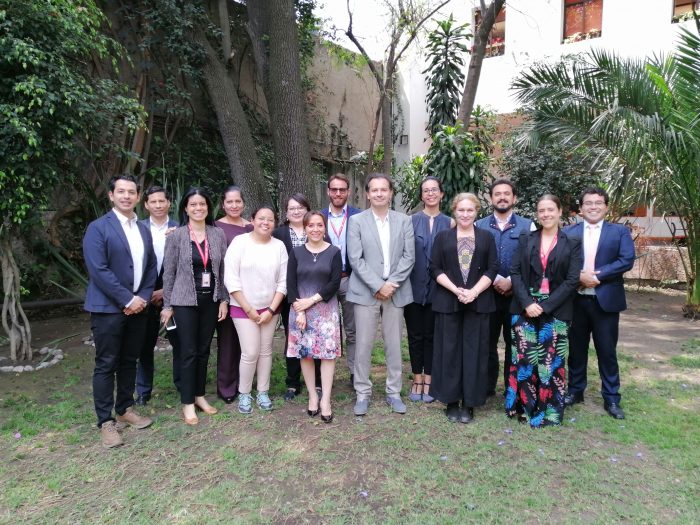
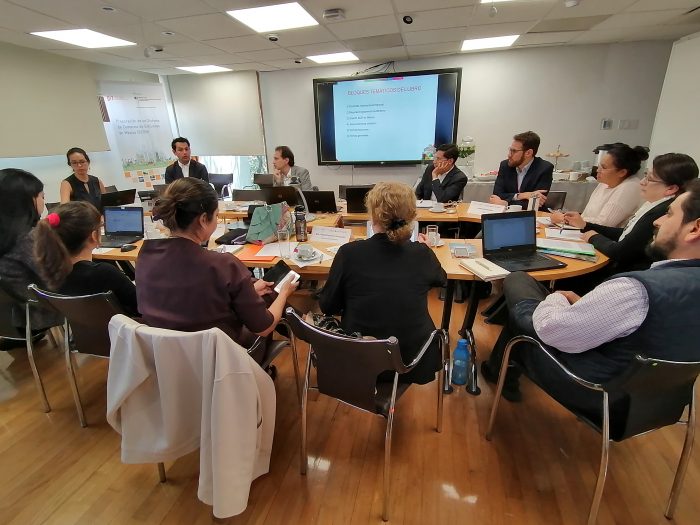
In this context, together with the Mora Institute and the academic publisher Springer, the SiCEM project is supporting a collaborative effort to write a multi-author academic book on the Emissions Trading System in Mexico. Academics from important national and international research centers will participate in the book. Recently, these researchers were summoned to a seminar to present their progress, as well as to hold an interesting conversation in order to shape the book’s thematic structure.


Credits: GIZ. Researchers during the event.

The seminar was held on March 10, 2020, at the Mora Institute facilities in Mexico City. This institution convened the event, with the support of the SiCEM project implemented by GIZ on behalf of Germany’s Federal Ministry for the Environment, Nature Conservation and Nuclear Safety (BMU). Participants included distinguished universities such as the National Autonomous University of Mexico (UNAM), the Center for Research and Teaching in Economics (CIDE), Anahuac University, the National Polytechnic Institute (IPN), the Autonomous University of Baja California Sur (UABCS), and the Latin American Faculty of Social Sciences (FLACSO). Furthermore, researchers participated virtually from international universities and research centers such as Stanford University, the University of California, and the Alexander Von Humboldt Foundation.


Credits: GIZ. The researchers discussed the book’s progress.


The conversation revolved around different subject areas. Firstly, it was acknowledged that the book needed to contain a section that would contextualize the ETS in the framework of the country’s public policies and compliance with international agendas. The importance of analyzing the legal framework that supports the implementation of the ETS in Mexico, along with its institutional and governance structure, was also discussed. Finally, the discussion covered the design elements of the ETS as well as perspectives that will further strengthen the instrument, as the Mexican ETS transitions from its test phase to the operational phase.

Academic research about the ETS is key to generating analysis and inputs that can strengthen the instrument’s Operational Phase. Thus, the SiCEM project will continue to support promotional activities for this research in Mexico. In the coming months, efforts to build capacities, facilitate dialogue, and develop additional technical studies to strengthen the system’s design will continue to be featured on the “IKI Alliance Mexico” blog.

For more information on this subject, please contact us at: Comercio.Emisiones-MX@giz.de

Mexico is highly vulnerable to climate change due to its geographical location, topography, and socioeconomic characteristics. Adaptation measures are essential to face the already inevitable effects of climate change, which have the greatest impact on the country’s most vulnerable populations and main productive activities.

According to data provided in the PECC 2014-2018, 13% of municipalities in Mexico present the highest degree of vulnerability to climate change. About 25% of the population lives in irregular settlements and flood risk areas; while droughts in the north of the country are increasingly recurrent and threaten the population’s food security. This translates into the restricted adaptive capacity of a large majority of inhabitants in the face of potential severe hydrometeorological events.


Credits: Shutterstock. Irregular settlements on the Acapulco coast.


The National Regulatory Harmonization Process on Mobility began in 2019 with the aim of designing a legal framework to improve the implementation of Mexico’s national and international legal obligations regarding mobility and other cross-cutting agendas.

On March 23, 2020, the “Open Parliament: Right to Mobility” event was held under the umbrella of the House of Representative´s Constitutional Matters Commission. In the event, Román Meyer Falcón, the Minister of Agricultural, Territorial and Urban Development (SEDATU), presented the results of the Regulatory Mobility Diagnostic.


Credits: News Report. Román Meyer Falcón, minister of SEDATU.


This Diagnostic is part of the National Regulatory Harmonization Process on Mobility, in which the Ministry of the Interior (SEGOB), the Mexican Office for Agrarian, Land and Urban Development  (SEDATU), and the Ministry of Environment and Natural Resources (SEMARNAT) joined efforts with the projects “Mexican-German Climate Change Alliance” and “Climate Protection in the Mexican Urban Policy (CiClim)”, implemented by the Deutsche Gesellschaft für Internationale Zusammenarbeit (GIZ) GmbH on behalf of the German Federal Ministry for the Environment, Nature Conservation and Nuclear Safety (BMU).

The final document is the result of an extensive consultation and research process in which more than 600 people participated from the public, private, civil society, and academic sectors. The process included seven regional working groups (see Table in Spanish), one with the private sector, and another with experts from all over the country. Remote participation was also used to collect proposals from stakeholders interested in mobility.


Credits: Luis Paz-SEDATU. Regional working groups.


The Diagnostic aims to take apart the complex legal network involved in mobility by exploring the regulations relevant to Mexico. In this way, opportunity areas will be identified by diverse governmental departments. In essence, the study is based on the relationship between mobility and three crucial pillars: human rights, climate change, and civic participation.

In the same way, it explains the intersection between legal frameworks and other transversal agendas, such as public health, urban development and land-use planning, and climate change adaptation and mitigation. Thus, the Diagnostic identifies the General Law on Climate Change (LGCC) as the first legal instrument to recognize the importance of mobility to climate change and the environment since the transportation “element” is the activity that contributes most to greenhouse gas (GHG) emissions. As a law, the LGCC divides power between the three levels of government and the different country authorities to implement public policies and climate change mitigation programs that address the need to achieve sustainable mobility in Mexico.


En la imagen se muestra la portada de la publicación que contiene el diagnóstico normativo en materia de movilidad.
Credits: Sedatu

This year, World Water Day puts the spotlight on climate change. We must find sustainable water solutions to adapt to the worrying reality of our most valuable resource.

The project City Lab Saltillo is working alongside representatives of all interested groups in Saltillo (Coahuila, Mexico) intending to increase sustainability in the city’s water sector, thus achieving an appropriate adaptation to climate change. In this context, national and international water management initiatives that have had a positive impact were analyzed. In this article, some of the country’s successful efforts are presented.

In Mexico City, the organization Isla Urbana has implemented rainwater collection systems in the most vulnerable parts of the city in terms of water supply. Thanks to this project, around 25,000 inhabitants have benefited and obtained free access to water without being connected to the municipal water system. Despite the low annual precipitation in Saltillo, rainwater collection could bring about the previously described benefits, especially for the Saltillo community that lacks the adequate availability of water.


Credits: Isla Urbana. Rainwater Collection System.

Another practice in Mexico City that is worthy of mention is related to the restoration and reuse of water. The large quantity of residual water coming from millions of inhabitants is an excellent source of irrigation and lake-filling water – once it’s been treated. This practice allows for a significant reduction in underground water extraction. In Saltillo, the search is still on for ways to increase the reuse of water from the three municipal plants, with irrigation and industry being potential options.


Credits: Page 24. Irrigation with Treated Water.


Moving on to another city, Monterrey inaugurated the artificial river Paseo Santa Lucía in 2007, using water from the Santa Lucía springs. It is currently the most populated area of public land in the city, offering pleasant views that integrate urbanism perfectly with nature. In Saltillo, this river system would complement their focus on leveraging their green and blue infrastructure and provide additional water storage capacity. Also, it would contribute to better weather in the city and would encourage the Saltillo population to do more outdoor activities.


Credits: Touristic zone. The Artificial River Paseo Santa Lucía.


The examples mentioned above show just a fraction of the possibilities for increasing the availability, storage capacity, and efficiency in water use as a response to climate change. Particularly, World Water Day incites us to reflect and understand that it is possible – and necessary – to do more. Taking this into account, we will team up with our partners to look for the most adequate and high-impact solutions for the Saltillo Water Sector.

The project Financing Energy for Low-Carbon Investment – Cities Advisory Facility (FELICITY) completed an identification and selection round of projects that would receive technical accompaniment in 2019-2020. In this context, the team put together a report that evaluated the results of the process and extracted the lessons learned to improve the following rounds of project identification and inform the work of other preparative project platforms in Mexico, Brazil and China.

The report “FELICITY Identification and Selection Process: General Vision and Lessons Learned” has the following aims:

  • To understand and evaluate the FELICITY identification and selection process, as well as the associated achievements and challenges.
  • To consolidate and evaluate the results of the identification and selection process of FELICITY projects, taking into account the main characteristics of the requests and chosen projects.
  • To determine the lessons learned and formulate recommendations, not only to improve the selection of FELICITY projects themselves but also how FELICITY can adapt itself to reflect the necessities of cities.
  • To provide information that can aid the work of other platforms in the preparation of projects and associated initiatives.


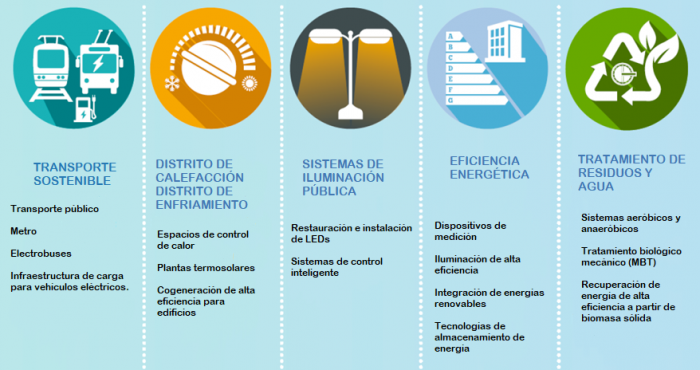
Credits: FELICITY, 2019. FELICITY Lines of Work.


In the same way, recommendations were formulated in several areas such as improvement of communication, standardization of the application process, identification of local collaborators, and scheduling of the selection process.

Finally, a more comprehensive range of initiatives was recommended in terms of scope, sectors, and geographic coverage. Thus, the sector that prepares projects could be developed to include a broader range of initiatives that need assistance, which would allow an acceleration of support to scale in cities.


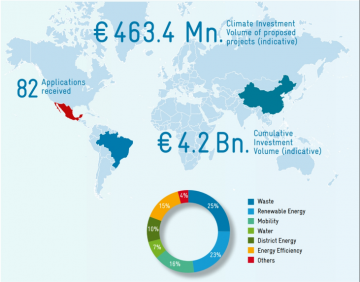
Credits: FELICITY, 2019. Sectorial Distribution of Projects Received in 2019.


Felicity is the initiative implemented by Deutsche Gesellschaft für Internationale Zusammenarbeit (GIZ) GmbH; with the support of European Investment Bank (EIB) and the Germany’s Federal Ministry for the Environment, Nature Conservation and Nuclear Safety (BMU), which offers technical assistance and the project preparation focused on low-carbon infrastructure in cities.

For more available information, consult the website GIZ-FELICITY.


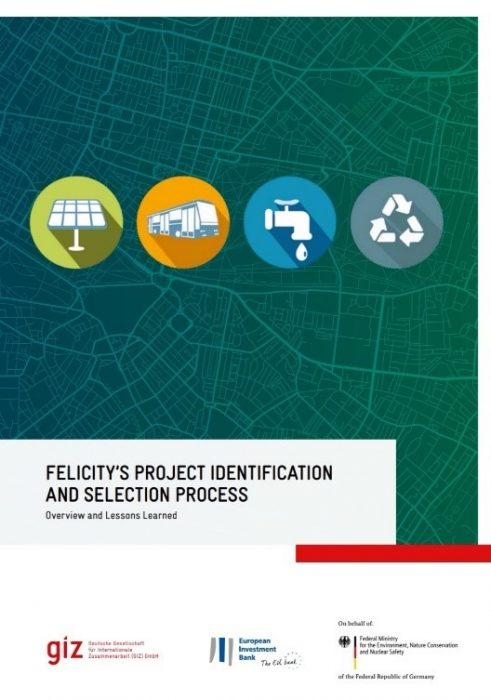
Credits: FELICITY, 2019. Publication’s cover