People’s wellbeing depends, among other things, on environmental conditions. Poor air quality can increase the risk of respiratory complications during diseases such as COVID-19. Air quality monitoring facilitates risk assessment and public policy decision-making.

The forest fires and agricultural burning that take place in many regions – including the Mayan Forest – generate harmful particles, visible as black smoke, which affect human health. The respiratory problems caused by these particles are an aggravating factor for people who are fighting against the disease caused by the novel coronavirus type 2, better known as COVID-19, which is ending the lives of many people.
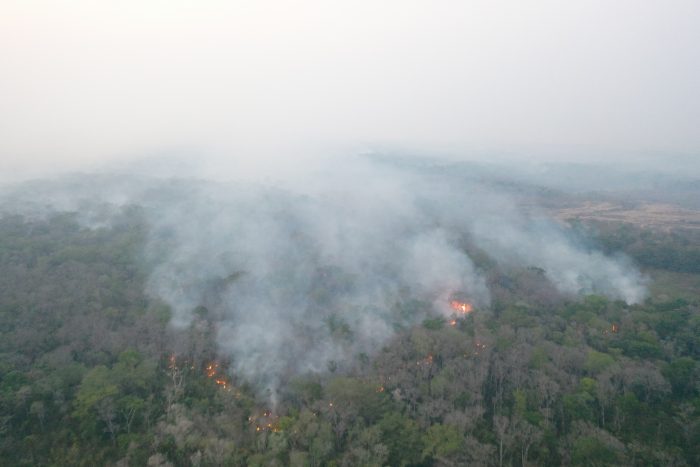
 

Credits: César Paz – WCS Guatemala. Fire in the Mayan Forest


To assess the risk level that air pollution means for human health, it is important to have access to reliable data. For this reason, the project  Development of a Regional System to monitor biodiversity and climate change – Selva Maya, financed by the Germany’s Federal Ministry for the Environment, Nature Conservation and Nuclear Safety (BMU) within the framework of its International Climate Initiative (IKI), supports various actors in the Mayan Forest region in monitoring air quality.

For this, the project supported the acquisition of PurpleAir sensors that were installed in different regions of the Mayan Forest, covering areas in Guatemala, Belize and Mexico. These sensors detect air particles, and the levels are available publicly and in real time on the Internet.
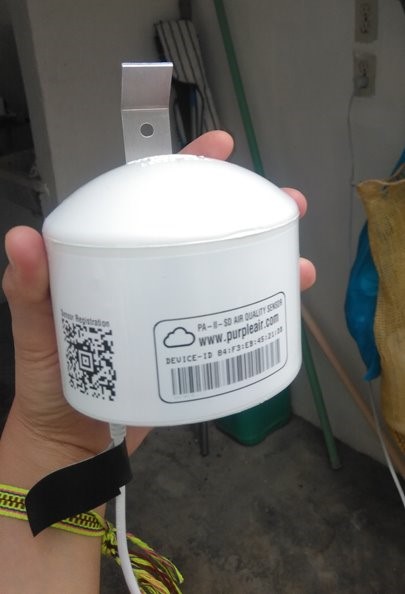
 

Credits: GIZ / Ameyalli Nares. An Aire PurpleAir Quality Sensor


This data has already been used to improve the living conditions of many people. After confirming a dangerous air quality level during a fire at the San Benito landfill, Guatemala, the municipality began the process for better solid waste management. In Belize, data concerning agricultural burning inspired a social media campaign. Consequently, the Belize government passed a law that prohibited burning during the COVID-19 contingency.

Due to these successful experiences, actors in Guatemala, Belize and also Mexico want to expand the network of air quality sensors. This will allow faster detection and reaction to threats to human respiratory health. Together with other measures, this approach will help the population and decision-makers of the three countries to cope with the COVID-19 pandemic and possible similar epidemics in the future.

Contact: claudia.nares@giz.de

More information at:

Selva maya, devorada por las llamas – La Jornada (in Spanish)

Purple Air

https://www.prensalibre.com/ciudades/peten/alarma-por-mala-calidad-del-aire-en-peten-un-factor-de-riesgo-para-la-poblacion-ante-el-covid-19/


https://www.facebook.com/photo.php?fbid=10220715773857156&set=a.1065690675430&type=3&theater

The Emissions Trading System (ETS) is one of the carbon price mechanisms that has accelerated the mitigation of greenhouse gas (GHG) emissions over the past decade. It works using the “cap and trade” principle. A limit is imposed on emissions from one or more economic sectors, and regulated facilities are granted a limited number of emission rights that they can trade among themselves, to carry out their compliance obligations in a cost-effective manner.

There are factors that ensure the proper functioning of an ETS; among them, stability in carbon prices and a supply of emission rights that is consistent with market demand. The current economic recession caused by COVID-19 has altered these two variables and has presented significant challenges for the more than 20 ETS operating around the world. It is important to be aware of the global strategies to overcome these challenges and identify lessons learned that could strengthen the ETS Test Program in Mexico, in force since January 2020.

According to ICAP data, there was a significant drop in carbon prices in California and Quebec in March, as well as in the European Union (EU), where it fell from an average of 25 EUR to 15 EUR. In Switzerland, the auction of emission rights was even rescheduled due to the price drop. Commercialization of emission rights in the ETS of the EU is affected by oversupply, which can lead to a reduction in public revenue from auctions, and discourage investments in mitigation technologies.

Countries such as Canada, China, Korea, and Switzerland have responded to these impacts by postponing compliance and reporting dates, while the European Commission anticipates a reduction in the number of emission rights available within the Market Stability Reserve. On the other hand, Poland and the Czech Republic have suggested a review of the EU’s ETS conditions.

Strategies implemented by other countries help inform Mexico of the risks faced by ETS and their possible solutions. The project “Preparation of an Emissions Trading System in Mexico” (SiCEM), implemented by the Deutsche Gesell¬schaft für Internationale Zusammenarbeit (GIZ) GmbH will follow the evolution of the system’s global situation closely.

There are countless ways in which the global food system will be tested and strained in the coming weeks and months. Most current assessments generally foresee a contraction in both supply of and demand for agricultural products, and point to possible disruptions in trade and logistics. Vulnerable groups include small-scale farmers, who may be prevented from working their land, accessing markets to sell their products or buying seeds and other essential inputs

According to FAO, one of the consequences of the pandemic will be lower supplies of intermediate inputs such as fertilizer, pesticides, and seeds, that will likely reduce yields later in the year. In Mexico, small scale farmers are highly dependent on these inputs. This high dependence on commercial pesticides and fertilizers and the pressure arising from their scarcity could be lowered when adopting environmentally friendly options such as biological pest control and the use of natural fertilizers. The promotion of community seed banks would not only lower farmer dependency on commercial seeds, but also promote the use of local seeds that are better adapted to changing climate patterns.

On the other hand, precision agriculture could provide cost reduction for farmers struggling to make end meet and facing illness or quarantine restrictions. Mexican farmers are highly dependent on labor inputs and are particularly exposed to COVID-19.

The pandemic will affect all elements of the food system, from primary supply, to processing, to trade as well as national and international logistics systems, to intermediate and final demand. In Mexico, productive chains are highly dependent on independent intermediaries. Well integrated and coordinated value chains with close involvement from all productive chain links and focus on local markets, will ensure a more stable process for all stakeholders.

Farmers in Latin America not only produce with high debt shares, but their interest rates are significantly higher than in high-income countries. They are, therefore, more exposed to a possible shock in the cost of capital, potentially arising from changes in interest rates. Financial mechanisms specifically designed for small-scale farmers could help alleviate this situation.