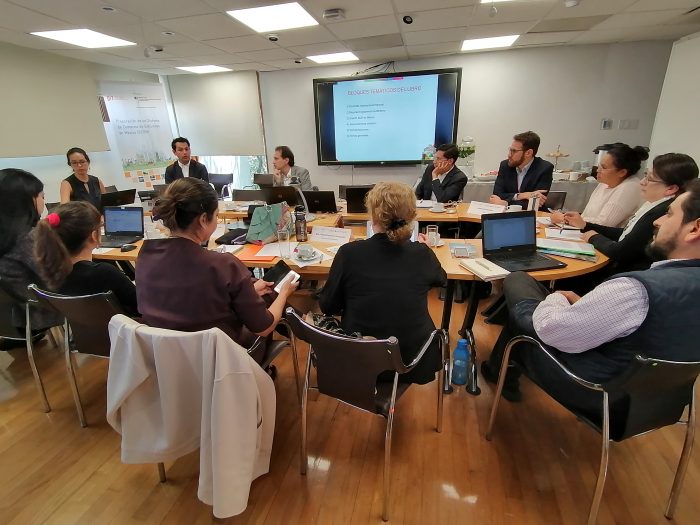
More than 500 people representing various organizations from the power sector, lime, cement, mining, oil and gas sectors, among others, who participate in the Emissions Trading System (ETS) of Mexico were part of the second edition of the Training on the ETS for regulated sectors.

Between September and November 2022, 5 thematic modules were developed throughout 25 work sessions, totaling 50 hours of training.

This training was implemented by the Deutsche Gesellschaft für Internationale Zusammenarbeit (GIZ) GmbH (German Cooperation for Sustainable Development), the Ministry of Environment and Natural Resources (SEMARNAT) and in collaboration with the international team of Carbon Limits. It had the participation of national and international experts involved in the design and implementation of the ETS in various jurisdictions, who shared their knowledge and experience in operational, financial and management areas to consolidate their knowledge on the operation of this market instrument oriented to the effective reduction of Greenhouse Gas (GHG) emissions.

The distribution of topics throughout the five modules was established as follows:

  • The first module provided the international and national context on general concepts around the ETS, as a carbon pricing instrument, characteristics and differences with other mechanisms.
  • Module two consisted of the context under which the System has been developed in Mexico, its particularities and operation, such as the regulated sectors, emission threshold, compliance cycles and obligations of the participants.
  • Module three was dedicated to the analysis of key aspects during the Monitoring, Reporting and Verification (MRV) process, good practices, and the main challenges and experiences to contribute to the fulfillment of your company’s obligations.
  • In module four, the main considerations on trade and finances of an ETS, basic concepts of trading, transactions and negotiations and investments in mitigation projects were addressed.
  • Finally, the last module included topics on organizational structure, carbon management, challenges and opportunities for compliance.

By facilitating these types of spaces, the GIZ SiCEM project continues to provide technical support to SEMARNAT in the creation and strengthening of institutional and technical conditions for the implementation of the ETS in Mexico, aligned with national climate goals.
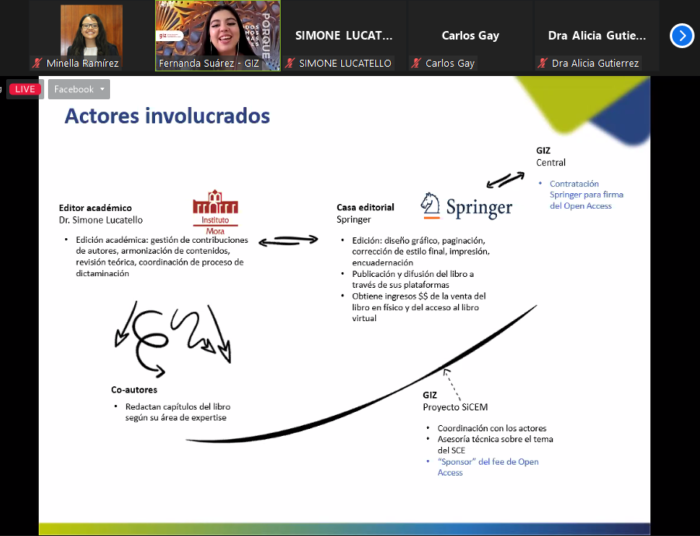
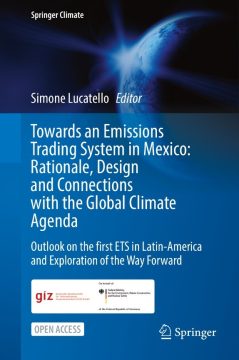
The book “Towards an Emissions Trading System in Mexico: Rationale, Design and Connections with the Global Climate Agenda” is the result of a multi-stakeholder dialogue between the public, private and academic sectors about Mexico’s Emissions Trading System, the first in Latin America and the Caribbean.

The presentation of this work took place last Thursday, 20 October, during the 12th National Congress on Climate Change Research, an event hosted by the Climate Change Research Programme (PINCC) of the National Autonomous University of Mexico (UNAM). This year’s event focused on decision-making and public policy making, with the aim of reducing climate change risk and vulnerability.

Stakeholders involved in the production and design of the book, as well as the project “Preparation of an Emissions Trading System in Mexico” (SiCEM) of the Deutsche Gesellschaft für Internationale Zusammenarbeit (GIZ) GmbH, participated in the event, which was moderated by Dr. Simone Lucatello, book coordinator.

On behalf of the SiCEM project, María Fernanda Suárez presented the contextual framework under which this initiative was coordinated and formalised. Subsequently, Juan Carlos Mendoza highlighted the importance of international cooperation to strengthening dialogue and informed discussion through the development of mechanisms and tools that promote Mexico’s climate agenda.

From academia, Ms. Neydi Cruz from the Mora Institute highlighted Mexico’s participation in different international climate initiatives, as well as the benefits of international collaboration in climate change mitigation efforts. Finally, Dr. Alicia Gutiérrez from the Universidad Anáhuac reflected on the adoption of the system in the context of Mexico’s climate policy and legal framework.

The publication includes contributions from more than 20 authors who, through an interdisciplinary approach, combine theory and practice to provide a comprehensive perspective on the development of Emissions Trading in Mexico. The work was published by Springer in an Open Access format, thus seeking to promote open and plural access to the report for society and the public. So far, the digital version has been downloaded more than 32,000 times and can be consulted and downloaded free of charge through this link.

The SiCEM project seeks to create more spaces for informed and science-based discussion on the Emissions Trading System in Mexico. The participation of academia and civil society contributes to an open, plural and participatory debate on the design and operation of market instruments that seek to contribute to the fulfilment of Mexico’s climate goals.


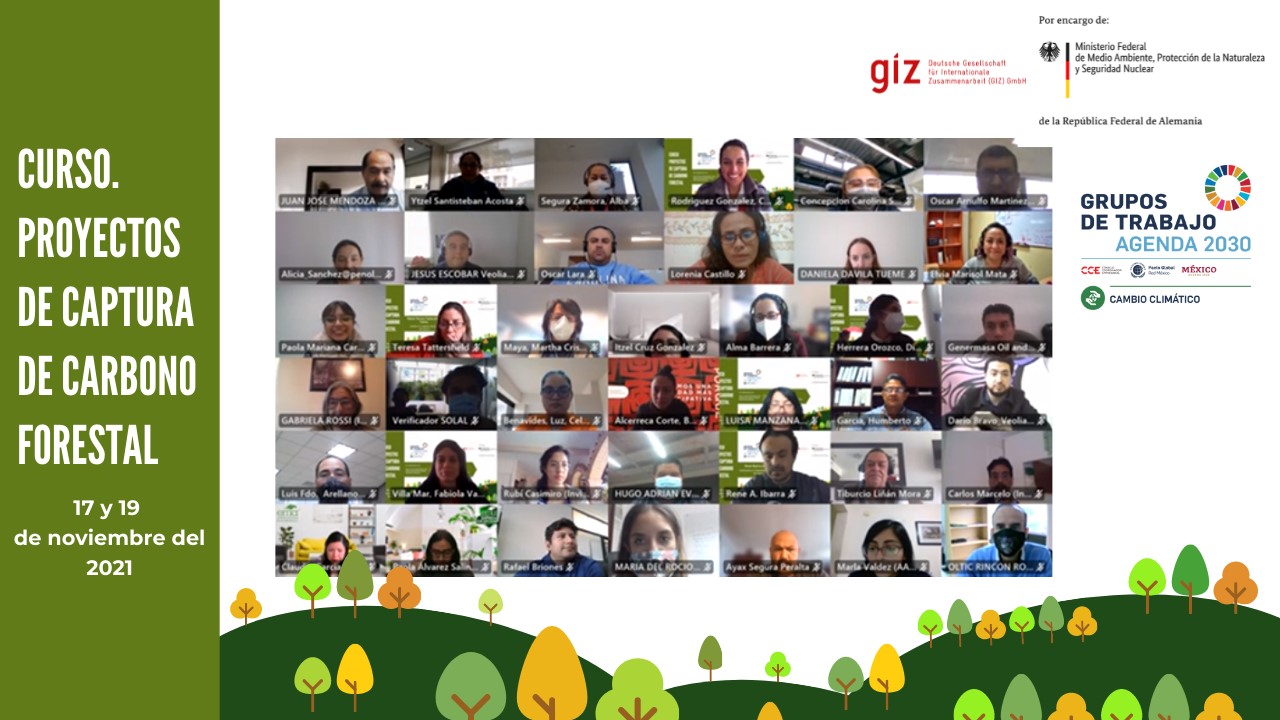
On November 17 and 19, the course on Forest Carbon Capture Projects took place, aiming to generate a greater understanding of this topic and allowing its relevance to be identified within an Emissions Trading System (ETS) by encouraging the reduction of emissions in unregulated sectors.

The GIZ SiCEM project and the 2030 Agenda Working Group on Climate Change organised the course, which focused on showing the challenges and opportunities currently presented by these projects in the national and global context. Specialists from the World Resources Institute imparted the training.

Over the two sessions, participants discussed the status of forestry projects within Mexico as well as the environmental and social co-benefits they provide. The validation and verification of projects of this type were also addressed, based on the provisions of the Forestry Protocol for Mexico of the Climate Action Reserve (CAR). Thus, more than 100 attendees– including verifiers and the private sector –were able to learn in detail about the importance of validation and verification for project development. Likewise, they were able to learn about the process behind this type of project, the documentation necessary and the requirements to become a verifier.

Finally, an analysis was carried out of the processes that make up a forest carbon capture project, emphasising that–although the main objective of these projects is the reduction of emissions and the conservation of biodiversity–it is necessary to keep the communities that own the the land in mind, taking advantage of their social organisation and, above all, favouring their empowerment.

During the sessions, the importance of verifying these projects was reiterated, inviting the attendees to replicate what they learned within their companies. They were also invited to consider the opportunity to be trained to become verifiers, given their relevance within the voluntary and regulated carbon markets.

Sesión 2. Curso: “Proyectos de Captura de Carbono Forestal”. Preparación de un Sistema de Comercio de Emisiones en México (SiCEM). GIZ México

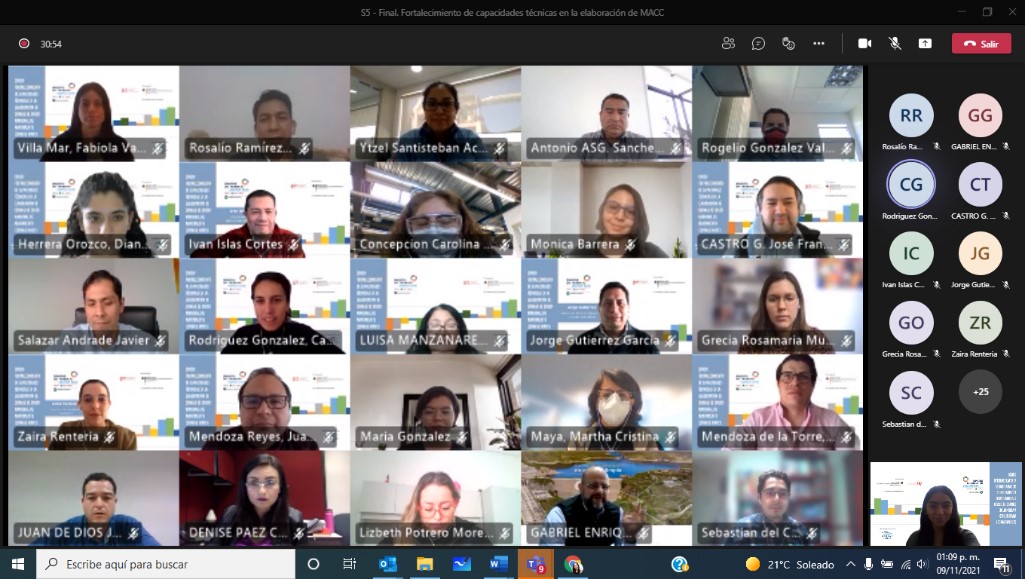
The five virtual sessions that made up this course were held in October and November 2021, with the aim of strengthening technical capacities for the design of marginal abatement cost curves (MACC curves) for industrial sectors, who participate in the Emissions Trading System (ETS).

This event arose as a coordination between the 2030 Agenda Climate Change Working Group and the GIZ SiCEM project, born of the need to highlight the benefits of a correct interpretation of the MACC curves, since these allow– through a graphical representation –the identification of optimal mitigation measures for each organisation, according to their scope and technical-economic limitations.

The theoretical-practical classes had an average capacity of 30 participants from sectors regulated by the Mexican Emissions Trading System, who had the opportunity to immerse themselves in fundamental economic concepts for the correct understanding of the MACC curves, and other practical cases. These sessions also included interactive spaces that encouraged collaboration among attendees, in order to find solutions to the proposed exercises. The course work resulted in very enriching analyses, showing that the participants supported the knowledge brought forward at the event.

The consulting team of Carbon Trust Mexico was in charge of the sessions and, thanks to its expertise on the subject, it was possible to guide the participants in the implementation of the MACC curves, with examples in each of their industrial sectors.

The interest of the industrial sector in this issue reflects the commitment to making well-informed decisions aimed at mitigating GHG within their organisations, as well as the co-benefits that such actions represent.

Session 5. Course: “Strengthening technical capacities in the elaboration of marginal abatement cost curves (MACC curves)”. Preparation of an Emissions Trading System in Mexico (SiCEM). GIZ Mexico
The exchange of experiences on the SCE between companies in the electric power generation sector demonstrates the growing interest in contributing to the mitigation of climate change from their trenches.

On September 10, the fourth and final technical webinar was held as part of a series of virtual sessions aiming to strengthen capacities linked to the importance of the participation of the electric power sector in the Emissions Trading System (ETS). Participants exchanged experiences in theoretical and practical sessions.

One activity involved the identification of projects that could contribute to reducing emissions at their facilities. There were also presentations on the operation of the European Trading System (EU ETS), and other by the government body SEMARNAT on the monitoring plan, differences, and similarities between the ETS and the National Emissions Registry (RENE), and a final session addressing the monitoring system.

These events were organised by the Environmental Protection Management of the Federal Electricity Commission in coordination with the GIZ project SiCEM. Given the type of participants, these sessions set a precedent for collaboration between the public and private sectors of the national energy sector on the ETS. Their participation in these events shows the growing interest in contributing to the mitigation of climate change from their trenches.

These sessions took place between February and September 2021, with about 60 people present. FactorCO2 consultants, who presented various international experiences regarding the implementation of a European ETS, supported this learning network.

This learning network represents the first effort to apply the work methodology in the ETS context; it also shows how joint work between different sectors–including organisers, participants, and authorities–is of great importance for successful ETS implementation in Mexico.


The objective of the virtual segment was to understand the relationship between the design aspects of an ETS and transparency and accountability from different perspectives. The event was organized by the General Directorate for Climate Change Policies (DGPCC) of the Mexican Environmental Ministry SEMARNAT in collaboration with GIZ.

The series consisted of four virtual sessions given during the month of March 2021. Throughout the first sessions, there were contributions from: FactorCO2, German Emissions Trading Authority (DEHSt, for its acronym in German), European Energy Exchange (EEX), Spanish Association for Standardization and Certification (AENOR), Carbon Market Watch, and BC3, who shared their overall experiences and knowledge about the environmental and financial integrity of ETS. Suriel Islas from SEMARNAT was also present and shared an overview of the Mexican ETS in its testing phase.

Additionally, CEMEX and Acciona participated; they each highlighted the importance of having a robust MRV scheme, as well as developing adequate strategies to ensure companies’ internal GHG reduction. The relevance of flexible compliance mechanisms, also known as offsets, and their relevance in the process of ensuring the environmental integrity of ETSs, was also highlighted. During the last session, the contribution of civil society was emphasized, as well as the importance of achieving an adequate understanding of the objectives and implications of an ETS, in order for civil society to be a counterweight in the discussion of relevant aspects.

This series of virtual sessions sets a precedent for the relevance of aspects such as market monitoring, financial regulation, the legal nature of emissions rights, and the cybersecurity of the monitoring system, among others; together they generate a common understanding of the risks —both financial and environmental— that must be observed and mitigated in an ETS to ensure its proper functioning.

Access the material from the sessions in the Downloads section.

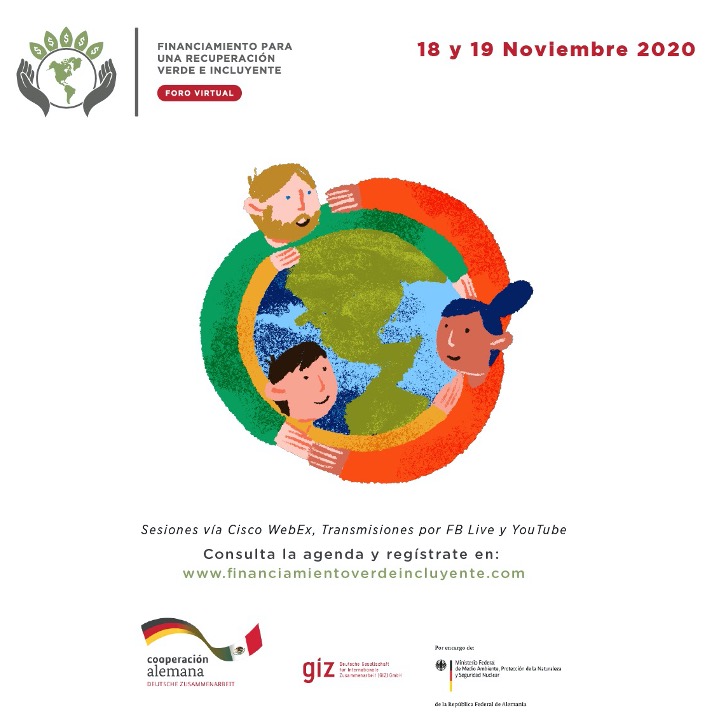
In the framework of the virtual forum “Financing for a Green and Inclusive Recovery” that took place on November 18 and 19, 2020, the project “Preparation of an Emissions Trading System in Mexico (SiCEM) organized the session “Integrating Transitional Climate Risks: The Case of the Emissions Trading System”.

The aim of the session was to learn about the way in which the financial and productive sectors assess and incorporate both climate transition risks and opportunities in their strategic planning, corporate decision-making and financial disclosure related to climate, as well as the possible role of the Emissions Trading System (ETS) in these processes. Distinguished experts participated: Alan Gómez (Citibanamex Vice President of Sustainability) as moderator, as well as Alba Aguilar (Director of New Markets in the Mexican Stock Exchange) and José Ramón Ardavín (Executive Director of the Private Sector Studies Commission for Sustainable Development, CESPEDES).

It was highlighted that the recognition of transition risks in Mexico has promoted important changes. These changes include a financial community that is now convinced about the importance of understanding, evaluating and integrating risks in their strategies. In addition, the need for information, standards and clear business rules was identified to scale the green financing market. Finally, in recent years, green financial products have emerged and been labeled with environmental, social and government criteria. However, it was highlighted that the amount of green financing is still incipient.

The launch of the ETS is essential to unleash climate finance and accelerate the development of the green product market. During the session, the importance that companies should give to the ETS was mentioned, since it is an important instrument for integrating climate change into their business strategies and reducing climate financial risks. This is because it allows them to specify emission reduction goals and facilitate the management of the carbon budget, facilitate the development of mitigation projects and promote green investment. It also allows them to promote resilient business models, adapt to changes in the market and continue to be highly competitive in the future.

To access the recording of the session, click here (in Spanish).

Invitation to the Virtual Forum “Financing for a Green and Inclusive Recovery”. GIZ

The Emissions Trading System (ETS) is one of the carbon price mechanisms that has accelerated the mitigation of greenhouse gas (GHG) emissions over the past decade. It works using the “cap and trade” principle. A limit is imposed on emissions from one or more economic sectors, and regulated facilities are granted a limited number of emission rights that they can trade among themselves, to carry out their compliance obligations in a cost-effective manner.

There are factors that ensure the proper functioning of an ETS; among them, stability in carbon prices and a supply of emission rights that is consistent with market demand. The current economic recession caused by COVID-19 has altered these two variables and has presented significant challenges for the more than 20 ETS operating around the world. It is important to be aware of the global strategies to overcome these challenges and identify lessons learned that could strengthen the ETS Test Program in Mexico, in force since January 2020.

According to ICAP data, there was a significant drop in carbon prices in California and Quebec in March, as well as in the European Union (EU), where it fell from an average of 25 EUR to 15 EUR. In Switzerland, the auction of emission rights was even rescheduled due to the price drop. Commercialization of emission rights in the ETS of the EU is affected by oversupply, which can lead to a reduction in public revenue from auctions, and discourage investments in mitigation technologies.

Countries such as Canada, China, Korea, and Switzerland have responded to these impacts by postponing compliance and reporting dates, while the European Commission anticipates a reduction in the number of emission rights available within the Market Stability Reserve. On the other hand, Poland and the Czech Republic have suggested a review of the EU’s ETS conditions.

Strategies implemented by other countries help inform Mexico of the risks faced by ETS and their possible solutions. The project “Preparation of an Emissions Trading System in Mexico” (SiCEM), implemented by the Deutsche Gesell¬schaft für Internationale Zusammenarbeit (GIZ) GmbH will follow the evolution of the system’s global situation closely.

Within the framework of the recent launch of the Emissions Trading System (ETS) Test Program in Mexico in January, 2020, the Deutsche Gesellschaft für Internationale Zusammenarbeit (GIZ) GmbH project “Preparation of an Emissions Trading System in Mexico” (SiCEM) is carrying out capacity development activities, dissemination, and dialogue regarding the ETS with various actors. The aim is to work together with public, private, and civil society sectors in order to create an environment conducive to the implementation of an Emissions Trading System in the country.

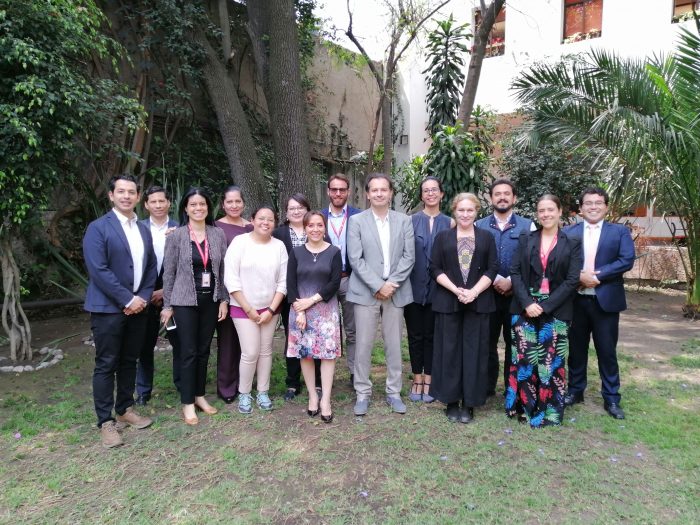
In this context, together with the Mora Institute and the academic publisher Springer, the SiCEM project is supporting a collaborative effort to write a multi-author academic book on the Emissions Trading System in Mexico. Academics from important national and international research centers will participate in the book. Recently, these researchers were summoned to a seminar to present their progress, as well as to hold an interesting conversation in order to shape the book’s thematic structure.


Credits: GIZ. Researchers during the event.

The seminar was held on March 10, 2020, at the Mora Institute facilities in Mexico City. This institution convened the event, with the support of the SiCEM project implemented by GIZ on behalf of Germany’s Federal Ministry for the Environment, Nature Conservation and Nuclear Safety (BMU). Participants included distinguished universities such as the National Autonomous University of Mexico (UNAM), the Center for Research and Teaching in Economics (CIDE), Anahuac University, the National Polytechnic Institute (IPN), the Autonomous University of Baja California Sur (UABCS), and the Latin American Faculty of Social Sciences (FLACSO). Furthermore, researchers participated virtually from international universities and research centers such as Stanford University, the University of California, and the Alexander Von Humboldt Foundation.


Credits: GIZ. The researchers discussed the book’s progress.


The conversation revolved around different subject areas. Firstly, it was acknowledged that the book needed to contain a section that would contextualize the ETS in the framework of the country’s public policies and compliance with international agendas. The importance of analyzing the legal framework that supports the implementation of the ETS in Mexico, along with its institutional and governance structure, was also discussed. Finally, the discussion covered the design elements of the ETS as well as perspectives that will further strengthen the instrument, as the Mexican ETS transitions from its test phase to the operational phase.

Academic research about the ETS is key to generating analysis and inputs that can strengthen the instrument’s Operational Phase. Thus, the SiCEM project will continue to support promotional activities for this research in Mexico. In the coming months, efforts to build capacities, facilitate dialogue, and develop additional technical studies to strengthen the system’s design will continue to be featured on the “IKI Alliance Mexico” blog.

For more information on this subject, please contact us at: Comercio.Emisiones-MX@giz.de