

Author: IKI Alliance
The project “Convergence of Energy and Climate Change Policy in Mexico” (CONECC) seeks to build bridges between the energy and climate sectors in order to facilitate the achievement of global and national climate goals. The scope of these commitments requires a strong impetus to technological change, which is why CONECC, in coordination with the Querétaro Sustainable Development Secretariat (SEDESU) and the company LiCore, began the process of forming the Querétaro Hub of Technological Innovation in February 2020.
The Hub is a linking platform that seeks to promote the development and implementation of innovations that can accelerate the energy transition and green competitiveness of Querétaro’s productive sector. Given its pioneering characteristic in the region, the experience is expected to serve as a model for various public-private collaboration efforts for climate technology development in other states.
Likewise, the Hub seeks to strengthen collaboration in the area of innovation and entrepreneurship in Querétaro, which includes start-ups, SMEs, large and corporate companies, public institutions, and academia. In March 2020, a Working Group was set up to form the Hub, made up of representatives from the state’s innovation and entrepreneurship sectors. The Working Group will discuss governance and financial sustainability mechanisms, as well as identify projects to start the Hub’s operations.
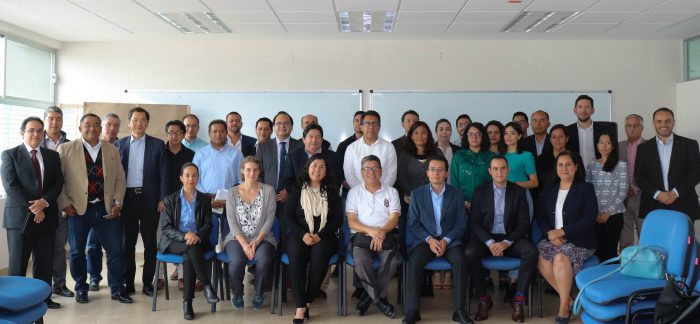
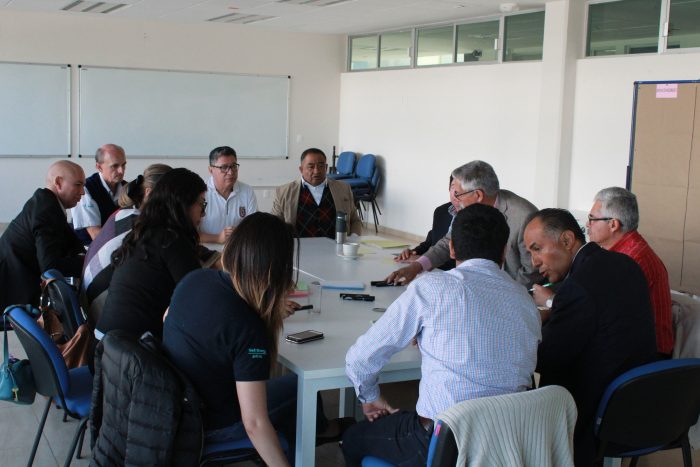
During the Working Group’s first meeting at the facilities of the “Nuqleo” entrepreneurship area in Querétaro, the process of legal incorporation of the Hub and the prioritization of strategic services and lines of action were analyzed; some of them include:
- Acceleration and promotion of disruptive technologies and business models.
- Advice, training, and certification for startups and SMEs.
- Access to innovation laboratories (sandbox formats) or similar. A sandbox guides the development of new technologies or business models in a testing environment that takes into account the regulation and/or applicable legislation, mainly promoting innovation in the field of digitalization of the electricity sector.
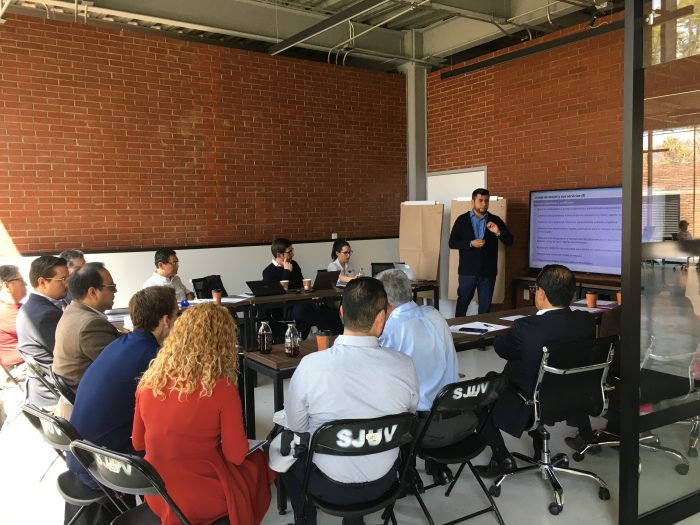
The CONECC project will provide technical support in the process of forming the Hub. The aim is to have the technical opinion of an expert team to create linkage platforms and technological innovation and establish a coordination office for the Hub based in Querétaro. A communication strategy will also be elaborated for the socialization and dissemination of the Hub on local and national levels.
The Working Group plans to work on the selection of specific projects that, through a strategic action plan, allow successful integration of start-ups and SMEs in the innovation environment. The selected projects are expected to receive (1) consultancies to align their proposals to the main issues facing the state energy sector and, (2) support in development and implementation processes, through methodologies such as design thinking or sandboxes. Mentoring, access to specialized testing laboratories, commercial feasibility analysis, links to financing, and interrelation with national and international companies and experiences are included, among others.
The creation of a technological innovation hub in Querétaro is essential for sustainable economic recovery. This collaboration model fosters innovative technologies and business models in the field of renewable energy and energy efficiency. Coordinated action between the state innovation area and entrepreneurship is strengthening economic competitiveness and accelerating the implementation of low-carbon technologies. More information coming soon.
All images are from workshops carried out prior to the COVID-19 health emergency. Currently, meetings and work sessions are held in virtual format.
On May 14, the first webinar on climate change was held in Chiapas: “Economic Effects Resulting From the COVID-19 Contingency in Chiapas“. This meeting was organized by the State Advisory Council on Climate Change, as part of the efforts to reflect on the economic impacts that we are facing as a society in the face of the current health emergency.
The webinar involved four speakers from different sectors, who focused their presentations on two relevant aspects. On the one hand, they shared the geographical context and the unequal ways in which the local Chiapas communities are facing the contingency. On the other, they highlighted the importance of not seeing economic problems according to sector, but rather with a bigger vision that links to the national perspective, to enable dialogue and find new ways of working in the post-pandemic stage.
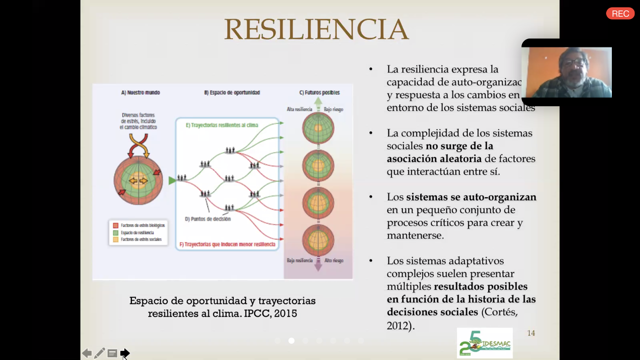
The productive sector also participated through the Ministry of the Board of Directors of the Mexican Milk Federation, who stated: “We need, more than ever, to turn sustainable livestock farming into a public policy that guarantees the participation of producers, technical agents, and NGOs in tune with our governments, in order to face the vulnerability in which the productive sector finds itself. ”
The government sector was represented by the Ministry of Environment, Energy and Sustainable Development of Oaxaca, which, from its experience as a member of the GCF Task Force (GCF TF), stated that there are great challenges facing indigenous peoples of Latin America in the face of this sanitary and climatic emergency; thus, the GCF TF is proposing a work route from the instances at the international level to face uncertainties regarding the increase in forest destruction.
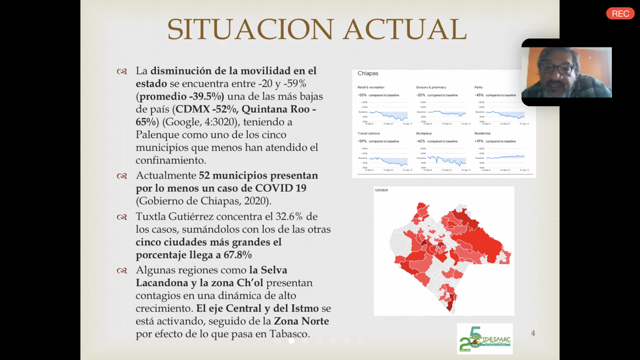
As part of the transition to the project “Development of a regional system to monitor biodiversity and climate change – Selva Maya” that will be concluding shortly, Pronatura Sur will be taking up the achievements of the strategy built by the the GCF TF.
The aim of the GCF TF is to guarantee the permanence of forests and the livelihoods of their inhabitants, so efforts will focus on reducing environmental and social risks during the post-COVID-19 economic reactivation. The pressure on land and the risks of deforestation will increase exponentially if there are no economic alternatives for the most vulnerable groups, such as indigenous and rural communities, and the floating population, which has experienced unemployment during the pandemic. Thus, this initiative will be focusing its efforts on modifying existing strategies and developing new ones that allow it to support its member states – such as the state of Chiapas – during economic recovery, mainly in the forestry sector.
The recording of the webinar is available here.
People’s wellbeing depends, among other things, on environmental conditions. Poor air quality can increase the risk of respiratory complications during diseases such as COVID-19. Air quality monitoring facilitates risk assessment and public policy decision-making.
The forest fires and agricultural burning that take place in many regions – including the Mayan Forest – generate harmful particles, visible as black smoke, which affect human health. The respiratory problems caused by these particles are an aggravating factor for people who are fighting against the disease caused by the novel coronavirus type 2, better known as COVID-19, which is ending the lives of many people.
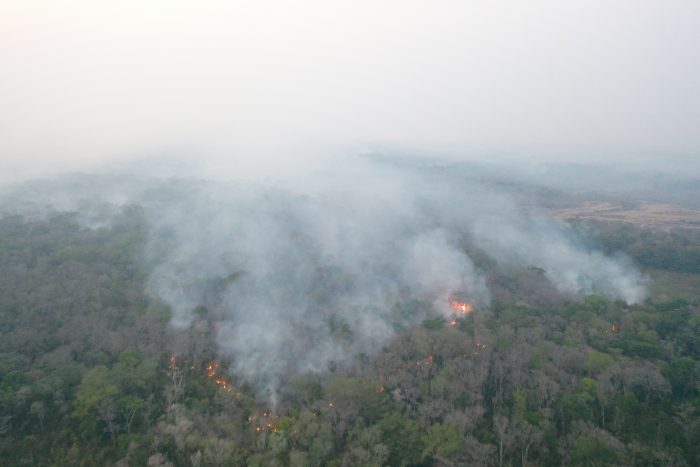
To assess the risk level that air pollution means for human health, it is important to have access to reliable data. For this reason, the project Development of a Regional System to monitor biodiversity and climate change – Selva Maya, financed by the Germany’s Federal Ministry for the Environment, Nature Conservation and Nuclear Safety (BMU) within the framework of its International Climate Initiative (IKI), supports various actors in the Mayan Forest region in monitoring air quality.
For this, the project supported the acquisition of PurpleAir sensors that were installed in different regions of the Mayan Forest, covering areas in Guatemala, Belize and Mexico. These sensors detect air particles, and the levels are available publicly and in real time on the Internet.
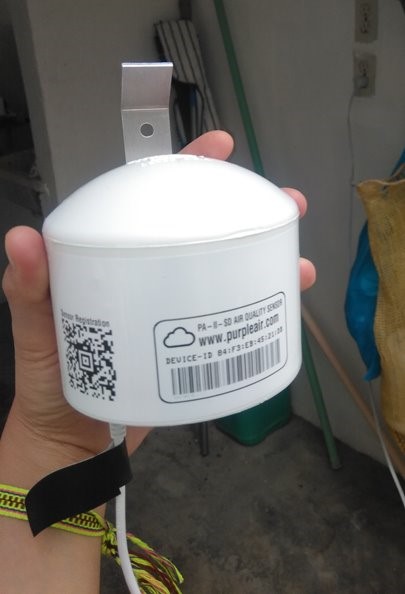
This data has already been used to improve the living conditions of many people. After confirming a dangerous air quality level during a fire at the San Benito landfill, Guatemala, the municipality began the process for better solid waste management. In Belize, data concerning agricultural burning inspired a social media campaign. Consequently, the Belize government passed a law that prohibited burning during the COVID-19 contingency.
Due to these successful experiences, actors in Guatemala, Belize and also Mexico want to expand the network of air quality sensors. This will allow faster detection and reaction to threats to human respiratory health. Together with other measures, this approach will help the population and decision-makers of the three countries to cope with the COVID-19 pandemic and possible similar epidemics in the future.
Contact: claudia.nares@giz.de
More information at:
Selva maya, devorada por las llamas – La Jornada (in Spanish)
https://www.prensalibre.com/ciudades/peten/alarma-por-mala-calidad-del-aire-en-peten-un-factor-de-riesgo-para-la-poblacion-ante-el-covid-19/
https://www.facebook.com/photo.php?fbid=10220715773857156&set=a.1065690675430&type=3&theater
Due to the COVID-19 outbreak, the priorities for attention to the health emergency have been markedly reduced. Government efforts have also been redirected to protecting citizens and fighting against the health epidemic.
In an adjustment process, the municipalities’ focal points, national development banks, and federal ministries (Ministry of Agricultural, Territorial and Urban Development – SEDATU, Ministry of Environment and Natural Resources – SEMARNAT, Secretary of Treasury and Public Credit – SHCP) have continued preparing their projects.
With the support of FELICITY and key actors, the migration of face-to-face project preparation courses to digital workshops has been encouraged, so that sub-national public officials can continue their great efforts in the development of technical, financial, environmental, technological and social capacities.
Project promoters have also collaborated through platforms that facilitate training and remote communication for project preparation. Progress is being made in technical assistance from the cabinet, to prepare the procurement process and have the documentation required for the continuation of the project cycle.
A healthy collaboration between the parties involved has allowed the adjustment towards the implementation of the projects; however, the main challenges in the current context of COVID-19 increase the pressure on urban budgets.
Green recovery represents a potential opportunity to reduce budget spending by saving energy costs, but also to generate more quality jobs and mitigate greenhouse gas emissions. The continuity of these projects is particularly important in the current context of a health crisis that seeks economic recovery in the short term and green recovery in the medium term.
The Emissions Trading System (ETS) is one of the carbon price mechanisms that has accelerated the mitigation of greenhouse gas (GHG) emissions over the past decade. It works using the “cap and trade” principle. A limit is imposed on emissions from one or more economic sectors, and regulated facilities are granted a limited number of emission rights that they can trade among themselves, to carry out their compliance obligations in a cost-effective manner.
There are factors that ensure the proper functioning of an ETS; among them, stability in carbon prices and a supply of emission rights that is consistent with market demand. The current economic recession caused by COVID-19 has altered these two variables and has presented significant challenges for the more than 20 ETS operating around the world. It is important to be aware of the global strategies to overcome these challenges and identify lessons learned that could strengthen the ETS Test Program in Mexico, in force since January 2020.
According to ICAP data, there was a significant drop in carbon prices in California and Quebec in March, as well as in the European Union (EU), where it fell from an average of 25 EUR to 15 EUR. In Switzerland, the auction of emission rights was even rescheduled due to the price drop. Commercialization of emission rights in the ETS of the EU is affected by oversupply, which can lead to a reduction in public revenue from auctions, and discourage investments in mitigation technologies.
Countries such as Canada, China, Korea, and Switzerland have responded to these impacts by postponing compliance and reporting dates, while the European Commission anticipates a reduction in the number of emission rights available within the Market Stability Reserve. On the other hand, Poland and the Czech Republic have suggested a review of the EU’s ETS conditions.
Strategies implemented by other countries help inform Mexico of the risks faced by ETS and their possible solutions. The project “Preparation of an Emissions Trading System in Mexico” (SiCEM), implemented by the Deutsche Gesell¬schaft für Internationale Zusammenarbeit (GIZ) GmbH will follow the evolution of the system’s global situation closely.
After a multi-stakeholder participatory process, the CiClim program supported the development of the conceptual and methodological structure to put payment models for environmental services in two cities into operation.
The inhabitants of León (Guanajuato) suffer from water supply service problems (90% of which is overexploited) and poor air quality (in 2017, 173 days were outside the norm). In this context, 75% of the population surveyed through social networks showed that they were willing to voluntarily contribute between $2 and $15 more when paying for their water bill or vehicle verification. This financing will be administered by the already existing Municipal Environmental Fund and will be destined towards activities that help to recover urban green areas and subsequently the Sierra de Lobos natural protected area, as projects subject to the Fund’s operating rules are approved.
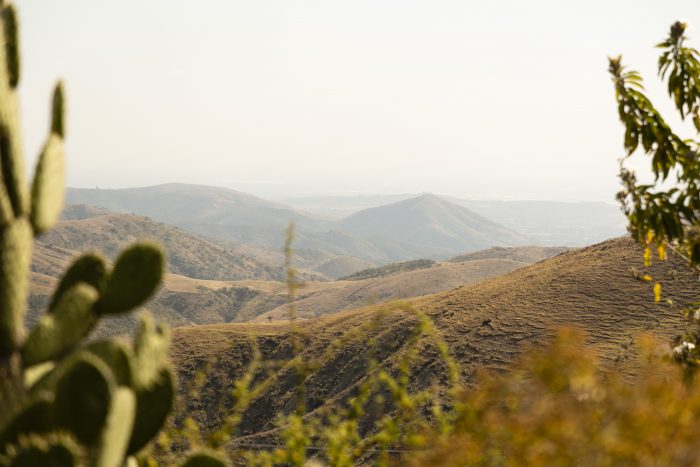
In Morelia (Michoacán), the overexploitation of the aquifer that supplies the city – and affects the current condition of the main state and municipal protected natural areas – was considered serious. In this city, surveys (with direct population sampling) reported that 80% of the interviewees are willing to make a voluntary contribution of money – between $2 and $12 fortnightly – going towards financing projects related to the conservation of protected areas. The municipal government is in the process of approving the Environmental Fund, to manage the resources and coordinate the proposed programs.
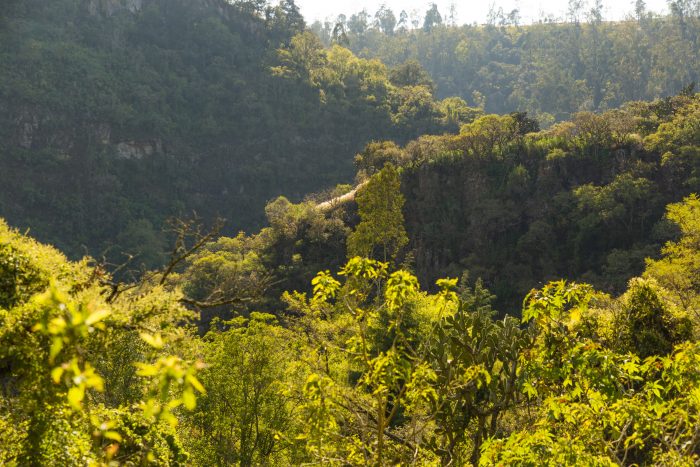
As of the writing of this text, work is still in progress on a forest compensation mechanism for the municipality of Mérida (Yucatán).
This project is implemented by the Cities and Climate Change (CiClim) program and is part of the International Climate Initiative (IKI) of Germany’s Federal Ministry for the Environment, Nature Conservation and Nuclear Safety (BMU).
Human mobility in the context of climate change has gained space in international agendas on sustainable development and climate change. The formulation of the National Adaptation Plans of the United Nations Framework Convention on Climate Change (UNFCCC) member countries following COP 16 represents an opportunity to consider internal climate migration from a human rights perspective.
Climate migration is a reality all over the world. As the global average temperature increases to 1.5°C, there will be an increase in incidents of internal migration and displacement. The challenge is much greater for the most vulnerable countries: Least Developed Countries (LDCs), Landlocked Developing Countries (LLDCs) and Small Island Developing States (SIDS). According to a study by the World Bank, it is projected that by 2050, in sub-Saharan Africa, South Asia and Latin America alone, around 143 million people could be forced to move within their own countries to escape the impacts of climate change.
Under the 2010 Cancun Adaptation Framework, the Parties to the UNFCCC assumed the commitment to intensify their work identifying and implementing strategies of adaptation to climate change, among others things; this involves taking measures to improve understanding, coordination, and cooperation regarding displacement, migration, and planned relocation as a consequence of climate change. In addition, the Sendai Framework for Disaster Risk Reduction 2015-2030 addresses the displacement caused – or not – by climate disasters, as well as the contribution of migrants to resilience at their destination. However, the official recognition of climate-induced migration and displacement is still in its early stages within international agreements on climate change.
Human mobility related to climate risks can occur in response to different types of risks and in different ways: forced displacement, voluntary migration, organized relocation, within a country or across borders, individually, or as a community. For its part, the International Organization for Migration maintains a sustainable development perspective, which allows needs to be met and vulnerabilities of populations exposed to environmental factors to be reduced, through disaster risk reduction and adaptation measures to climate change.
One of the initiatives in the field that has most gained momentum at an international level is the understanding of migration as part of the adaptation strategy that can be promoted through planned relocation and resettlement, or through temporary migration. However, it is increasingly evident that the ability to migrate – beyond a human right – is a function of mobility and resources (both financial and social); that is, the people most vulnerable to climate change are not necessarily the most likely to migrate.
It is important to understand the context that motivates the displacement of people due to reasons associated with climate change. However, going further than the risk-focused approach, the challenge of the international agenda and regulatory frameworks at an international level lies in addressing an approach that focuses on the human rights of migrants – the movement itself and the destination. Furthermore, it should focus on those who, for economic, social, or cultural reasons, are forced to stay in the affected or most at-risk areas.
To date, only a few countries have finished formulating their National Adaptation Policy (NAP). In the case of Mexico, the government is in charge of initiating a participative construction process with regional actors. For their part, other countries are still defining their strategy to comply with the Nationally Determined Contributions (NDCs), either by increasing the ambition of their goals or by updating national commitments. This represents an opportunity for these countries to consider climate risk and the challenges and opportunities of migration in national development planning, from a human rights and people-centered approach.
When implementing climate measures, indicators play a critical role in monitoring and evaluation (M&E) mechanisms. In addition to promoting transparency, they justify investments in climate change adaptation projects as effective and sustainable actions.
In Mexico, the General Law on Climate Change (LGCC) recognizes in Article 27 that the national policy of adaptation to climate change “will be based on instruments of diagnosis, planning, measurement, monitoring, reporting, verification, and evaluation”, with the aim of reducing the vulnerability of society and ecosystems, as well as strengthening the resilience of natural and human systems to the effects of climate change. This provision is essential to glimpse the progress that Mexico has made in complying with Nationally Determined Contributions (NDCs) on adaptation.
The monitoring and evaluation (M&E) instruments, as well as facilitating the monitoring of project progress, function as a transparency and accountability mechanism that is attractive for both political and financial decision makers. Thus, managers of climate change adaptation projects must design M&E mechanisms with indicators that provide unequivocal conclusions about how adaptation measures reduce vulnerabilities to the consequences of climate change.
The formulation of indicators for monitoring and verifying the results of adaptation projects presents challenges, amongst them the uncertainties about the local and regional consequences of climate change, the time horizon of climate variability, and the relationship between climate change and other social aspects. Likewise, given the diversity of socio-cultural, socio-political and geographic contexts, there is no universal indicator or list of indicators that can evaluate the results of adaptation or promote their replicability.