In the current health crisis we are experiencing, the environmental issue has become important and deserves to be placed at the center of the public health discussion. In fact, various Natural Science research institutes have pointed out that this crisis had its origin in the interruption of the delicate environmental balance. Factors such as habitat destruction, capture, trafficking and consumption of wildlife have represented favorable conditions for the SAR-CoV-2 virus to become contagious to humans. This is why today, more than ever, the protection of natural resources and the environment is crucial.

For this reason, it is important to ask ourselves: What will happen after the pandemic? What will be our role in this return to a “new normal”? What are our alternatives? How can we identify these measures or solutions? Which actors should be added? Which communication strategies should be promoted at a territorial level?

We must acknowledge that the main cause of the spread of this disease is the poor relationship that humans have established with the environment. Therefore, we have to generate a new, more harmonious relationship between society and nature. This is the only way to avoid similar situations: not only those associated with health problems, such as the emergence of new epidemics and their escalation towards pandemics, but other phenomena that have been documented with scientific evidence, such as the loss of biodiversity, climate change, water loss, and the reduction of plant cover and soil erosion, could lead us to critical situations for humanity.
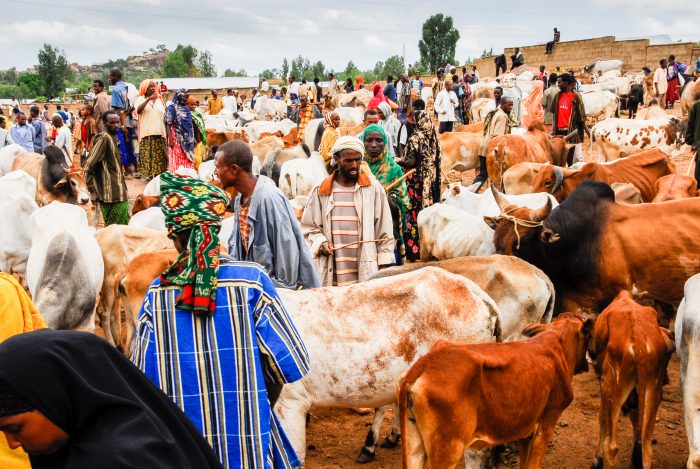
 

Credits: Shutterstock. The increase in domesticated animals for human consumption has a large impact on ecosystems.


One of the most relevant causes is the change in land use, explained by the increase in extractive and productive activities, deforestation, and the expansion of urban areas. Another relevant factor is the increase in the proportion of domesticated fauna (for example, cattle, pigs, and poultry) in recent centuries as food for human consumption, alongside a detriment in the proportion of wild fauna. Consequently, this combination of elements has expanded the universe of pathogens associated with domesticated fauna, specifically viruses, bacteria, fungi, parasites, prions or misfolded proteins. These pathogens play a role, and ecosystems, both terrestrial and marine, depend on their activity. For example, plants and animals release residues into the soil (carbon, nitrogen and sulfate, among others) that, when degraded, are used by bacteria as food. Thus, it is important that anthropogenic activities – and the different sectors involved in the environment – become aware of this and act responsibly, maintaining the natural balance.

For these reasons, the Nationally Determined Contributions (NDC) presented in 2015 by the Government of Mexico, and now in 2020, subjected to a review and update process, should identify concrete actions, opportunities, and needs, taking into account the value of natural resources, ecosystems, and their services to human and planetary health that provide the means for their implementation at different scales in the country.
On May 14, the first webinar on climate change was held in Chiapas: “Economic Effects Resulting From the COVID-19 Contingency in Chiapas“. This meeting was organized by the State Advisory Council on Climate Change, as part of the efforts to reflect on the economic impacts that we are facing as a society in the face of the current health emergency.

The webinar involved four speakers from different sectors, who focused their presentations on two relevant aspects. On the one hand, they shared the geographical context and the unequal ways in which the local Chiapas communities are facing the contingency. On the other, they highlighted the importance of not seeing economic problems according to sector, but rather with a bigger vision that links to the national perspective, to enable dialogue and find new ways of working in the post-pandemic stage.


Credits: Pronatura Sur. Webinar


The productive sector also participated through the Ministry of the Board of Directors of the Mexican Milk Federation, who stated: “We need, more than ever, to turn sustainable livestock farming into a public policy that guarantees the participation of producers, technical agents, and NGOs in tune with our governments, in order to face the vulnerability in which the productive sector finds itself. ”

The government sector was represented by the Ministry of Environment, Energy and Sustainable Development of Oaxaca, which, from its experience as a member of the GCF Task Force (GCF TF), stated that there are great challenges facing indigenous peoples of Latin America in the face of this sanitary and climatic emergency; thus, the GCF TF is proposing a work route from the instances at the international level to face uncertainties regarding the increase in forest destruction.


Credits: Pronatura Sur. Webinar


As part of the transition to the project “Development of a regional system to monitor biodiversity and climate change – Selva Maya” that will be concluding shortly, Pronatura Sur will be taking up the achievements of the strategy built by the the GCF TF.

The aim of the GCF TF is to guarantee the permanence of forests and the livelihoods of their inhabitants, so efforts will focus on reducing environmental and social risks during the post-COVID-19 economic reactivation. The pressure on land and the risks of deforestation will increase exponentially if there are no economic alternatives for the most vulnerable groups, such as indigenous and rural communities, and the floating population, which has experienced unemployment during the pandemic. Thus, this initiative will be focusing its efforts on modifying existing strategies and developing new ones that allow it to support its member states – such as the state of Chiapas – during economic recovery, mainly in the forestry sector.

The recording of the webinar is available here.

People’s wellbeing depends, among other things, on environmental conditions. Poor air quality can increase the risk of respiratory complications during diseases such as COVID-19. Air quality monitoring facilitates risk assessment and public policy decision-making.

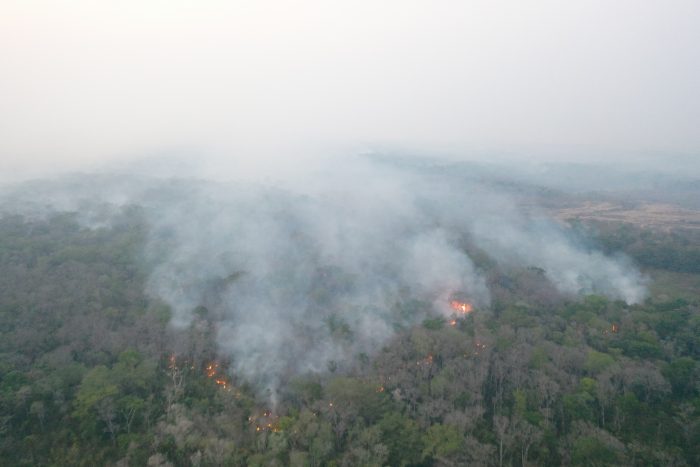
The forest fires and agricultural burning that take place in many regions – including the Mayan Forest – generate harmful particles, visible as black smoke, which affect human health. The respiratory problems caused by these particles are an aggravating factor for people who are fighting against the disease caused by the novel coronavirus type 2, better known as COVID-19, which is ending the lives of many people.


Credits: César Paz – WCS Guatemala. Fire in the Mayan Forest


To assess the risk level that air pollution means for human health, it is important to have access to reliable data. For this reason, the project  Development of a Regional System to monitor biodiversity and climate change – Selva Maya, financed by the Germany’s Federal Ministry for the Environment, Nature Conservation and Nuclear Safety (BMU) within the framework of its International Climate Initiative (IKI), supports various actors in the Mayan Forest region in monitoring air quality.

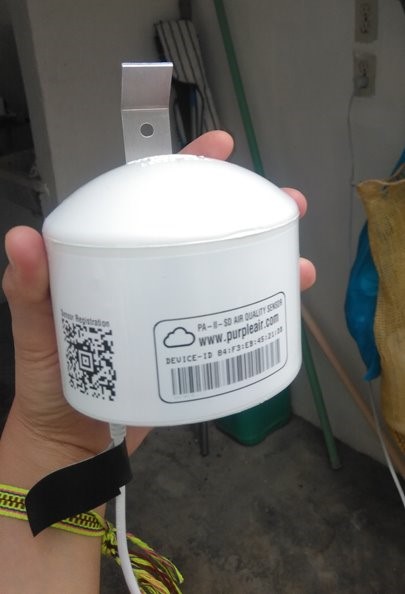
For this, the project supported the acquisition of PurpleAir sensors that were installed in different regions of the Mayan Forest, covering areas in Guatemala, Belize and Mexico. These sensors detect air particles, and the levels are available publicly and in real time on the Internet.


Credits: GIZ / Ameyalli Nares. An Aire PurpleAir Quality Sensor


This data has already been used to improve the living conditions of many people. After confirming a dangerous air quality level during a fire at the San Benito landfill, Guatemala, the municipality began the process for better solid waste management. In Belize, data concerning agricultural burning inspired a social media campaign. Consequently, the Belize government passed a law that prohibited burning during the COVID-19 contingency.

Due to these successful experiences, actors in Guatemala, Belize and also Mexico want to expand the network of air quality sensors. This will allow faster detection and reaction to threats to human respiratory health. Together with other measures, this approach will help the population and decision-makers of the three countries to cope with the COVID-19 pandemic and possible similar epidemics in the future.

Contact: claudia.nares@giz.de

More information at:

Selva maya, devorada por las llamas – La Jornada (in Spanish)

Purple Air

https://www.prensalibre.com/ciudades/peten/alarma-por-mala-calidad-del-aire-en-peten-un-factor-de-riesgo-para-la-poblacion-ante-el-covid-19/


https://www.facebook.com/photo.php?fbid=10220715773857156&set=a.1065690675430&type=3&theater

Due to the COVID-19 outbreak, the priorities for attention to the health emergency have been markedly reduced. Government efforts have also been redirected to protecting citizens and fighting against the health epidemic.

In an adjustment process, the municipalities’ focal points, national development banks, and federal ministries (Ministry of Agricultural, Territorial and Urban Development – SEDATU, Ministry of Environment and Natural Resources – SEMARNAT, Secretary of Treasury and Public Credit – SHCP) have continued preparing their projects.

With the support of FELICITY and key actors, the migration of face-to-face project preparation courses to digital workshops has been encouraged, so that sub-national public officials can continue their great efforts in the development of technical, financial, environmental, technological and social capacities.

Project promoters have also collaborated through platforms that facilitate training and remote communication for project preparation. Progress is being made in technical assistance from the cabinet, to prepare the procurement process and have the documentation required for the continuation of the project cycle.

A healthy collaboration between the parties involved has allowed the adjustment towards the implementation of the projects; however, the main challenges in the current context of COVID-19 increase the pressure on urban budgets.

Green recovery represents a potential opportunity to reduce budget spending by saving energy costs, but also to generate more quality jobs and mitigate greenhouse gas emissions. The continuity of these projects is particularly important in the current context of a health crisis that seeks economic recovery in the short term and green recovery in the medium term.

The Emissions Trading System (ETS) is one of the carbon price mechanisms that has accelerated the mitigation of greenhouse gas (GHG) emissions over the past decade. It works using the “cap and trade” principle. A limit is imposed on emissions from one or more economic sectors, and regulated facilities are granted a limited number of emission rights that they can trade among themselves, to carry out their compliance obligations in a cost-effective manner.

There are factors that ensure the proper functioning of an ETS; among them, stability in carbon prices and a supply of emission rights that is consistent with market demand. The current economic recession caused by COVID-19 has altered these two variables and has presented significant challenges for the more than 20 ETS operating around the world. It is important to be aware of the global strategies to overcome these challenges and identify lessons learned that could strengthen the ETS Test Program in Mexico, in force since January 2020.

According to ICAP data, there was a significant drop in carbon prices in California and Quebec in March, as well as in the European Union (EU), where it fell from an average of 25 EUR to 15 EUR. In Switzerland, the auction of emission rights was even rescheduled due to the price drop. Commercialization of emission rights in the ETS of the EU is affected by oversupply, which can lead to a reduction in public revenue from auctions, and discourage investments in mitigation technologies.

Countries such as Canada, China, Korea, and Switzerland have responded to these impacts by postponing compliance and reporting dates, while the European Commission anticipates a reduction in the number of emission rights available within the Market Stability Reserve. On the other hand, Poland and the Czech Republic have suggested a review of the EU’s ETS conditions.

Strategies implemented by other countries help inform Mexico of the risks faced by ETS and their possible solutions. The project “Preparation of an Emissions Trading System in Mexico” (SiCEM), implemented by the Deutsche Gesell¬schaft für Internationale Zusammenarbeit (GIZ) GmbH will follow the evolution of the system’s global situation closely.