

Initial situation
Cities are responsible for climate change, but they are also part of the solution.
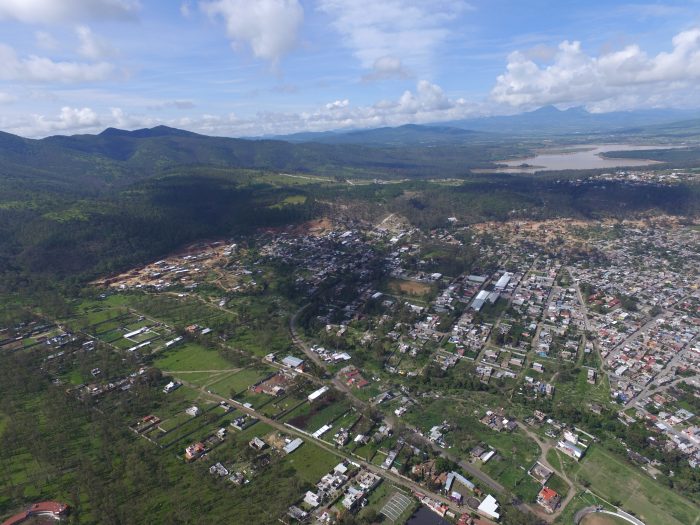
Mexican cities have grown rapidly in recent years, and the way they have developed affects the quality of life of their inhabitants. Currently, 78% of Mexico’s population lives in cities, and this figure is expected to continue increasing in the coming years. Vehicle traffic, flooding, the loss of green areas, and long daily commuting distances are some of the consequences of limited and inadequate planning.
Cities produce around 70% of the greenhouse gas emissions responsible for climate change, while also being affected by its impacts. For all these reasons, cities play an important role in combating climate change and its effects, as well as in fulfilling Mexico’s international commitments and achieving the Sustainable Development Goals of the 2030 Agenda.
Our approach
Transforming cities to address climate change.
The Deutsche Gesellschaft für Internationale Zusammenarbeit (GIZ) GmbH (German Development Cooperation) seeks, through the Climate Protection in Mexican Urban Policy Programme (CiClim), to improve the planning of Mexican cities. The programme is implemented on behalf of the Federal Ministry for the Environment, Nature Conservation and Nuclear Safety (BMU) as part of the International Climate Initiative (IKI).
In coordination with the Ministry of Agrarian, Territorial and Urban Development (SEDATU), the Ministry of Environment and Natural Resources (SEMARNAT), and the five local governments of Mérida, Hermosillo, Tlaquepaque, León, and Morelia, we work to promote urban development that protects the environment and its citizens.
Improving urban planning
We seek to build more human-centered, livable, green cities that are capable of facing the challenges of climate change. For this reason, GIZ provides technical advice and strategic guidance for urban development and focuses on promoting integrated planning. To achieve this, we foster coordination among different levels of government and strengthen cross-sector partnerships to bring together isolated efforts toward innovative solutions to urban growth.
We develop strategies to reduce emissions of the gases that cause climate change and improve adaptation to extreme events such as torrential rainfall, among others. We promote intersectoral coordination to integrate climate change into federal policies and programmes in the urban and environmental sectors.
Developing local solutions to global challenges
Together with SEDATU and SEMARNAT, civil society organizations, academia, and international organizations, we defined a roadmap to guide the implementation of green infrastructure projects in Mexican cities. For more information, click here.
At the local level, we develop urban, environmental, and mobility projects focused on the specific needs of five Mexican cities. Among our activities, we identify residential areas with the potential to increase density in order to achieve more compact growth; support the development of integrated sustainable mobility plans; promote high-quality public transport and active mobility; and integrate the economic and social value of green areas into urban planning while also addressing natural areas on the urban periphery.
Providing tools for learning
Through our cooperation with partners at the national, state, and metropolitan levels, CiClim promotes the transfer of experiences to other cities.
We foster knowledge exchange among cities to replicate good practices through communication platforms and spaces such as the Green Infrastructure and Climate Change Forum. Through the programme, we strengthen the technical capacities of more than 100 public officials and members of civil society, focusing on improving the design of better-connected, safer, and greener streets.
Expected results
Through the CiClim programme, we seek to:
- Design compact cities, where people’s homes are better connected to workplaces, schools, public spaces, and green areas.
- Improve mobility planning, so that people have better access to comfortable, reliable, and high-quality public transport.
- Promote the creation of and access to adequate infrastructure, such as bicycle lanes and safe sidewalks for residents’ mobility.
- Conserve biodiversity in cities and their surrounding areas, so that future generations have access to better-quality water and air for a dignified life.
- Strengthen the capacities of decision-makers, in order to create better-designed local solutions.
Twitter: @ciudades_demx