Within the framework of the high-level forum “Legislative Challenges of Quintana Roo”, held in person and virtually in the State Congress lobby, the Environment and Climate Change Commission of the XVI Legislature, announced three initiatives regarding climate change, environmental justice, water management, and sustainable tourism.
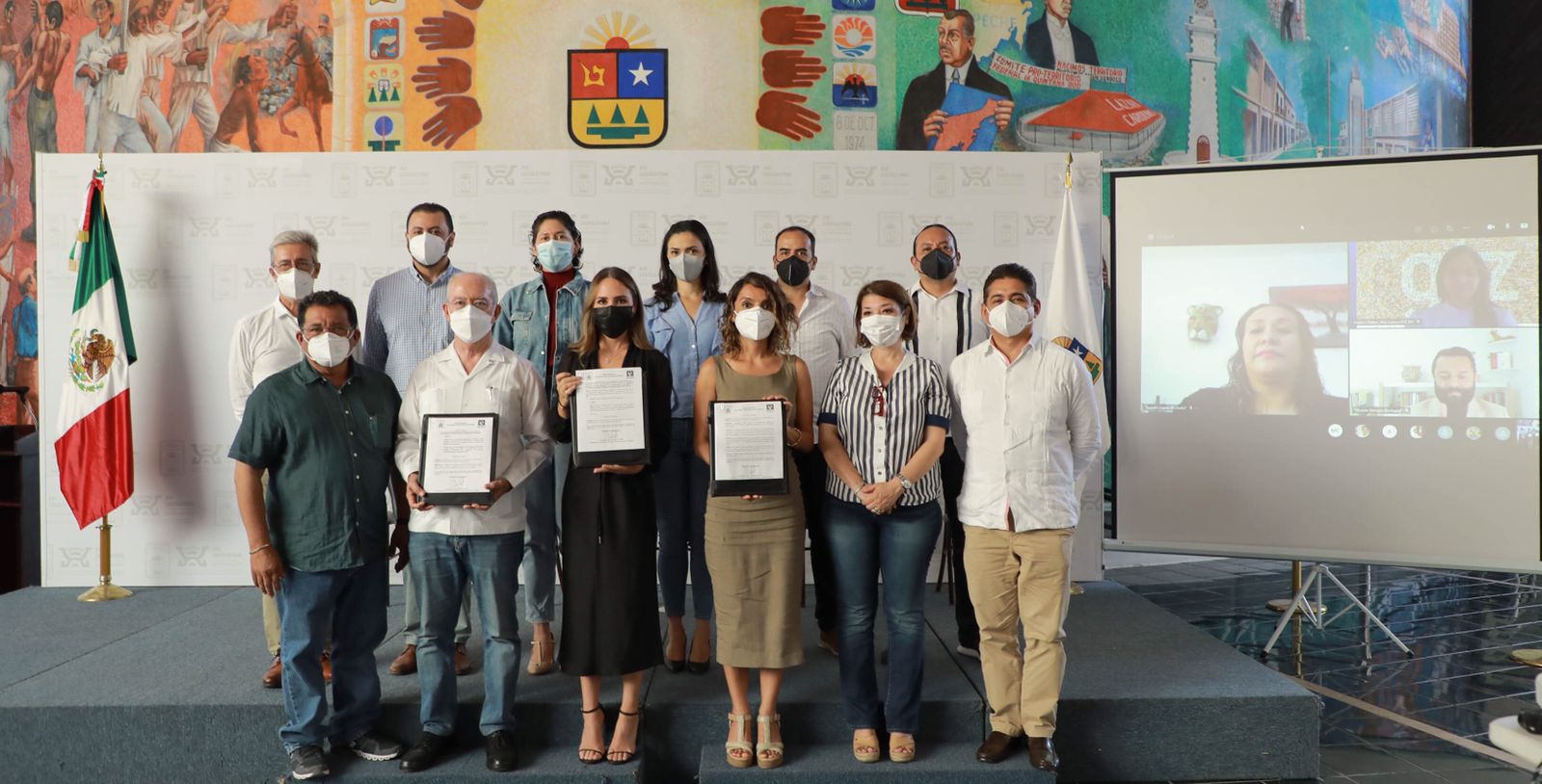
©Foto: Congreso del Estado de Quintana Roo. Foro de alto nivel sobre retos legislativos en Quintana Roo.
© Photo: State Congress of Quintana Roo.  High-level forum on legislative challenges in Quintana Roo.

The initiative was carried out within the cooperation between the Congress of Quintana Roo and the ADAPTUR project, made up of: a training aimed at legislative teams on environmental challenges; virtual conversations between deputy presidents of various commissions, technical experts such as Gonzalo Merediz from Amigos de Sian Ka´an A.C. and Rosaura Cuevas from GIZ, as well as federal authorities such as Nancy Hernández, from the Directorate of Sustainable Tourism Management of SECTUR and Marco Heredia from the General Directorate of Climate Change Policies of SEMARNAT. Finally, as a conclusion to the work, the aforementioned high-level forum took place on April 21, on the eve of Earth Day.
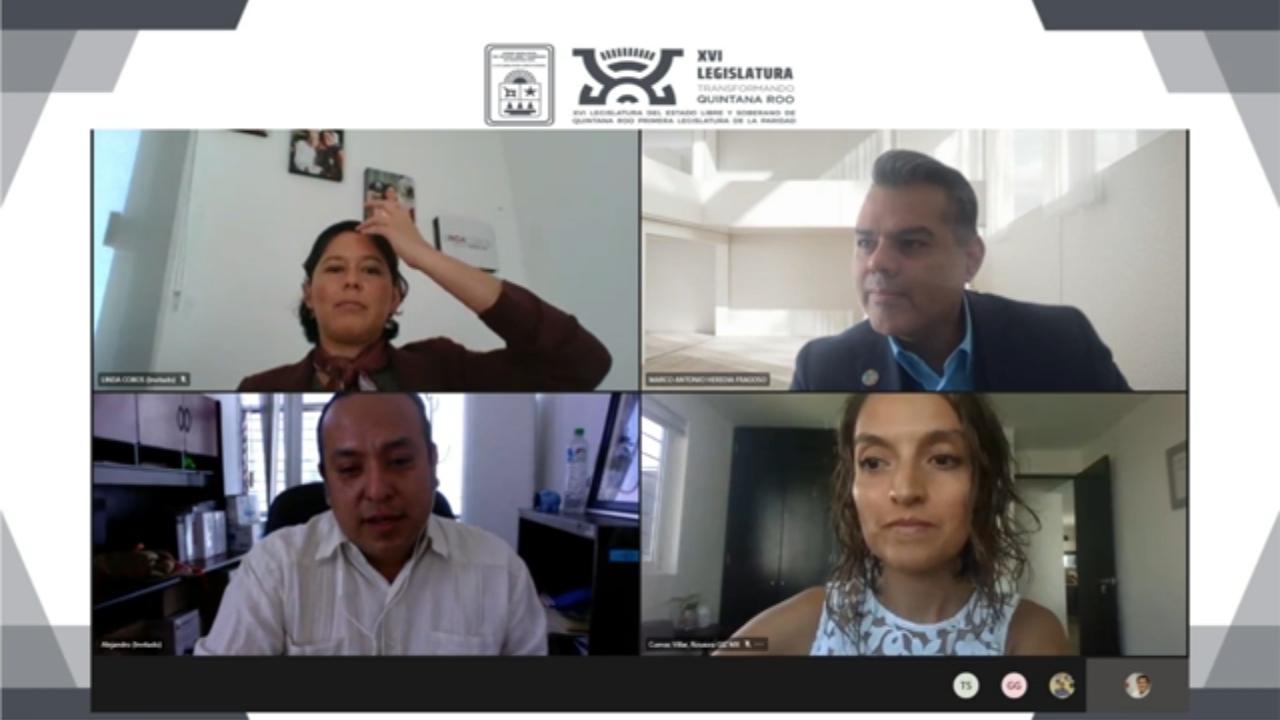
©Foto: Congreso del Estado de Quintana Roo. Conversatorio virtual sobre cambio climático
© Photo: Congress of the State of Quintana Roo. Virtual conversation on climate change

The three initiatives presented by the deputy president of the Environment and Climate Change Committee involve the following:

  1. Reform of the Law of Quotas and Rates for Public Services of Drinking Water and Sewerage, Treatment and Disposal of Wastewater of the State of Quintana Roo, to reduce or eliminate dissolved nutrients that damage ecosystem health.
  2. Reform of the Quintana Roo Tourism Law to grant power to the state executive to create the State Zones for Sustainable Tourism Development.
  3. Creation of a new State Law on Environmental Responsibility, which will aim to establish and regulate environmental liability arising from damage caused to the environment, as well as the repair and compensation of such damage.

These proposals represent an important milestone for the State of Quintana Roo, since they demonstrate that the health of ecosystems is a fundamental element for the development of the population and productive sectors.

The ADAPTUR project is funded by the German Federal Ministry for the Environment, Nature Conservation and Nuclear Safety (BMU) and is part of the International Climate Initiative (IKI). It is led by SECTUR with technical support from SEMARNAT, CONANP, INECC and GIZ in Mexico.

For more information consult:
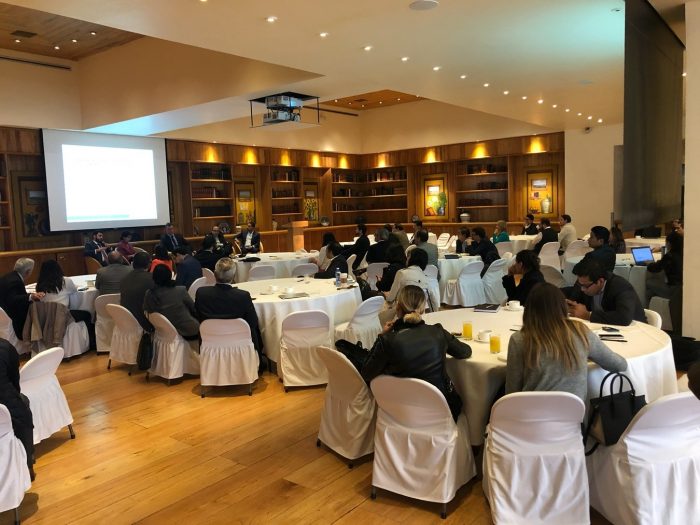
Distributed Generation is an adequate mechanism to impulse cost reduction in companies and organizations while avoiding emitting greenhouse gases into the environment. It is an important strategy to mitigate the economic impacts of COVID-19, and one of the main challenges is to find financing mechanisms that can accelerate the execution of these projects in the country. For this reason, LAB Mexico promoted the development of a workshop for the financing of Distributed Generation (DG) on November 13, 2019.

Currently, the photovoltaic DG has an installed capacity in Mexico of almost 1,000MWp, representing 1% of the capacity of the national electricity system, while the available capacity of the General Distribution Network is 27,000MWp. The DG will play a fundamental role in fulfilling energy transition goals by 2035.

There is a great opportunity to support companies – especially small and medium-sized enterprises – with renewable energy strategies that reduce their energy costs, permitting the recovery of their post-COVID-19 economies.

The conclusions, based on the analysis of the discussions carried out among participants during the workshop, will serve as a guide for establishing the monitoring and intervention plan (roadmap) with key stakeholders in the industry.


Credits: LAB México


The DG sector is not robust enough to finance this transformation alone. Commercial banking in Mexico is a solid sector with reserves, capacities and scope that can facilitate this transition.

However, both industries are required to work together on the following aspects:

  • The promotion of the benefits of photovoltaic DG must be strengthened in the SME sector to increase financing demands for this type of project. This promotion should be a joint effort between relevant business associations, development finance institutions, and local and federal governments.
  • Revolving credit lines must be implemented for companies integrating DG in order to facilitate DG growth and consolidation.
  • Other financing instruments, such as leasing and energy purchase contracts, must be promoted as alternatives to conventional credit, both in supply and demand.
  • A certain and stable regulatory environment must be promoted to facilitate the investment of risk capital with different business models and financing, and with the capacity to replicate and scale. This is the work of the photovoltaic industry, alongside development and commercial financial institutions, as well as local governments.
  • Information that allows financial institutions to better assess risks and generate products according to the risk profile of the projects must be generated on the market and performance of DG projects.
  • Financial institutions require a greater technical understanding of the value propositions of PV systems, their operational risks and shelf life.
  • Various financial intermediation schemes should be explored with the support of “asset managers” that facilitate project evaluation, risk determination, dispersion of financing and collection responsibility.

As a product of this IDB workshop, ABM and GIZ, together with NAFIN, encouraged the hiring of a consultant to provide material for this roadmap, which will be delivered at the end of June and will be disseminated through the IDB, ABM, GIZ and IKI.

The workshop materials can be found here.