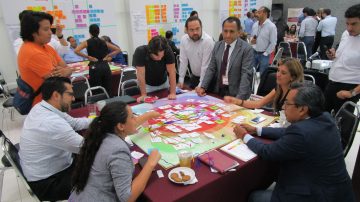
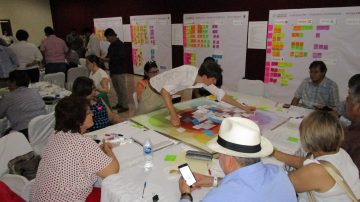
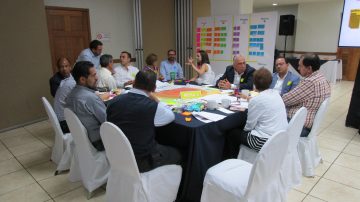
The objective of the Regional Workshops was to strengthen the capacities of the states in order to align, quantify and report their contributions in the field of mitigation and adaptation to climate change to the Nationally Determined Contribution (NDC). The workshops were held in the western, northern, southern and central regions.
To see the material of each of the workshops please refer to the following links.
Ecotechnology can be defined as any method, product, device, or process whose value lies on its potential to contribute to improving the quality of life and have a positive environmental impact. The potential to combat climate change of ecotechnologies lies in their ability to replace the use of non-renewable energy sources, promote forest conservation, reduce dependence on centralized water systems, reduce and use waste, among other benefits.
Therefore, the Mexican-German Climate Change Alliance carried out an analysis of the potential use of existing ecotechnologies at the national and international levels and how they can contribute to reducing emissions and the vulnerability to which states are exposed due to their climatic conditions.
The result of this analysis yielded a catalog of 34 ecotechnologies and a matrix with the 10 ecotechnologies that best adapt to the context of the country following the criteria of affordability, vulnerability reduction capacity, mitigation capacity, and adaptation. The selected ecotechnologies were: Rainwater collection systems, dry ecological toilets, biodigesters, biofilters, photovoltaic systems, efficient stoves, solar water heaters, solar dehydrators, solar cooking pot, and wind turbines.
The matrix provides information about the states, such as: their geographical characteristics, the level of precipitation and their social characteristics, and also provides data of ecotechnologies, such as: their description, cost, useful life, the Sustainable Development Goals (SDG) to which the use of ecotechnology is aligned. With this information, the matrix makes a cross check and provides the degree of feasibility of the use of one or another ecotechnology in the urban, semi-urban or rural environments of each state.
The matrix is expected to be adopted and updated by the states, and to incorporate it into their development process and decision making of new projects and programs to actively contribute to the fight against climate change.
Ecotechnology can be defined as any method, product, device, or process whose value lies on its potential to contribute to improving the quality of life and have a positive environmental impact. The potential to combat climate change of ecotechnologies lies in their ability to replace the use of non-renewable energy sources, promote forest conservation, reduce dependence on centralized water systems, reduce and use waste, among other benefits.
Mexico is the second WEEE generator in Latin America, registering a production of 1.1 million tons in 2016, equivalent to 8.2 kg per capita. According to the Office of Science and Technology Information for the Mexican Congress (Oficina de Información Científica y Tecnológica para el Congreso de la Unión; INCyTU 2018), of the total WEEE generated nationwide, about 10% is recycled, 40% remains stored in residential houses or warehouses and the remaining 50% is sent to landfills.
Despite the importance of the problem, this country does not have a specific regulation focused on the recycling of electronic waste. What is available is the General Law for the Prevention and Integral Management of Waste (Ley General para la Prevención y Gestión Integral de los Residuos; (LGPEGIR), which defines WEEEs as technological waste and classifies them as special handling waste, therefore, the states and municipalities are in charge of their prevention, transport, storage, handling, treatment, and final disposal. This law only defines the classification of waste, but does not assign clear responsibilities for its management and hence provides an opening for an informal market.
According to authorities of the Ministry of Environment and Natural Resources (SEMARNAT), only 8 of the 32 states have regulations related to WEEE management. On the other hand, in Mexico, apart from the local government, the private sector can collect and manage WEEE. In 2017, SEMARNAT with other institutions identified 153 companies nationwide with an authorized capacity of 235,859 tons of WEEEs.
Therefore, under this scenario, Mexico does not have enough formal infrastructure to take charge of its WEEEs which encourages the existence of an informal sector in the main cities of the country of which little is known.
In consequence, the German-Mexican Alliance from the German Cooperation for Sustainable Development (IKI Alliance) has been given the task of conducting an analysis of WEEE recycling with emphasis on entertainment devices (televisions, computers, and cell phones) with the objective of generating a series of public policy recommendations that allow the Mexican government to leverage on the existing efforts, and with this, build a responsible system that encourages the sustainable consumption of these devices, as well as their adequate disposition at the end of their useful life. The results of this analysis will be presented to SEMARNAT and other relevant institutions in November 2019.
Achieving capacity building at subnational level is essential to generate expertise within public officials responsible for defining actions on mitigation and adaptation to climate change at the local level. For this reason, the Deutsche Gesellschaft für Internationale Zusammenarbeit (GIZ) GmbH (German Cooperation for Sustainable Development) held a workshop on 14-15 August with the representatives of 19 government agencies of the state of Veracruz.
Credits: GIZ
Veracruz is one of the pioneer states in the development of public policy instruments in the climate change field. It was the first state to create a Law on Climate Change, even before the General Law on Climate Change (LGCC) was created, with sectorial agendas that allow compiling the actions carried out within the entire state with a monitoring, reporting, and verification (MRV) system to follow-up the progress of the designed actions. With the signing of the Paris Agreement and the recent change of government within the state, they have decided to begin the process to update their sectorial agendas on climate change.
Credits: GIZ
Therefore, GIZ trained more than 35 public officials in the correct design, selection and prioritization of climate change actions that are aligned to the Nationally Determined Contributions (NDC) of the country and above all that address the main needs of the state in mitigation and adaptation matter.
Credits: GIZ
The government of Veracruz is expected to have its new climate agenda ready in the coming months and to know the contribution that it is providing as a state to the fulfillment of the NDC.
State and municipal governments, as the government levels closer to citizens, possess the abilities and know the territory to address climate change challenges and implement actions that contribute to greenhouse gas (GHG) mitigation and to the adaptation in different areas, such as: urban development, transport, waste, forests, agriculture and livestock, among others.
Currently, all states in greater or lesser proportion are already developing actions, however, little is known about the benefits and/or impacts generated by their implementation. For this reason, it is essential to have a tool that allows knowing the progress in the implementation of actions in a transparent, comparable and exhaustive manner.
How to ensure that this tool is available locally?
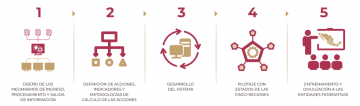
The Ministry of Environment and Natural Resources (SEMARNAT) is building a “Monitoring system of climate actions at the subnational level”, as a tool designed from participatory mechanisms, which will allow states and municipalities to decide the type of actions to be instrumented and report their progress periodically, giving them the ability to incorporate new actions and guide them in the selection of new measures and their adequate monitoring.
With this system, the Government of Mexico will be able to announce the progress in the implementation of actions at the local level, incorporating said actions into the accounting of the contributions the local level contributes for the fulfillment of the Nationally Determined Contributions (NDC).
In addition, states and municipalities may have sufficient and reliable information to make appropriate decisions when allocating resources for the implementation of their actions. On the other hand, the system will allow them to know the progress of other states to achieve better communication, generate synergies and join efforts towards achieving a common goal: contributing to the mitigation and adaptation of climate change for the benefit of the citizens.
Credits: Edgar Javier Castillo
How will the system be built?
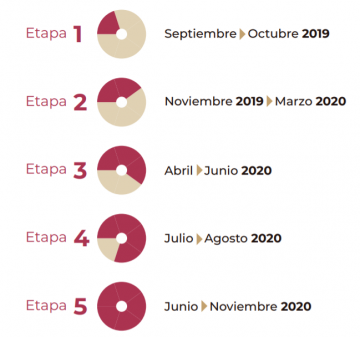
The construction of the climate actions monitoring system at the subnational level is a process that SEMARNAT will carry out with the support of the Deutsche Gesellschaft für Internationale Zusammenarbeit (GIZ) GmbH (German Cooperation for Sustainable Development) program ; which will be carried out in five stages:
Credits: Edgar Javier Castillo
The estimated development times of the stages are:
Credits: Edgar Javier Castillo
Participation of the states will be crucial to make the system work and be useful.
BENEFITS
Common Reporting System
Transparent and comparable information
Basic methodologies for mitigation and adaptation actions
Strengthen subnational capabilities
Identification of exercised budgets will be possible
For the first time, the participation of states and municipalities will be part of Mexico’s contribution to be presented to the United Nations Framework Convention on Climate Change (UNFCCC)
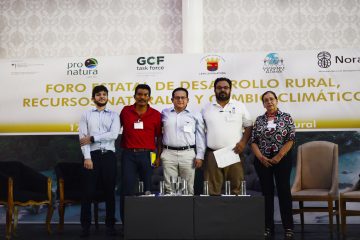
Pronatura Sur as part of the International Climate Initiative (IKI) and with the help of strategic allies has made an effort to include in the institutional agenda topics that will deepen the discussion on how to mitigate the effects of climate change. For this reason, in this first semester of the year the State Forum on Rural Development, Natural Resources and Climate Change was organized in the city of Tuxtla Gutiérrez, Chiapas.
Credits: Pronatura Sur. Participants of the State Forum on Rural Development, Natural Resources and Climate Change
The objective of the forum was to promote a space for dialogue and reflection on the over-exploitation of natural resources, the vulnerability of the population in the face of climate change and the actions to be taken at the legislative, programmatic and social levels.
The inauguration of the forum was in charge of the representative Rosa Bonilla Hidalgo and Romeo Domínguez, general director of Pronatura Sur, who pointed out that it is the concurrence of all the actors that will allow progress towards the goals of reducing deforestation, preserving natural resources, reducing poverty and hunger, achieving responsible production and consumption; goals that are included in the Sustainable Development Goals (SDG) and in the State Development Plan.
The forum had two keynote presentations given by Dr. Claudia Octaviano, PhD, General Coordinator for Climate Change Mitigation of the National Institute of Ecology and Climate Change (INECC) and by Dr. Jose Alberto Lara, PhD, Director of the Transdisciplinary University Center for Sustainability (CENTRUS) of the Iberoamerican University.
During the panels, the role of public policies and inter-institutional arrangements to boost public and private participation in comprehensive land management and the achievement of SDG goals in rural areas were analyzed. Among the panelists of the Forum were Antonio Bonifaz, Director of Planning, Monitoring and Evaluation of the Ministry of Finance of the State of Chiapas; Joaquín Zebadúa, Municipal President of Berriozabal, Chiapas; Elsa Esquivel, Director of the AMBIO Cooperative, and Alejandra Blanco, Strategic Project Coordinator of the Ministry of Environment and Territorial Development of the State of Jalisco (SEMADET), who agreed that it is necessary to create spaces for dialogue among the three levels of government and concluded that the enunciation of solutions and initiatives for sustainable rural development must take place at the territorial level and that state planning should have mitigation and adaptation to climate change as a transversal axis.
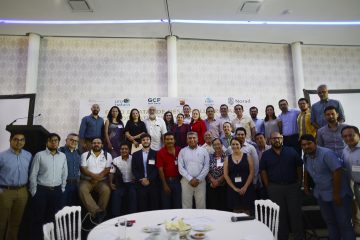
Credits: Pronatura Sur. Participants of the State Forum on Rural Development, Natural Resources and Climate Change
The second panel focused on the role of alliances among private initiative, local communities and governments for comprehensive land management and achievement of the SDGs. The panelists, with the public, analyzed the need to align the various public policy instruments to implement concrete actions at the state level and emphasized that sustainable development should occur at the territorial level from the bottom up.
The forum showed that there is an opportunity and availability among academic institutions, government and Non-Governmental Organizations (NGOs) to achieve collaboration in order to meet the state challenges in climate change, sustainable development and integrated territory management.
More than 400 people from all sectors involved in mobility within the 32 states worked on the draft of normative and public policy proposals to improve mobility in Mexico with perspectives of climate change and human rights.
When speaking about “regulation” and “normativity” in relation to mobility, one usually thinks about conflicts between taxi services and digital platforms, about the reorganization of public transport concessions or the regulation of new mobility services such as electric scooters. In Mexico, states are the ones that have more attributions in these matters — although the reality is complex and requires the participation of cities, users, private sector, and other stakeholders in decision making. In recent years, the creation of Mobility Laws in some states has advanced the discourse and has managed to integrate concepts of sustainability and equity.However, many legislative initiatives have been motivated solely by particular phenomena such as those mentioned above. In a few cases, the full legal potential has been exploited to improve mobility in all its dimensions for Mexicans, strengthening good management of the sector among the different actors involved and affected.
Considering the express request of ten state congresses and the pressing realities in the matter of mobility in the states, the federal government through the Ministry of the Interior (SEGOB), the Ministry of Agrarian, Territorial and Urban Development (SEDATU) and the Ministry of Environment and Natural Resources (SEMARNAT), with the support of the Deutsche Gesellschaft für Internationale Zusammenarbeit (GIZ) GmbH (German Cooperation for Sustainable Development), through the Mexican-German Climate Change Alliance and the Cities & Climate Change Program (CiClim) carried out the coordination and implementation of the National Process of Regulatory Harmonization in Mobility.
The process is based on the observance of human rights, and hence mobility is understood as a phenomenon centered on the person, his/her movements and access to goods and services for the free exercise of his/her rights. In this sense, CiClim seeks to harmonize the regulatory framework with the primary objective of mitigating the impact of mobility on the climate crisis, in accordance with the General Law on Climate Change (LGCC), which, since 2012, recognizes that in order to reduce emissions caused by comprehensive public transport systems, sustainable mobility programs and their strategic link with urban development and territorial planning must be designed and implemented. Similarly, the harmonization process was carried out considering guiding principles such as participation, information, equity and accessibility, among other mainstreaming topics.
As part of the results, seven regional forums were held, consisting of representatives of the executive and legislative branches of all government orders, civil society organizations, academia, private initiative, working people and their trade union groups, among other key actors of the 32 states of Mexico.
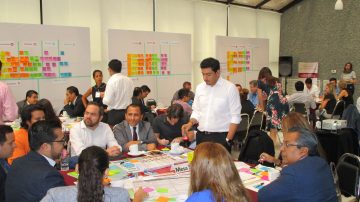
Credits: Luis Paz Regional table Megalopolis, Monterrey, NL. August 20th, 2019
Through a participation methodology to co-create the regulatory framework for mobility under the supervision of GIZ, specific needs for efficient and sustainable mobility were recognized in the 32 states. Together, the participants proposed the changes and actions needed to improve standards, public policies, and monitoring and evaluation mechanisms. In this way, it was possible to create networks of mobility among the states. The participants noticed the similarities between their problems and the potential of their solutions beyond their borders. Similarly, the reality of mobility between its various territories was recognized and participants from various sectors agreed upon proposals for improvement in metropolitan and interstate coordination.
Credits: Luis Paz Regional table, Megalopolis 3. Monterrey, NL. August 20th, 2019
The regulatory map resulting from the work tables gives the Process the ability to start from the reality of the mobility phenomenon and compare it with the congruence of its reflection on the regulatory framework. The Government of Mexico is expected to issue its recommendations in the form of a model regulatory framework for mobility in the last quarter of 2019, accompanied by a use and implementation guideline. Local congresses may discuss them, adapt them to their diverse realities and, where appropriate, adopt or reform laws on the matter through their legislative process.
Credits: Luis Paz, Northwest regional table. La Paz BCS, August 13th, 2019
The National Process puts into action the Sustainable Development Goals (SDG) of the 2030 Agenda in Mexico. This process serves especially as a tool for the implementation of the goals numbers 11 “Make cities and human settlements inclusive, safe, resilient and sustainable” and 13 “Take urgent action to combat climate change and its impacts”. Together with all interested parties and sectors, the Process has the potential to create the legal tools necessary to transform mobility in Mexico. It is expected that in subsequent phases and in compliance with their obligations, the authorities of the three government branches have succeeded in creating or adapting, “harmonizing,” all legal and regulatory provisions for sustainable mobility.
Credits: Luis Paz North regional table Durango, DGO, August 17th, 2019
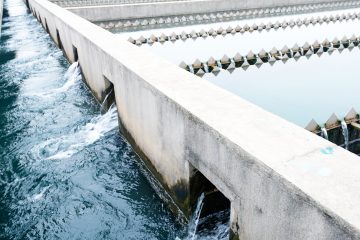
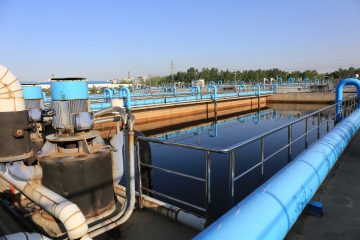
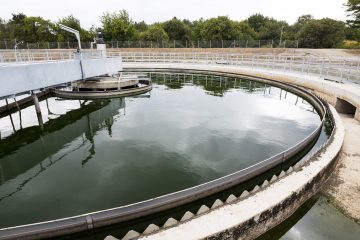
A water and sanitation operating agency (WASA) can be public or granted to a private one, whose main objective is the service provision for drinking water supply, sewerage, treatment and disposal of wastewater. According to the National Inventory of Municipal Potabilization and Wastewater Treatment Plants in Operation published in 2015 by CONAGUA, at the end of the same year, the country had a total of 874 water treatment plants and 2,477 facilities for sewage water treatment plants.
Credits: Shutterstock
In terms of climate change and energy intensity within the urban water cycle in Mexico, it is estimated that 5% of total greenhouse gas (GHG) emissions come from this sector, as well as 5% of total electricity consumption nationwide *.
In addition to the GHG mitigation potential that exists in the water and sanitation sector, it is essential to look at the high vulnerability to the impacts that climate change can cause to WASA, as is the case of atypical rains that increase the water flow for treatment, floods and droughts that compromise the supply of drinking water to populations. These are only some of the factors that should be considered when seeking and implementing measures to achieve a comprehensive water management.
Credits: Shutterstock
The Water and Wastewater Companies for Climate Mitigation (WaCCliM) program together with its direct counterpart, the National Water Commission (CONAGUA), seek to implement transversal climate change mitigation and adaptation measures with the WASA. Some of the measures being implemented with the OAs are the development of climate risk analysis and GHG reduction measures. Similarly, WaCCliM seeks to promote the digitalization of water processes, obtaining real-time information that supports decision-making and risk minimization.
The main challenges this program is facing to achieve mainstreaming of climate change adaptation and mitigation measures are the financial situation of the WASA to reach the necessary investment in infrastructure, a dynamic political environment, short administration periods in relation to times of implementation of the proposed measures and the professionalization of the sector.
During the implementation of the program, it seeks to convert the aforementioned challenges into opportunities that help to meet the proposed objectives.
To closely monitor the progress of the program, please refer to the IKI Alliance MX website.
The prolonged Water and Wastewater Companies for Climate Mitigation (WaCCliM) project has as its direct counterpart the National Water Commission (CONAGUA) 2019-2022, in accompaniment with the Ministry of Environment and Natural Resources (SEMARNAT), on behalf of the German Federal Ministry for the Environment, Nature Conservation and Nuclear Safety (BMU). The project is part of the German Development Cooperation (GIZ), through the International Climate Initiative (IKI) in collaboration with the International Water Association (IWA).
Credits: Shutterstock
In this extension, WaCCliM seeks to create a resilient and low-carbon water and sanitation sector, mainstreaming the mitigation and adaptation approach to climate change in the sector and improving the level of ambition for compliance with the National Determined Contribution (NDC), where the operating agencies (O.A) of the sector play a predominant role.
Being a global program, WaCCliM is implemented in Peru, Jordan and Mexico, with the objective of promoting the exchange of experiences between these countries. Based on the good results obtained during the first phase of the project, the lines of work on stakeholder awareness, capacity development and strengthening of operating agencies at the local level will be continued.
Some of the activities planned for Mexico include to continue working with pilot projects in operating agencies; encouraging the use of the Energy Performance and Carbon Emissions Assessment and Monitoring (ECAM) Tool; technical support for the implementation of OA measures such as: energy efficiency in pumping processes, identification of water losses in distribution systems, or reduction of direct methane emissions in wastewater treatment.
Credits: Shutterstock
At federal level, it seeks to promptly assist CONAGUA in identifying opportunities within the OAs with climate actions aimed at complying with the sector’s NDC.
Finally, as an innovative element, it seeks to insert the digital technology and climate risk analysis component for service providers in the water and sanitation sector in order to achieve a more significant impact on climate change adaptation.
Credits: Shutterstock
To closely monitor the progress of the program, please refer to the IKI Alliance MX website.
The Smart Coasts project aims to identify a series of adaptation measures in order to reduce the vulnerability of the communities that inhabit the Dzilam State Reserve and the Ría Lagartos Biosphere Reserve in Yucatán and the Flora and Fauna Protection Area Yum Balam in Quintana Roo.
Mainstreaming of the ecosystem services approach
The project is focused on ecosystem-based adaptation (EbA), that is, it seeks to take advantage of the benefits that coastal ecosystems, mainly mangroves, seagrasses and coastal dunes offer to human communities, particularly in the context of climate change. The ecosystem services that are sought to be strengthened, and therefore the sectors involved in the project, are fisheries, tourism and coastal protection. An expected result of the project is that the relevant actors in each sector are able to recognize the importance that ecosystems have for the protection and productivity of their sectors.
Mainstreaming of adaptation to climate change
In order to seek the sustainability of the measures identified in the long term, the project contemplates its mainstreaming in a series of policy instruments, from the community to the federal. Through a collaboration with the Mexican Center for Environmental Law (CEMDA), the instruments of ordinance, planning and operation will be identified, among others, that must be adapted to promote climate change vulnerability reduction in the natural protected and coastal areas management.
Once the instruments to be updated have been identified, WWF and CEMDA will collaborate with the relevant institutions to identify the mechanisms through which it is possible to manage the modification of the instruments. It should be mentioned that these actors are being involved in the process of identifying adaptation measures.
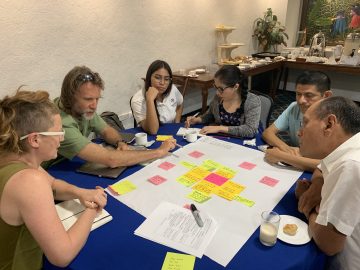
Credits: WWF . Participatory workshop with various sectors in which ecosystem-based adaptation measures were preliminary identified
Introduction to cities and financing
According to UN-HABITAT in 2050, cities will contribute 65% of greenhouse gas (GHG) emissions, since they consume 78% of the world’s energy, while currently covering less than 2% of the Earth’s surface. A large number of people living in cities depend on fossil fuels, which makes this population extremely vulnerable to the effects of climate change. Therefore, a rapid and powerful transition in the use of energy, land, urban spaces and infrastructure including transportation and buildings (United Nations, 2019) is required and consequently the Global Program FELICITY seeks financing for low-carbon urban infrastructure as well as energy transition in cities.
Credits: Shutterstock. Cities vulnerable to climate change, due to their consumption of fossil fuels
How to move forward?
Financing is a key factor for the implementation of actions. That is why, through FELICITY, the parameters for financing low-carbon infrastructure in cities are established, as well as the development of capacities in local governments and in institutions related to climate change financing in three key partner countries: Brazil, China and Mexico.
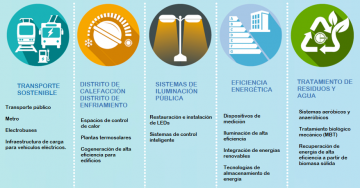
The program has different areas: sustainable transport; district heating or cooling; public lighting systems; energy efficiency in buildings; renewable energies and waste and water treatment to help countries meet their Sustainable Development Goals (SDGs), in particular the following four:
SDG 7: Affordable and clean energy
SDG 11: Sustainable cities and communities
SDG 13: Climate
SDG 17: Partnerships for the goals
Credits: FELICITY. FELICITY global program action lines
How is the contribution to Latin America being carried out?
In Latin America, FELICITY has selected five low carbon projects, three in Brazil and two in Mexico, which receive assistance to meet the administrative, financial, social and environmental requirements assessed by financial institutions.
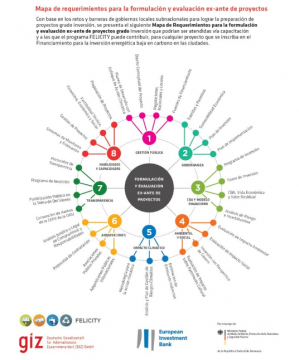
The program makes a series of elements available to improve the capacities of the states and municipalities interested in receiving support of FELICITY. The requirements for the ex-ante project formulation to be considered are identified: a solid base of socio-environmental impact study; Investment with a gender perspective; Cultural Heritage Impact Assessment and Climate Impact studies such as indirect emission estimates, analysis and climate risk management plan.
Credits: FELICITY. Formulation and ex-ante evaluation of FELICITY projects