

Initial situation
Through the Energy Transition, Mexico has promoted the diversification of its energy mix, as well as energy efficiency measures that contribute to achieving national climate targets. The goal is for clean energy to account for 35 percent of the electricity generation mix by 2024, in accordance with Mexico’s Energy Transition Law.
Likewise, with the reform of the General Climate Change Law in June 2018, Mexico aligned the commitments undertaken within the framework of the Paris Agreement on climate change through its Nationally Determined Contributions (NDCs), which represent the intention to reduce greenhouse gas and compound emissions by 22 percent by 2030 unconditionally, or by up to 36 percent conditionally upon technology transfers and the establishment of an international carbon price, among other factors.

Objective
The main actors in Mexico’s climate and energy policy are equipped to initiate or implement policy and institutional measures that improve collaboration between the energy and climate sectors. In this way, Mexico can strengthen the energy sector’s contribution to the country’s climate objectives.
Approach
The project is implemented in the context of the transformation of Mexico’s energy system and seeks to build bridges between the energy and climate change sectors and to harmonize climate and energy policies. To this end, the project advises the Ministry of Environment and Natural Resources (SEMARNAT) on technical and process-related issues at the climate-energy interface.
Coordination between climate and energy policies at the national level improves when strategic measures are implemented. In addition, the project promotes the development of regulatory instruments and economic incentives to advance the convergence of climate and energy policy. National information systems are also improved to achieve greater integration of energy and climate data and variables. This project facilitates the creation of improved framework conditions to promote investments that support development and climate protection in Mexico through the energy sector. The experiences gathered in Mexico are discussed in dialogue with international experts, and the knowledge and lessons learned are shared with other countries. The private sector is also included to promote the transfer of climate protection technologies related to the energy sector.
Areas of work
CONECC is working on various topics, including:
- Social and economic co-benefits of Energy Efficiency and Renewable Energy in Mexico
The project seeks to quantify the social and economic co-benefits of renewable energy and energy efficiency at the federal and state levels in Mexico. To this end, a quantification of the social and economic co-benefits of renewable energy and energy efficiency in Mexico was developed based on three case studies at the subnational level (Yucatán, Oaxaca, Mexico City, and Baja California Sur) to promote their implementation and strengthen the achievement of Mexico’s NDC.

Next, the project will conduct a specific analysis of the co-benefits of existing projects in energy efficiency or renewable energy with the aim of developing a co-benefits quantification tool adapted to the Mexican context. At the same time, the project is conducting training for decision-makers on integrating a co-benefits perspective into climate, energy, and social policy agendas, accompanied by a communication strategy to mainstream the topic of co-benefits and create greater impact.
https://youtube.com/watch?v=Zo69h0qt_e0%3Ffeature%3Doembed
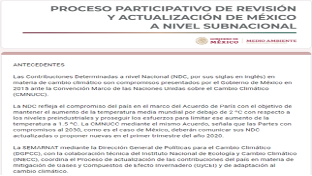
- Process for updating Mexico’s Nationally Determined Contribution (NDC): the contribution of climate action to society’s well-being.
Technical support is provided to the Government of Mexico in the process of updating its Nationally Determined Contribution (NDC) under the Paris Agreement, in order to submit an update of its climate commitments, which must adhere to the principle of progression compared with the current NDC and reflect the highest possible level of ambition.
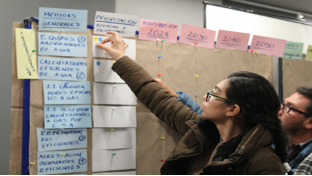
In this context, the CONECC project supports SEMARNAT in integrating the mitigation potential of sustainable energy measures, mainly energy efficiency, to reduce greenhouse gas (GHG) and black carbon (BC) emissions. This work has been developed through two main activity areas. On the one hand, the systematization of information, energy-climate modeling, and estimation of mitigation potential; and on the other hand, support for the social participation process, which has been fundamental in gathering and integrating the voices of the various sectors involved in the process.
- Development and dissemination of carbon budgets and decarbonization pathways for the energy sector
The project seeks to increase climate ambition and promote climate-energy convergence in Mexico through the estimation of carbon budgets and the development of decarbonization pathways for the energy sector. Based on a methodology developed in 2019 together with the Mexico Climate Initiative (ICM), it currently aims to estimate carbon budgets and generate decarbonization pathways at the subnational level, beginning with the states of Jalisco and Yucatán.
Carbon budgets seek to be aligned with scenarios in which the increase in global average temperature is limited to 2°C or 1.5°C by the end of the century. Decarbonization Pathways, meanwhile, will consist of a portfolio of actions that, if implemented, align the sector’s emissions trajectory with the estimated budget, with their implications carefully analyzed and discussed with key stakeholders in each state.
- Development of a technological innovation hub for renewable energy and energy efficiency focused on climate action in the State of Querétaro
Through this project, technical support is provided to the Government of the State of Querétaro through the Ministry of Sustainable Development (SEDESU) and in coordination with LiCore A.C. and the Querétaro State Energy Cluster, in order to conceptualize and establish an innovation hub that promotes technological solutions and innovative business models in renewable energy and energy efficiency.
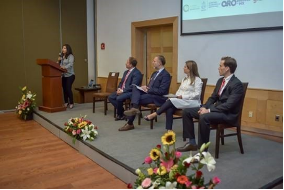
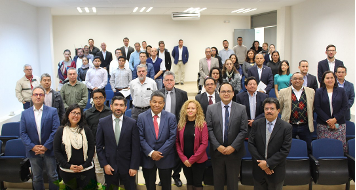
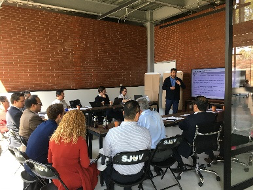
Since January 2020, the CONECC project has coordinated with SEDESU the process of establishing the Hub, creating a Working Group with key stakeholders, including start-ups, large companies, business associations, state authorities, and universities-research centers to facilitate the implementation process. Progress is being made on the legal establishment of the Hub, the definition of an initial project portfolio, and the intervention methodology. The Hub is expected to begin operations in the second half of 2020.
Promoting technological innovation for the energy transition at the local level strengthens the frameworks for advancing local climate action in the energy sector. Accordingly, one of the objectives of this project is to identify good practices derived from strengthening local innovation communities in order to promote business models and technologies that foster the decarbonization of the electricity sector, by replicating and disseminating Querétaro’s experience in other states and thereby supporting its scaling to other levels of government in Mexico. In this regard, the publication of a Manual for establishing an innovation hub at the subnational level is planned.
https://youtube.com/watch?v=v2NV-X0R6wo%3Ffeature%3Doembed
- Study of the climate, socioeconomic, and public health impacts of the National Electric Mobility Strategy
The project quantifies the expected impacts of the National Electric Mobility Strategy in terms of climate, energy, social, economic, and public health aspects.
The modeling of impacts is carried out based on a review of national and international literature and consultations with key stakeholders in the field of electromobility from the public sector, private sector, and civil society. A monitoring tool is also being developed to track impacts once the strategy enters its implementation phase.
- Digitalization of the electricity sector: an opportunity for climate protection?
This project seeks to identify the main digitalization actions in Mexico’s electricity sector that could potentially contribute to mitigating emissions associated with the energy sector and analyze their potential contribution to climate action. The analysis focuses on three areas: smart grids, smart markets, and energy efficiency.
In 2018, the CONECC project coordinated, together with the Ministry of Environment and Natural Resources, a study tour to Germany to exchange practices and perspectives on digitalization for climate protection, and the International Forum “Digitalization of the electricity sector: an opportunity for climate protection?” was held. As a result of both processes, the report “Bits and bytes for CO2 savings. The role of digitalization in the energy sector for climate protection in Mexico and Germany” is being prepared.
Email: conecc@giz.de
Twitter: @Conecc_Mx
Publications:
- “Building bridges between climate action and sustainable energy: Selection of key products from the project Convergence of Energy and Climate Change Policy in Mexico (CONECC), 2017–2021”.
- Final Report: “Co-benefits of sustainable energy: An opportunity to promote well-being and sustainable development in Mexico”.
- Manual: “Innovation and Climate Action. Manual for establishing technological innovation hubs for sustainable energy”.
- Study on “CO-BENEFITS: Employment opportunities and local benefits from community participation in renewable energy projects in Yucatán”.
- Study “Toward an optimal concept for implementing a technological innovation hub for renewable energy and energy efficiency for climate action in Querétaro”.
- Study “Doing the math: Quantifying the co-benefits of climate action for sustainable development in Mexico”.
- Study on “Co-benefits: Contribution of the energy transition to sustainable development in Mexico”.
- Study on “Co-benefits of renewable energy and energy efficiency for sustainable development in Mexico”.
- Study on “Convergence between climate change and energy policy instruments and institutions at the national and subnational levels in Mexico”.
- Study on “Carbon Budgets: An Opportunity to Increase Climate Ambition in the Energy Sector”.
- Study “Improving and retargeting electricity subsidies: Options for their optimization in Mexico”.