
Credits: LAB México


One of the most important issues in international forums where climate change is discussed has been the need to mobilize financial capital wisely to be able to assign it to high-impact tasks, which has been a challenge. The need to increase the effectiveness and efficiency of the use of money for climatic purposes has been emphasized. Within this context, LAB Mexico is a mechanism to rapidly meet this need.

LAB Mexico is an initiative that arises in 2019 and its origin is promoted by the Banks of Mexico Association (ABM), the Inter-American Development Bank (IDB) and the Green Finance Advisory Board of the Mexican Stock Exchange. The initiative can be defined as a multisectoral and institutional meeting space that promotes debate and exchange of experiences in the field of green finance, with the participation of the public and private sectors for the generation of financial innovations that support Mexico’s sustainable development.

One of the challenges of LAB is to invite other relevant actors to contribute with resources, practices and knowledge to drive the objectives of LAB Mexico; such is the case of the recent invitation made to GIZ to join the cause. At the beginning resources from the Mexican-German Climate Change Alliance  have allowed to carry out the first activities.

As part of LAB Mexico’s planning, the following statements have been set as strategic objectives:

  • To create a shared and transparent agenda of initiatives that support the integration and coordination of similar projects, thereby avoiding duplicated efforts.
  • To be recognized as a space that encourages discussion and innovation in the field of green finance.
  • To recognize existing best practices and promote them instead of creating new ones, thereby avoiding duplications that dilute their impact.
  • To awake the interest in private and public institutions to join this Laboratory to allow them to contribute from their sphere of influence with knowledge or resources in order to accelerate its impact.
  • To identify bottlenecks for private investment in green financing especially in sectors such as energy, transport, agriculture, and water.
  • To design innovative financial instruments to encourage climate investments.


Initially, LAB Mexico is organized into three working groups (WG) that help to structure the projects according to their vocation:

  • Green banks: Propose business models that promote sustainable financing programs in different sectors such as transportation, agriculture, industry, and services in applications such as renewable energy, energy efficiency, or transitional or disruptive technology.
  • Sustainable investments: Promote market development for sustainable investments in Mexico, especially green bonds, both at the level of issuers, investment banks, as well as potential investors.
  • Sectoral initiatives: Support the development of a green model in public and private banking by creating capacities and a culture that fosters good practices in sustainable finance.

One of the first activities identified by the institutions that drive LAB Mexico is the need to foster a culture of social and environmental risk management in financial institutions. It is a reality that not considering the effects of climate change on  business models may jeopardize its continuity and profitability.

Other activities that are of high priority for LAB Mexico are the creation of business instruments and practices that allow financial institutions to facilitate a green model, especially by strengthening the products they offer with climate or sustainable vocation.

LAB Mexico will continue to promote sectoral initiatives, especially in the field of transport, agriculture, housing and energy. In a previous issue, the activities to be carried out  in the transportation sector were explained and the next challenge will be to strengthen the activities being carried out in the distributed generation sector caused by their appetite of supply and demand of this model.

During 2019 and 2020, LAB Mexico will continue to consolidate and expand its agenda. It is expected to be a mechanism for the efforts of institutions linked to climate finance to find a space to discuss, disseminate and execute all the ideas and knowledge that contribute to the fight against climate change. For more information about LAB Mexico you can visit the webpage: www.labmexico.com

  • For more information about the project, contact the project team leader, Enrique Nieto, Specialist in Capital Markets and Financial Institutions: ENRIQUEN@iadb.org.
  • For more information on innovative green finance operations through national development banks, see www.greenfinancelac.org


Experts from Mexico, Colombia, and Panama participate in a Webinar to present their experiences regarding the construction of climate financing taxonomies in these countries.

At the global level, for three years several international initiatives such as TCFD, SBN-IFC, NGFS,CBI and UNEP -FI have provided recommendations and lines of work to create favorable conditions and advance in the mobilization of public and private financial resources to contribute to the fulfillment of the goals of global agendas regarding climate change. Moreover,this work is directed at including climate risks in financial operations and capital mobilization towards green and low carbon investments in the broader context of environmentally sustainable development.

Before this, countries like China and the European Union have been pioneers in developing taxonomies for climate financing, which allow them to identify if their investments are based on more sustainable projects.

What is a climate financing taxonomy?

A taxonomy is a reference framework (with criteria and indicators) that allows classifying, organizing and evaluating various sub-branches and economic activities according to their contribution to climate and/or sustainable  objectives  of a country. In brief, it is a classification of what is green and what is not.

Its main objective is to redirect capital flows to other sectors of the economy by supporting issuers and investors in the process of identifying and reporting eligible sustainable projects. Through a reporting framework, a taxonomy can include the elements of sustainability in the operation of a bank and thereby monitor investment flows and report results.

Why is a taxonomy so important and what is it for?

  • Taxonomies allow to establish a common language, a shared vision of what is considered “green financing” in the country, so that financial institutions can homogeneously inform  financing they grant under these characteristics.
  • They create a “level playing field” among banks, setting comparable and reliable standards.
  • They help making institutional reports and setting green financing goals.
  • They allow regulators to inform transparently.
  • They give certainty to investors,  attract investors in search of green assets and thus encourage the transition to a sustainable economy .
  • They facilitate the identification of investment opportunities and new markets to increase the portfolio of financial products focused on fighting adverse effects of climate change.
  • They help avoid greenwashing (affirming without a basis that a product or service is green or sustainable).
  • They help to reduce physical and transition risks linked to climate change.

Experiences in the construction of taxonomies in climate financing. The case of Mexico, Colombia and Panama

On October 25th, 2019, the Public Financing working group of the GADeR-ALC sectoral networks, the Mexican-German Climate Change Alliance and FELICITY facilitated a dialogue through a webinar between experts in charge of building the taxonomy of climate financing in Mexico, Colombia and Panama, in order to share and exchange experiences and advances  .

The Webinar was attended by around 35 people, who learned about the scope, progress and challenges that these three Latin American countries have had in the construction of their respective taxonomies, as well as their implementation processes and the progress of best practices to achieve sustainable finance in the banking sector.

In Mexico, the design and piloting of a reporting framework for green financing in commercial banks in Mexico is currently being carried out thanks to the technical assistance of the Mexican-German Climate Change Alliance implemented by GIZ.

On the other hand, the work in Colombia is being carried out by the Financial Superintendence, which is proposing the creation of a guide in order to support issuers and investors in decision making, as well as a harmonization or “tropicalization” of the taxonomy, in order to develop a taxonomy of common use for a region, country or state.

In the case of Panama, the Sustainable Finance Working Group of Panama (SFWG) formed by actors from the financial sector and key actors from the governmental and non-governmental sector of Panama, has a taxonomy committee that aims to achieve the development of an Integral Taxonomy in Sustainable Finance for Traditional Actors of the Financial Sector (Banking, Insurance, Securities) or a Referential Taxonomy (or Guideline) in Sustainable Finance for Other Actors of the Financial Sector (finance firms, cooperatives, private sector).

Around 50 representatives of 15 commercial banks and 2 mexican development banks, as well as representatives of regulators of the financial sector in Mexico including the Bank of Mexico (Banxico) and the National Banking and Securities Commission (CNBV), with  knowledge and tools that would allow them to take demonstrable measures to integrate the analysis of environmental scenarios into financial risk management frameworks.

Within the framework of the Memorandum of Understanding (MOU) between the Mexican-German Climate Change Program of the German Cooperation for Sustainable Development (GIZ) and the Banks of Mexico Association (ABM), with special support from the Bank of Mexico, the training workshop on environmental, climatic and social risk management and the incorporation of Environmental Scenario Analysis into the  risk management systems of banks in Mexico was developed.

The workshop was held on October 29th, 30th and 31st, 2019 at the headquarters of the Banks of Mexico Association, with the aim of strengthening and developing capacities, knowledge and tools for financial institutions and regulators in Mexico that allow them to take demonstrable measures to integrate the analysis of environmental scenarios into their daily activities. This workshop was given by the consultant Acclimatise and was attended by around 50 participants each day, who were representatives of the areas of sustainability, risks (operational and credit), of 15 commercial banks and two development banks in Mexico. Representatives of the Bank of Mexico and the National Banking and Securities Commission, important regulatory authorities of the country’s financial sector, also participated.


Credits: GIZ Welcome Panel: From left to right: Representatives of the Bank of México, IDB, GIZ and Citibanamex


The importance of this workshop is that, for the third consecutive year, the Global Risk Report (GRP) of the 2019 World Economic Forum indicated that among the five main global risks by probability and impact are risks related to environmental sources, more specifically extreme weather events, natural disasters and failures in mitigation and adaptation to climate change. This means that the risks related to climate change are very significant and affect most sectors and industry and economic organizations, including the financial sector.

In that sense, it is evident the need to strengthen the capacity of mexican banks by providing them with the necessary knowledge and tools that contribute to assess, measure and better understand climate-related risks in their business portfolios, under a variety of future climate scenarios.

In this regard, attendees were trained in various aspects such as:


They also learned practical examples of systematic methodologies for managing environmental and social risks such as the MEDIRSE and H-ARAS tools developed by BANCOMEXT and CITIBANAMEX respectively, which are used for the development and implementation of a comprehensive management framework to identify, evaluate and manage environmental and social risks exposure in the credit evaluation.


Credits: GIZ: From left to right: Acclimatise, Director of BBVA Corporate Responsibility and Reputation (CRR), Director of Sustainability of Grupo Banorte, Corporate Sustainability Manager of CEMEX, Acclimatise.

 

In addition, the experience of the BBVA, Grupo BANORTE and CEMEX on the part of the production sector was shared, through a panel in which representatives from the sustainability and corporate responsibility departments discussed how they have addressed the issue of climate risks management and the taskforce on Climate-Related Financial Disclosures (TCFD) provided recommendations focused on 4 pillars: the governance of the organization, strategic planning, risk management, and objectives and metrics through indicators that include climate risks, and performance against them.

As a result of this series of group discussions and development of group exercises, areas of opportunity were identified, as well as the main challenges and barriers for the integration of environmental risks, social risks, physical climatic risks and transitional climatic risks in the analysis of various financial operations, and the implementation of the Environmental Scenario Analysis. It was highlighted that climate risks have distinctive characteristics compared to other risks, and, therefore, have to be considered and managed in financial operations, as they can impact the economy and become a source of potential instability of the financial system.

Regarding the TCFD recommendations, the attendees acknowledged that the most difficult part to implement are those related to the governance of the organization and strategic planning, given the great challenge to sensitize senior managers of financial organizations about integrating  climate risks into decision-making process. This, together with the joint effort and coordination of all internal areas (risks, portfolio, sustainability, social responsibility, etc.) involved, as well as the financial sector as a whole, were identified as the first concrete actions necessary to implement climate risks in  banks, in synergy with the development of capacities and exchange of knowledge and methodologies with more experienced organizations on the subject, as well as the sector advancement in regulatory and legal dispositions at national level.


Credits: GIZ


Finally, the next steps on the agenda, for both, the Mexican-German Climate Change Alliance program and the IDB, together with the ABM and financial regulators, are continuing to join forces and making alliances to support the latent need to strengthen training and guidance mechanisms to transform and re-green the financial system, with the final objective of directly contributing to the fulfillment of Mexico’s Climate Change mitigation and adaptation goals established in its NDCs; and, in addition, building a key sector that promotes the transformation at medium and long term for low carbon, resilient and sustainable economic development in the country.

For the next year, it is expected for these spaces for learning, reflection and joint work to have a broader framework of action that involves more staff of financial institutions, and ideally senior managers of the board of directors of these organizations, to set the bases of a long-term relationship and technical cooperation.

The project “Preparation of an Emissions Trading System in Mexico” (ETS), implemented by the German Cooperation for Sustainable Development (GIZ), carried out a study trip for representatives of different sectors (public, private and academia) to Germany. The objective of the trip was to bring Mexican participants closer to the experience of implementing the EU ETS and to foster interaction between Mexican actors and their European counterparts. The trip covered some of the central design aspects of the Emissions Trading System (ETS) in a didactic way and compared them with some of the key elements of the European ETS.

The trip took place in the week of October 26 to November 1, 2019, in the cities of Berlin and Bonn, with an opening by the Mexican Embassy in Germany and the Ministry of Environment and Natural Resources (SEMARNAT). During this period, participants met with representatives of the United Nations Framework Convention on Climate Change (UNFCCC), the German Federal Ministry of Environment, Nature Conservation and Nuclear Safety (BMU), GIZ, the Mercator Institute (MCC), of the German Authority for Trade in Emission Rights (DEHSt) and of facilities regulated by the ETS of the European Union, such as Currenta and RWE, who shared their strategies and knowledge to face the challenges and areas of opportunity that entails the fulfillment of the obligations under this market instrument. In this way, the members of the travel group shared concerns and visions about the possible impact of an ETS in Mexico.

The German authorities shared with transparency the mistakes of the past, how they were overcome and some advice to the nascent Mexican market so that it can make the leap and avoid going through the same situations. They also commented that the ETS in Germany has fulfilled its objectives, being proof of the effectiveness of this mechanism to encourage mitigation by the private sector in that country.

In the MCC, different research opportunities associated with the ETS were presented; for example, to analyze the distributive effects of the mechanism, its acceptability and the way of communicating the impacts derived from its implementation.

A common message in all visits was the optimism for the effectiveness of the market mechanism and the possibility of using it to reduce emissions in a real way, with the involvement of various sectors of society.

In addition to the presentations of the experts, the trip was enriched by the interaction between the Mexican participants themselves, who were able to get to know directly the experience and vision of private sector companies, the environmental authority, regulators, verifiers, and researchers in the country.

With this edition of the study trip, SiCEM provides more tools to the main actors of the Mexican ETS and seeks to integrate them within the various participant institutions. SiCEM will continue to reinforce these efforts and transparently share the lessons learned in the implementation of the EU ETS more than a decade after its entry into force.

For the closing of this note, we would like to share the message that the Executive Secretary of the UNFCCC, Patricia Espinosa, gave us: if we continue to act under the same premises, we will only have problems and we will have to bear the costs. On the other hand, if we promote sustainable development, we will only find opportunities. It is in our hands to use the knowledge, skills, and technologies available to start this path. Making mistakes allows us to learn from them and move on. We can retake the example of the companies that have taken up the challenge and have found the opportunities. The road is difficult, but not doing anything will be even more difficult.

The trip was co-organized with adelphi and FutureCamp.

For more information on this topic, please contact us at:

comercio.eemissions-MX[at]giz.de

Within the framework of capacity strengthening in the subnationallevel, the global program FELICITY in collaboration with the Building Energy Efficiency Program (BEEP) and the consulting firm ECOLONER, held a training workshop in Mexico City to present to the political and financial leaders the benefits and the financing and tangible options in the transformation of the building sector. Linking climate finance and leveraging private investments for energy efficiency in buildings is the key to achieving the objectives of the Paris Agreement.

The workshop took place in mid-October at the Quinta Colorada and was attended by a total of 39 participants, 19 women and 20 men, who came on behalf of different federal agencies, as well as from diverse mayors’ offices from Mexico City.

All participants also received presentations, exercise sheets, case study files and a training manual that includes references, additional case studies, related software list and fragments of relevant references.

This year, on World Cities Day, commemorated every October 31, the Ministry of Agrarian, Territorial and Urban Development and the German Cooperation for Sustainable Development (GIZ) presented the study Cities for mobility: best practices in Mexico, available on the web pages of SEDATU and  IKI Alliance.

This compilation and analysis of best practices in the territory of the country, aims to share success stories of public policies, projects and initiatives to promote walking, cycling and public transportation, and, in turn, discourage the use of motorized private vehicles. The study is expected to serve as a guide for replicating the best documented mobility practices, considering the context, qualities and adaptation in other locations.

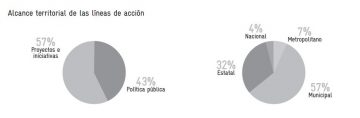
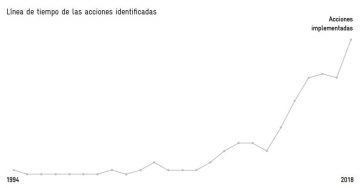
The great interest in promoting better mobility practices is reflected in the 182 identified actions that have been implemented by Mexican governments at their different levels during the last 25 years. It is important to note that a boom is identified during the last six years, where the largest number of actions are concentrated.


43% of these actions belong to the line of action on public policy, while 57% to projects and initiatives. Finally, it was identified that 57% of the practices implemented during the analyzed period are municipal, 32% statewide, 7% metropolitan and 4% national and that the central region, formed by the states of Guerrero, Hidalgo, State of Mexico, Morelos, Puebla, Tlaxcala and Mexico City, has the highest number of practices implemented. This is due to the fact that local governments execute more projects, while the federal government, in addition to granting financial resources, serves as a driving force.


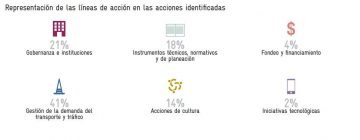
It was identified that Traffic and transport management is the category with more actions (41%). This shows that Mexican governments have focused on the implementation of infrastructure, equipment and transportation systems. In comparison with the few actions on Funding and financing (4%), which suggests the urgency of creating a specific fund or financing mechanism for the mobility of cities and metropolitan areas of the country.

As proof of this, among the actions of Traffic and transport management with considerable participation, are the mass public transportation systems which have mostly been funded by the Federal Mass Transportation Support Program. This demonstrates that the establishment of specific resources would allow the concretization of other modes of transportation such as pedestrian and cycling mobility, as well as measures for collective public transportation, urban merchandise management and to discourage excessive use of motorized private vehicles.


The categories of best practices were outlined in response to the main barriers that inhibit the development of efficient and environmentally friendly modes of transportation: lack of specialized institutions; prioritization of resources distribution; generation of regulatory, technical and planning instruments; and the periodic evaluation of the projects.

It is certain that the governments of Mexican cities have implemented numerous actions to boost mobility on foot, by bicycle and in public transportation. However, few cities have moved from promoting it to establishing a public policy. This is reflected when the actions implemented are based on specialized instruments and areas. Those cities that formalized the public mobility policy have implemented more and better actions. Such is the case of Mexico City, Guadalajara and Puebla. The participation of Zapopan and Tlaquepaque should also be highlighted, as they are replicating Guadalajara’s best practices, reinforced with specialized institutions and other metropolitan governance mechanisms such as the metropolitan mobility board.

In summary, we suggest 6 basic needs for Mexican cities to achieve more and better projects and actions for sustainable mobility:

  1. Greater coordination between the three levels of government in normative and planning instruments to link them between the granting and the application of resources to projects that are based on solid planning instruments.


  1. Formalization of specialized areas in all cities, metropolitan areas and states of the country, to achieve comprehensive public policies and greater scope for the implementation of actions for sustainable mobility (only 1% of the municipalities and 28% of the states have a specialized mobility area).


  1. Creation of a specific financing fund or mechanism for mobility of the cities and metropolitan areas of the country, as well as the adjustment of the rules of operation of the existing funds, which, in turn, continue to finance infrastructure oriented to private motor vehicles, but not to people or to combat the climate emergency.


  1. Take the opportunity of practices that have been less replicated: urban merchandise management, green infrastructure implementation, culture actions and technological innovation. (See also the excursus at the end of this article).


  1. Improve the documentation of the actions implemented by governments: It was identified that most of the information is not public, thus it is even more difficult to replicate best practices, and opportunities for obtaining national and international funding and financing, related to the climatic emergency and other sectors are wasted.


  1. Increase access to training and exchange offers on good practices in different areas, among them: street design, cycling mobility, planning of integrated transportation systems (through cooperation with existing operators), demand management (i.e. congestion and pollution charging systems).


Although the indicators and the evaluation itself are ambitious, the results reflect that Mexico has a great challenge to implement comprehensive projects. If there really is an interest to promote a public mobility policy that encourages walking, bicycle use and public transportation, it is necessary to develop projects in coordination with other areas so that economic, environmental and social benefits are considered from the planning and design phase onwards.

The progress that Mexico has made in the matter of mobility during the last 25 years is decisive. However, it is necessary to solve the barriers identified and learn to replicate the best practices so that there are more Cities for mobility. Fortunately, more local governments and sectors are beginning to promote innovative public policies, considering the relationship between urban structure, socio-economic conditions and travel decisions.


Practices that are (almost) not observed in Mexico

The practices that have been less replicated are those related to urban merchandise management, green infrastructure implementation, cultural actions and technological innovation. This represents an opportunity to generate new initiatives or improve existing ones, which are scarce.

Example 1: While transport network companies like Uber, Didi, Cabify, etc., put users in the middle of their interest, there is little practical information about public transportation services. Citymapper and moovit are accessible private and social initiatives in some cities, but governments and operators have shown little initiative to offer the necessary information at stations and stops, websites and even applications so that people can plan their trips easily and in real time.

Example 2: Intelligent traffic light systems cannot be identified in public transportation corridors. In other countries they are popular and successful, as they allow public transportation to be prioritized before private vehicles at crossings, and to reduce travel times for users and costs for companies that operate the service.

Example 3: The “Green Infrastructure” allows the realization of several benefits such as the combat of heat islands, less impact of floods, providing more shade and better air quality, and in turn, less construction and maintenance costs. Although green infrastructure elements were applied in some street and public space projects in cities such as Hermosillo and Mexico City, it is not yet systematically implemented in these cities or in the rest of the country.


On September 25th 2019, the annual Workshop of the Regional Group for the Monitoring of bodies of water and associated wildlife in the Selva Maya (MASM), was held in Flores, Guatemala with the objective to use the standardized monitoring of bodies of water and associated wildlife as an indicator of the state of conservation of biodiversity and climate change in the region, and then generate recommendations for management and conservation to decision makers.


GIZ credits: Regional workshop for monitoring bodies of water and associated wildlife in the Selva Maya


During the workshop, experiencesof those who work in the Selva Maya, shared by Guatemala, Mexico and Belize were presented; recommendations for management and conservation of  bodies of water in the region were also discussed. Derived from the discussions, it was concluded that between 2018 and 2019 the gouaches have presented a critical situation, registering that more than 90% of them remain dry compared to other years. This coincides with an increase in the number of animals found dead in the region (i.e. tapir and white-lipped peccary).

On the other hand, warnings about the threats generated by the reduction of water and humidity in the Selva Maya were given; among them, the increase in fires caused by agricultural and illegal activities, the increase in conflicts between wild animals and humans, and the decrease in income from sustainable activities, such as ecotourism, beekeeping, agroforestry, among others.

The support for the formation of this Regional Group, as well as for the execution of some training and annual meetings, are part of one of the project’s lines of work Support for the monitoring of biodiversity and climate change in the Selva Maya, of the German Cooperation for Sustainable Development (GIZ).

Contact: Gabriela Ponce  gponce[at]wcs.org


Imagine a web platform where any person, scientist or citizen interested in biological diversity can interact and share photos and data of plants and animals, a social network for nature lovers!… Such a magnificent platform is called Naturalist and was developed by the National Commission for the Knowledge and Use of Biodiversity (CONABIO) in collaboration with iNaturalist.

This website, which contributes to the knowledge of nature in a playful way, has had a high impact in Mexico reaching more than 50 thousand users who share, through their accounts, their observations with other naturalists. The best thing is that it can be used not only in Mexico but anywhere in the world. To promote it, on October 2nd and 3rd, the Naturalist workshop: Bases for citizen science, was held in Chetumal, Quintana Roo. It was given by CONABIO, in collaboration with El Colegio de la Frontera Sur (ECOSUR) and Support for the monitoring of biodiversity and climate change in the Selva Maya Project of the German Cooperation for Sustainable Development (GIZ).

This training of trainers (ToT) was attended by members of the Belize Audubon Society, Chaa creek and Ya’axché Conservation Trust from Belize; of the Center for Conservation Studies (CECON) of the San Carlos University (USAC) from Guatemala, of the National Council of Protected Areas (CONAP) from Guatemala; and of ECOSUR from Mexico. Their mission will be to replicate the training in their countries, strengthening national inventories through citizen participation.

Contact: claudia.nares@giz.de


What role can technological innovation play in renewable energy and energy efficiency in promoting local climate action? How can the link between various public and private actors be strengthened to promote a local energy transition based on entrepreneurship and digitalization?

These and other questions were addressed at the presentation event of the project that promotes the creation of a technological innovation Hub for renewable energy and energy efficiency in the State of Querétaro, which was held last August 20 at the Industrial Club in Queretaro. The project is implemented by the  Deutsche Gesellschaft für Internationale Zusammenarbeit (GIZ) GmbH (German Cooperation for Sustainable Development) through the Project Enhancing the Coherence of Climate and Energy Policies in Mexico (CONECC), in collaboration with the Ministry of Sustainable Development (SEDESU) of the State of Querétaro, the State Energy Cluster and the Research Laboratory in Reconfigurable Control (LiCore).

The Hub concept refers to a platform for linking and collaborating among different actors in the innovation ecosystem, in which various organizations, entrepreneurs and investors, industry, academia, government, among others, seek to develop disruptive technologies that strengthen the energy transition state and generate positive social, economic and environmental impacts for the whole population.

The event featured a welcome message from the Secretary of Sustainable Development of the State of Querétaro, Marco Antonio del Prete Tercero; the Director of the queretana start-up Solar Manager Arturo Fenton; the Director of LiCore Natalia Nila; and the CONECC Project Director Jonas Russbild. The Secretary del Prete highlighted the commitment of the state of Querétaro to promote projects aimed at promoting an equitable, sustainable, competitive and innovation-based economy, while the CONECC project highlighted the relevance that schemes such as the Hub are able to build bridges between the energy  and climate change sectors .


Credits: CONECC / GIZ. Marco Antonio del Prete Tercero, Secretary of Sustainable Development of the State of Querétaro, sharing his message of support for the development of the technological innovation Hub project.


Créditos: CONECC / GIZ Dra. Natalia Nila Olmedo, Directora de LiCore, y Mtra. Elisa Ávila durante el Presidium de apertura del Evento de presentación del Hub de innovación en Querétaro.
Créditos: CONECC / GIZ  Natalia Nila Olmedo Directora de LiCore  durante el Presidium de apertura del Evento de presentación del Hub de innovación en Querétaro.


The event also featured the presentation of Pedro López Sela, expert in entrepreneurship and innovation, who invited companies, the productive sector and the innovation ecosystem to join the project to generate sustainable and realistic collaboration ties.


Credits: CONECC / GIZ Pedro López Sela giving a Keynote speech on innovation in the energy sector and its scope


This initiative seeks to generate synergies and strategic links that allow participating actors to take advantage of the technological potential and development in the State in order to develop, mature and strengthen technologies or business models aimed at increasing the use of renewable energy and the implementation of measures of energy efficiency, thus contributing to the mitigation of GHG emissions. Some examples may be technologies that promote the digitalization of the electricity sector, the use of renewable resources for electricity generation (especially solar and wind resources), smart grids, energy storage, load aggregation, energy demand control, among others.

Queretaro is a State where the integration of mechanisms such as the Hub is favorable: in 2018, the State ranked second in the State Competitiveness Index developed by the Mexican Institute for Competitiveness (IMCO), andits strengths include innovation in the economic sector, the number of scientific and technological institutions, patents and research staff.

The Hub will seek to provide conditions and solutions for linking, training, communicating and accelerating young companies that enable all the above. Therefore, it is necessary to initiate a process of dialogue and exchange with all actors of the innovation and energy ecosystem to find the most efficient ways that this may require.

GIZ provides technical support to the State of Querétaro to develop an optimal concept of governance, operation and linkage of the Hub, considering the diversity of perspectives and the different areas of action identified. The next steps are to carry out consultations and interviews with key actors in Querétaro to integrate a proposal of elements for the integration of a strategic plan of the Hub, which will be discussed in a workshop with the actors involved and that will seek to derive in a first solid proposal by the end of 2019. The process of constitution of the Hub is expected to begin towards the beginning of the year 2020.


Credits: CONECC / GIZ. Jonas Russbild, CONECC Project Director, thanking the participants for their assistance and inviting them to join efforts around the Hub.


For more information, please contact:: jonas.russbild@giz.de


On October 1st, 2019, the Ministry of Environment and Natural Resources (SEMARNAT) published the Preliminary Bases of the Emissions Trading System (ETS) Pilot Program. This system, developed with the support of the Deutsche Gesellschaft für Internationale Zusammenarbeit (GIZ) GmbH  (German Cooperation for Sustainable Development) on behalf of the German Federal Ministry of Environment (BMU), is a key instrument for the fulfillment of Mexico’s sectoral climate commitments and low-carbon development.


Credits: Shutterstock


The Preliminary Bases detail some of the elements of the 36-month Pilot Program. With this, a greater generation of quality jobs and cost-effective mitigation of emissions from regulated sectors are expected. Together, the emissions covered by the Pilot Program correspond to 40% of the National Inventory of Greenhouse Gas and Compounds Emissions.

How will the Pilot Program operate according to the Preliminary Bases? The System will work under the “cap and trade” principle. In Mexico, the government will grant, for free and based on historical emissions, a number of allowances to regulated facilities. These allowances correspond to a proportional amount of direct CO2 emissions. This means that if emissions are reduced, regulated entities can trade these allowances, creating an allowances market and promoting more efficient mitigation. At the same time, by capping the global amount of emissions through the total number of allowances granted, the government ensures a reduction of Greenhouse Gases (GHG) in line with its environmental objectives.

In Mexico, only facilities from the industrial sector and the energy sector that have reported emissions greater than 100,000 tCO2 in 2016, 2017, 2018 or 2019 will participate, which represents around 300 units. To keep track of the transactions and tenure of the allowances, SEMARNAT will create a Registry that will keep track of the operations. Besides, each installation must create a Monitoring Plan based on the guide that will be published by SEMARNAT. Therefore, it is intended to establish a fair and transparent trading system.

At the end of each compliance period, each installation must have the same number of allowances as emissions caused. These emissions will be verified by independent third parties, giving solidity to the system. Also, in a limited way, offset credits generated in emission reduction projects outside the regulated sectors may be used to comply, which makes the system more flexible. Although the Pilot Program does not contemplate economic sanctions, for each missing allowance, two will be deducted in the first allocation of the Operational Phase (after the end of the 36 months of the Pilot Program). This encourages companies to comply without generating a strong impact on their competitiveness.

The Preliminary Bases lay the foundations for the formal establishment of an ETS in Mexico. This will contribute to the reduction of GHG in the country and will bring significant co-benefits, which will lead to economic growth that respects the environment. If you want to know more about this instrument, please refer to the attached informative brochure.

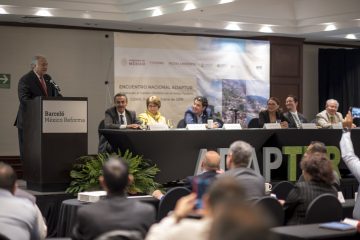
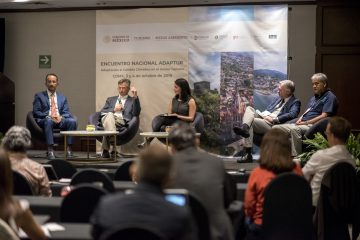
During the first National Climate Change Adaptation Meeting in the Tourism Sector (ADAPTUR), representatives of tourism from the public, private and social sectors, at the national level, from the Riviera Maya, Riviera Nay-Jal, and San Miguel de Allende, met to address climate change challenges in a coordinated manner.


Credits © ADAPTUR/Photo: Mariana Rodriguez Aguilera. Representatives of SECTUR, CONANP, INECC and GIZ at the opening ceremony


The Minister of Tourism, Miguel Torruco Marqués, pointed out the importance of working in coordination to face the challenge of climate change for the industry:


“Without the efforts of our partners, it is not possible to promote initiatives to conserve the natural assets that bring the tourism sector to life”


The dialogues focused  on how to achieve together, the public and private sectors a balance between territorial planning, conservation of natural resources, and the application of financial resources in tourist destinations. With that momentum, Benigno Torres, Chairman of the Business Coordinating Council of San Miguel de Allende, lead the public to reflect.


“The ultimate goal of the company is no longer the generation ofutility for its shareholders; the company must now generate prosperity for the community in which it develops”


The Resident Director of the Deutsche Gesellschaft für Internationale Zusammenarbeit (GIZ) GmbH (German Cooperation for Sustainable Development) in Mexico, Marita Brömmelmeier, recognized some of the efforts that have been made made in tourist destinations:


“I recognize the great efforts in Quintana Roo to combat the white syndrome in the Mesoamerican Reef System…  actions in San Miguel de Allende that help reduce the risk of droughts… and to the local governments of Puerto Vallarta in Jalisco and Bahía de Banderas in Nayarit to develop their Municipal Climate Action Programs “


The National Meeting was held on October 3 and 4 in Mexico City, and brought together more than 100 specialists. It was summoned by the Ministry of Tourism (SECTUR), with the support of the Secretariat of Environment and Natural Resources (SEMARNAT), the National Commission of Natural Protected Areas (CONANP), the National Institute of Ecology and Climate Change (INECC) and GIZ Mexico.


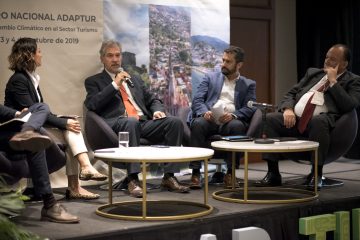
Credits: © ADAPTUR/Photo: Mariana Rodriguez Aguilera. Public environment sector addressing local challenges


Credits: © ADAPTUR/Photo: Mariana Rodriguez Aguilera. Private tourism sector discussing the risks and opportunities of climate change


ADAPTUR is a project financed by the German Federal Ministry for Environment, Nature Conservation, and Nuclear Safety (BMU) as part of the International Climate Initiative (IKI).

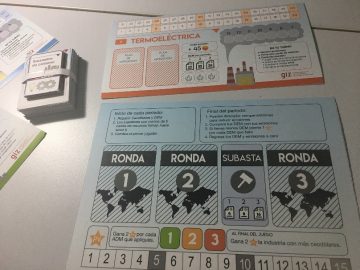
With the objective of providing capacity development mechanisms and accompanying actors involved in the Emissions Trading System (ETS), the project “Preparation of an Emissions Trading System in Mexico” (ETS) of the Deutsche Gesellschaft für Internationale Zusammenarbeit (GIZ) GmbH (German Cooperation for Sustainable Development)  created a board game that allows players to understand the technical aspects and possible scenarios that may occur during the implementation of an ETS.


Créditos: GIZ


ETS, commissioned by the German Federal Ministry of Environment, Nature Conservation and Nuclear Safety (BMU), supports the Mexican Ministry of Environment and Natural Resources (SEMARNAT) in the creation and dissemination of communication materials and awareness-raising instruments of the ETS. Due to the technical complexity of the system and having the shortage of technical experts at the national level in mind, SiCEM seeks innovative mechanisms that allow a non-face-to-face spread of information in this matter. Consequently, it created a didactic board game that incorporates specialized concepts and key messages for a more comprehensive understanding of the ETS.

The purpose of the board game is to have an educational tool that presents in a simple and fun way the essential aspects of the ETS, such as compliance, allocation, periods, offsets, allowances and penalties. The board game’s goal is to increase the general interest in how the ETS works and its status around the world. In the game, each player plays the role of one of four industrial plants. The objective of the game is to mitigate emissions, get money and comply with the ETS.

The process of creating the board game “Hasta el tope” included the participation of representatives from different institutions. Through meetings and test sessions, the creators were able to gather the opinions of the different participants on how to improve the game design, include more topics and facilitate the understanding of the ETS internal process. The final product is a board game that incorporates the main elements, processes, actors, and situations  that involve an ETS. Likewise, the game was able to extract the main information of the system and adapt it understandably and attractively, without losing its technical nature.

Dare to learn about the Emissions Trading System while playing and having fun!


DOWNLOADS:

ING – A board game on The Emissions Trading System

ING- MATERIAL

Playing round- Summary