
The Biodiversity and Sustainable Agrosilvopastoral Livestock Landscapes project, known as BioPaSOS, is being implemented in three Mexican states: Jalisco, Chiapas and Campeche. It has trained more than 1,200 producers on the importance and know-how of incorporating good livestock production practices, including the implementation of silvopastoral systems. Thanks to this work, there are currently cattle families practicing sustainable cattle production and conserving biodiversity on their ranches.

In the following video, Deutsche Welle shares the experience of several producers from Chiapas, who have worked with the BioPaSOS project and now recognize the value of simultaneously producing and conserving.


BioPaSOS has been running since 2017, in order to respond to the problem of traditional and extensive livestock farming. A development that has led to, among other things, habitat fragmentation and deforestation, contributing to the loss of biodiversity and ecosystem services. This further enhances the negative effects of climate change, affecting the productivity of ranches and negatively impacting the livelihoods of livestock families.

This project is implemented by CATIE (Tropical Agricultural Research and Higher Education Center), with the support of the Inter-American Institute for Cooperation on Agriculture (IICA), in coordination with the National Commission for the Knowledge and Use of Biodiversity (CONABIO) and the Ministry of Agriculture and Rural Development (AGRICULTURA), with funding from the International Climate Initiative (IKI) and alongside multiple local partners in their territories of intervention.


The Technological Innovation Hub, in the field of sustainable energy in the state of Querétaro, began its first generation of ventures with a virtual ideation workshop as the first step in the acceleration process that the Hub will offer.

The results of the first call for projects led to the selection of 14 renewable energy or energy efficiency ventures in different sectors and technologies. The projects seek to strengthen the local energy sector and promote local climate action through disruptive technological approaches based on digitization, such as the use of the internet of things, blockchain, management systems, agroecology, and green hydrogen, among other innovations. This use of technological innovation will bridge the gap between the energy sector and climate change.

The focus of the Querétaro Hub’s first generation of ventures is to promote post-COVID economic recovery, so the 14 projects promoted by 12 companies and research centers are expected to foster value chains and sustainability/job creation, in order to cope with the circumstances imposed by the pandemic.

The enterprises participating in the workshop had the opportunity to validate and strengthen their business models with social and environmental components that allow them to sustain their value proposition and define future strategies for market access and the social appropriation of technologies. The socio-environmental impacts generated by their ventures were also identified, in order to minimize the negatives and expand the positives. The strengthening process used design thinking methodology and a systemic vision of the energy sector to connect the expected impacts of the projects with a resilient and sustainable future in Querétaro.

At the end of the workshop, each project presented a pitch—a short presentation in which the innovation is presented—in front of an expert jury in innovation and energy, made up of people from organizations such as SIEMENS, General Electric, Mabe, and the institutions Creativity and Innovation Center 4.0 from Querétaro Technological University, the Center for Research in Applied Science and Advanced Technology (CICATA-IPN) and the Querétaro State Energy Cluster, who learnt about the technological proposals of the undertakings and gave expert recommendations, generating the first links with these ventures in order to strengthen the local innovation community.

Next, the Hub will offer training, mentoring and dialogue formats to these ventures in order to accompany their business models in the acceleration of their technological maturity, bringing them closer to the energy innovation ecosystem in Querétaro. The idea is to continue promoting a fair energy transition hand-in-hand with the fight against climate change.

The process of the call for projects, its results and the ideation workshop were coordinated between the Ministry of Sustainable Development of the State of Querétaro (SEDESU), the project “Enhancing the Coherence of Climate and Energy Policies in Mexico” (CONECC) of the GIZ, facilitated by Hevas Innovation. The workshop lasted 12 hours, spread over three working days, on November 23, 24 and 27. A total of 38 people participated.

The Conference of the Parties to the UN Convention on Biological Diversity initiated the process of developing a Post-2020 Global Framework for Biodiversity, as another step towards achieving the 2050 Vision of “Living in Harmony with Nature”.


This Global Framework and Vision 2050 must now face the new reality in which COVID-19 has placed us, and that is why the Integration of Biodiversity (Mainstreaming) in the productive sectors has acquired even greater relevance for the CBD. The concepts and messages that are currently heard everywhere, such as Build Back Better and Green Recovery, among others, have made us think about what we are doing within our own projects.


In the case of the IKI-IBA project, we have identified several actions and routes, which we have been promoting within our pilot projects. They include: maintaining and recovering the capacity of soils to produce food, through conservation agriculture; recovering the percentage of organic matter, its water retention capacity and increased fertility; as well as the promotion of good practices in the selection, storage and exchange of seeds and the management of pests with methods that do not involve agrochemicals – as is the case of bats and the rice borer moth. All of these are actions that allow producers to be more resilient, because a healthy soil, and a good variety and quality of seeds –as well as with the ecosystem services surrounding the crops– allows them to generate a better economy in their production, as well as higher quality products.


These are the examples that allow us to have a dialogue of trust and work together with SADER colleagues and they are key to promoting the integration of biodiversity to become a fundamental component in decision-making processes and in the design of programs in this sector.

The Ministry of Environment and Natural Resources (SEMARNAT), with the support of the Mexican-German Alliance for Climate Change project of the Deutsche Gesellschaft für Internationale Zusammenarbeit (GIZ) GmbH is about to consolidate a computerized system for monitoring, reporting and verification (MRV) of mitigation actions, and monitoring and evaluation (M&E) of adaptation to climate change at a subnational level.

This system came about as a response to the notorious need for a tool that allows the contributions of local actions to be known and accounted for, as well as visualizing the contribution they make to the fulfillment of Nationally Determined Contributions (NDC).

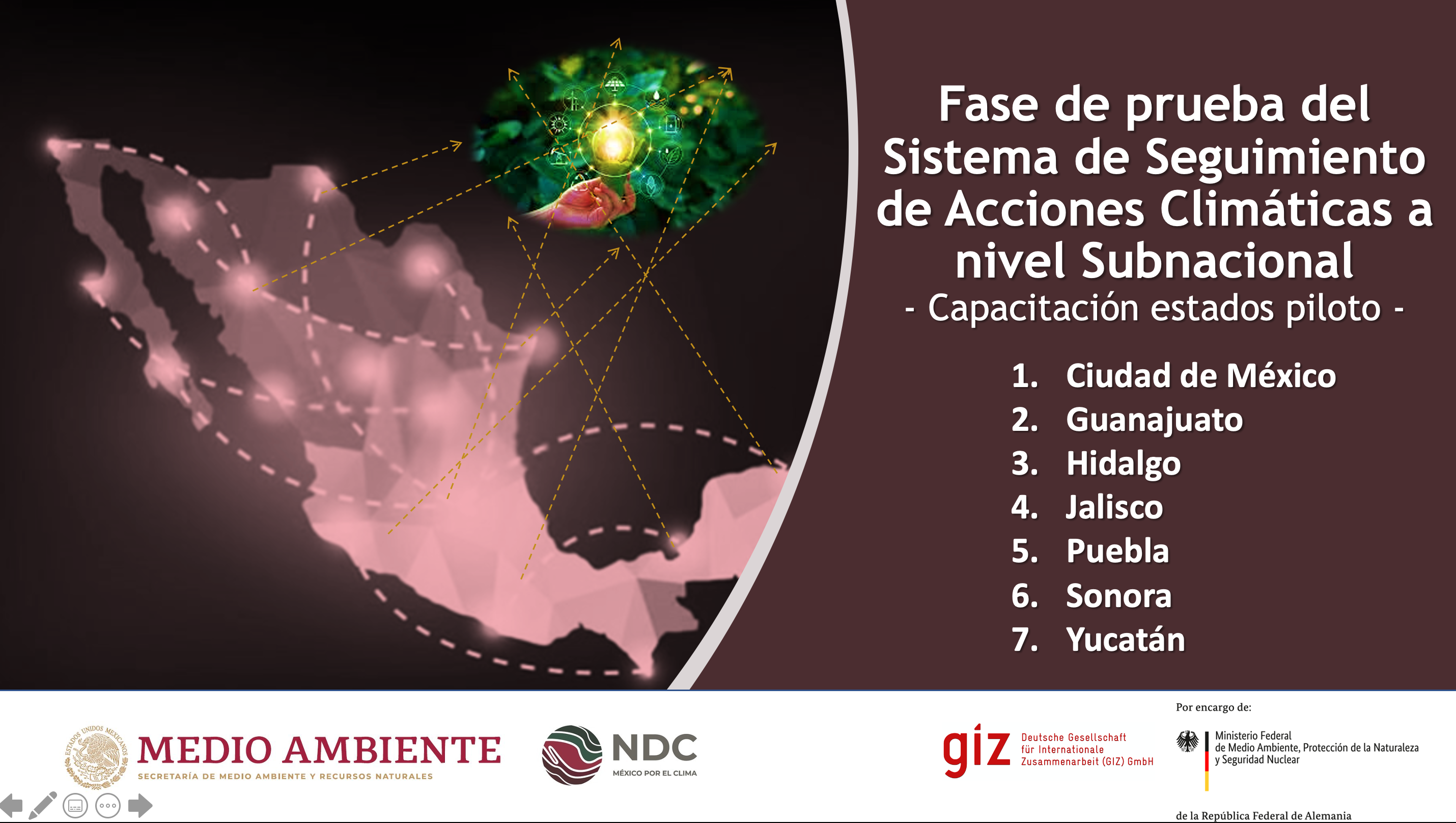
The process for the system’s construction began in September 2019 and is currently in the penultimate stage, which corresponds to the piloting of states from the various regions of Mexico. As part of the activities to be carried out in this stage, training was held on November 12 and 13 for the following states, since they are considered climate leaders in their regions:

  • Mexico City
  • Guanajuato
  • Hidalgo
  • Jalisco
  • Puebla
  • Sonora
  • Yucatan

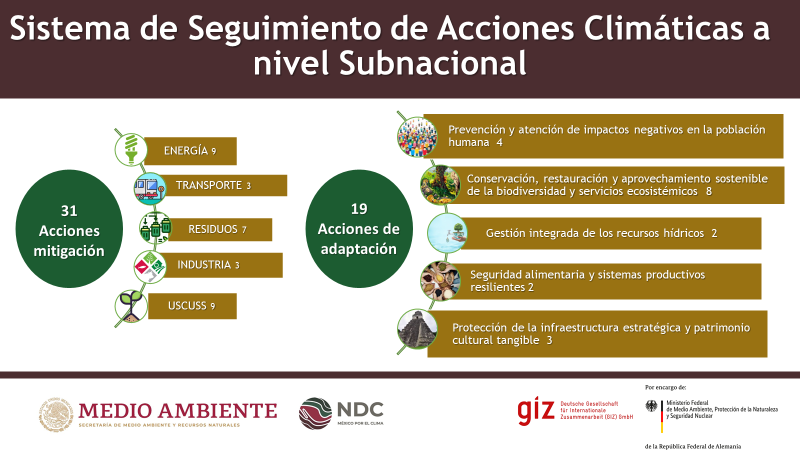
For two days, the states learned about the 31 mitigation and 19 adaptation actions that the system includes, learned how to use it, and carried out different practical exercises to report such actions and practice how they can propose the inclusion of additional actions.

The piloting included a session supported by the CONECC project in which, through a theoretical presentation and a series of exercises, the methodologies used to quantify and report six mitigation actions related to energy efficiency and electricity production from renewable sources were exhibited. The energy sector was chosen as an example for the pilot session; however, it should be noted that the system includes all the sectors mentioned by the NDC. The session contributed to generating an important exchange of perspectives and experiences, which will serve to test the system and improve it before the launch at the national level.

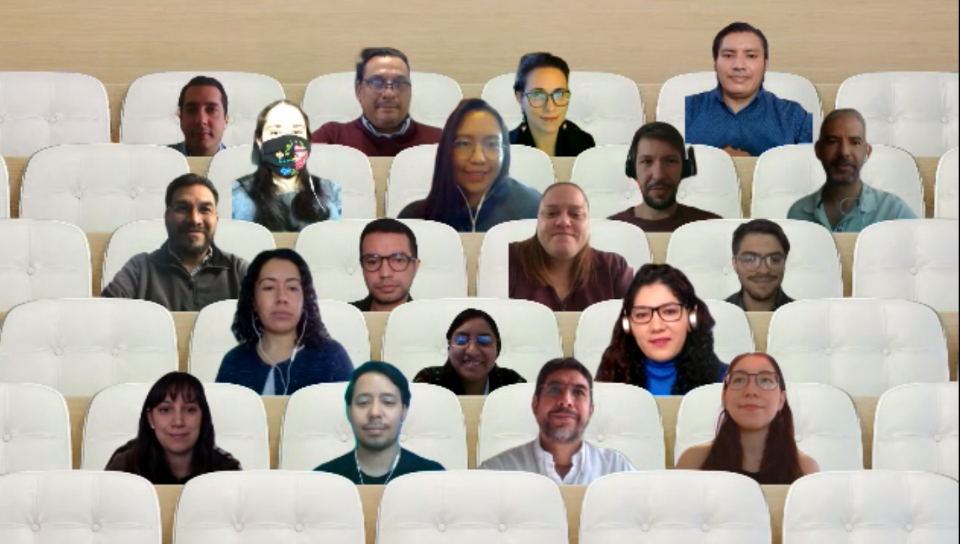
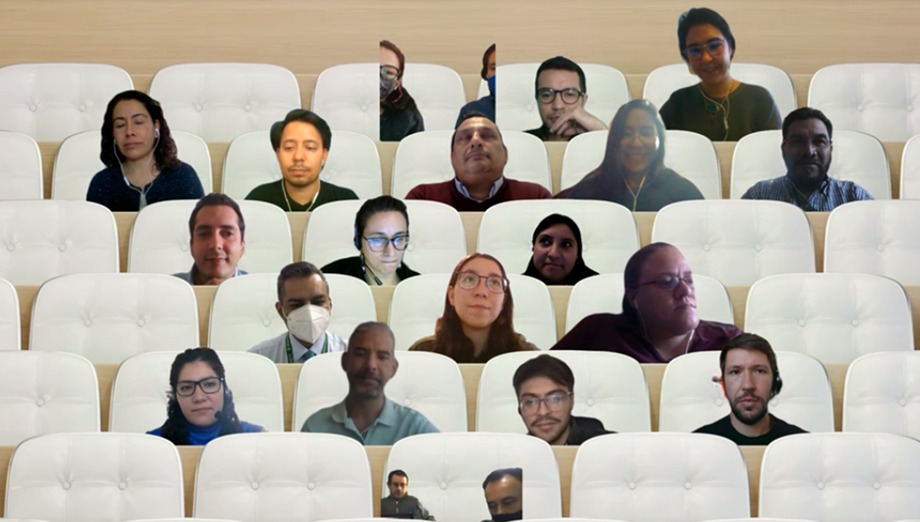
Attendees to training on November 12 and 13, 2020. Own elaboration.

What’s Next?

In order to move on to the final stage, the aforementioned states will have the task of testing the system under the real conditions of their territories between November 17 and December 17; they will have the opportunity to provide feedback under a constant communication mechanism with SEMARNAT and the GIZ, ensuring that the system is in optimal conditions so that the rest of the states can be trained in its use and implementation.

Between February and March 2021, trainings will be carried out with the 32 states and the official launch of the system will take place.

Stay tuned for the launch, as Mexico will be a pioneer in the creation of a system like this one, which in addition to the multiple benefits in public policy, financing, transparency and accountability, will ensure that no one is left behind and without visibility.

Presentation: Introduction_Subnational system test stage (in Spanish)

Coordinated work between the public and private sectors is key to promoting the energy transition and a sustainable future. It is for this reason, and under the framework of the implementation of a Technological Innovation Hub in the field of sustainable energy in the state of Queretaro, that the signing of a Memorandum of Understanding (MoU) took place between the GIZ through the Project “Enhancing the Coherence of Climate and Energy Policies in Mexico” (CONECC) with the Bello, Gallardo, Bonequi and Garcí law firm (BGBG Abogados).

This MoU, framed within the GIZ DeveloPPP public-private cooperation program, seeks to promote renewable energies and energy efficiency measures within the framework of local climate action. Through a Program of Accompaniment and Legal Advice for Hub users, which will include startups, MSMEs, companies, entrepreneurs and academic institutions, the mechanisms for promoting technological innovation will be strengthened and the selected projects will be supported with legal mentoring. Further, the Hub will consolidate its legal constitution in the state of Queretaro.

This cooperation agreement between the public and private sector (iPPP) represents a platform for linking key actors within the innovation ecosystem of the state of Queretaro, with the aim of promoting a local energy transition and its impact on mitigating climate change. Collaboration will be sought to achieve this objective and it is expected that very soon the Technological Innovation Hub will be formally established as a civil association, strengthening the linking platforms of the Queretaro entrepreneurial community.

Promoting climate action at a subnational level is key to mitigating climate change, complying with the Paris Agreement and national goals in the area. Establishing a Carbon Budget is an innovative way of promoting the fulfillment of these objectives: the concept refers to the amount of maximum emissions available to keep the temperature increase within a certain range. This estimate is based on the best available science, and allows more ambitious mitigation goals to be set in alignment with desirable climate futures.

This is why, on October 27, the signing event was held between the Deutsche Gesellschaft für Internationale Zusammenarbeit (GIZ) GmbH, through the project “Enhancing the Coherence of Climate and Energy Policies in Mexico”(CONECC), the Government of Jalisco and the Government of Yucatán for the estimation of Carbon Budgets and the development of decarbonization routes in the electricity sector.

The event was attended by the Resident Director of GIZ Mexico, Marita Brömmelmeier; the director of the CONECC project, Jonas Russbild; Ernesto Herrera Novelo, Secretary of the Ministry of Economic Development and Labor (SEFOET); Secretary Sayda Melina Rodríguez Gómez from the Sustainable Development Secretariat (SDS) on behalf of Yucatan; Secretary Sergio Humberto Graf Montero from the Ministry of the Environment and Territorial Development (SEMADET) and Secretary Ernesto Sánchez Proal from the Ministry of Economic Development (SEDECO) in Jalisco.

The signing of the Agreements marks the beginning of a collaboration to define mitigation goals with greater ambition, with a social and territorial focus. Marita Brömmelmeier commented that: “The commitments that were signed will serve as an example to inspire similar initiatives in favor of greater efforts for the convergence of energy and climate.”

As a next step, the states of Yucatan and Jalisco will receive technical support for the estimation of the Carbon Budget of their electricity sectors, in collaboration with the Climate Initiative of Mexico. The project will seek to identify local measures and actions focused on aligning energy and climate change policies in the states, ensuring the replicability of the exercise, and promoting the adoption of this methodology in Mexico.

The Carbon Budgets project will run from October 2020 to August 2021, and seeks to strengthen the capacity of sub-national actors in the design of energy policies that decisively contribute to the achievement of Mexico’s climate goals.

For more information, contact CONECC’s email, conecc@giz.de or Felipe Borja in his email Felipe.borja@giz.de.

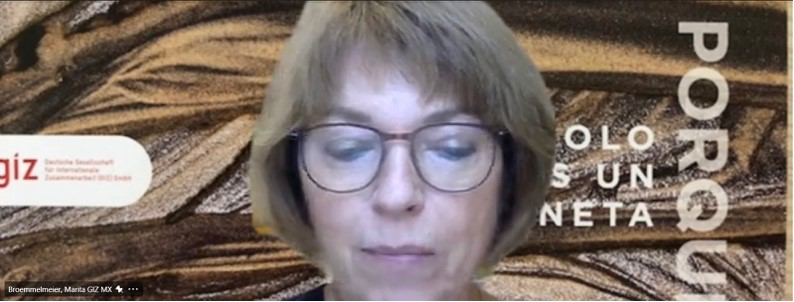
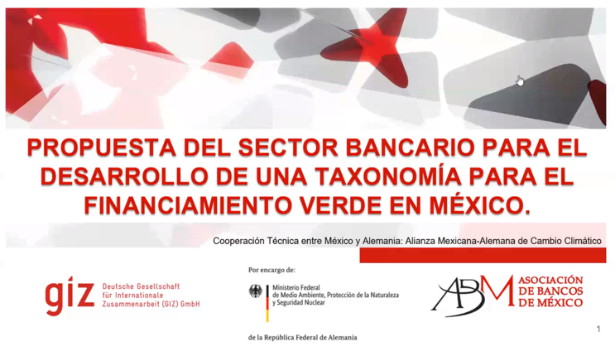
This event included the outstanding participation of Ms. Marita Brömmelmeier, members of the ABM sustainability committee, and the consultants who collaborated in the design and piloting of the taxonomy. The green taxonomy is essential to promote the transition towards sustainable finance, since it is made up of a methodology and procedures based on scientific evidence that allow the classification of types of assets into those that are green and those that are not.

Ms. Marita Brömmelmeier emphasised the importance of taxonomy in giving certainty to investors who want to mitigate and manage financial risks related to the climate crisis, which will allow the enormous potential that the country has in the mobilisation of investments towards sustainable projects, since even though domestic financial savings are equivalent to 70% of GDP, less than 50% of banks have green financing goals.

Participation of Mrs. Marita Brömmelmeier. GIZ

The forum highlighted that the green financing taxonomy will provide a common language for sustainable investments, establish an even floor for Mexican banks with fixed and comparable standards, allow the identification of new business opportunities, and facilitate the formulation of public policies to promote green financing.

In the taxonomy design, it was important to consider international experiences in the creation of this type of instruments, in order to recognise lessons learned and creation methodologies. In this case, the European Union taxonomy was the main point of reference due to its complexity, scope and legitimacy with financial regulators, its transparency and its alignment with science.

Presentation of the green financing taxonomy. GIZ

In the context of Covid-19 and in the framework of Urban October 2020, a space for dialogue was opened to reflect on the link between urban development and economic reactivation. In the discussion, actions that are being carried out for economic reactivation in different municipalities of the country were presented, and the role that municipalities play in attending to different emergencies was recognised to be of great relevance, since they know well the needs and the potential of their cities, as well as being the first in line when receiving citizens’ demands.

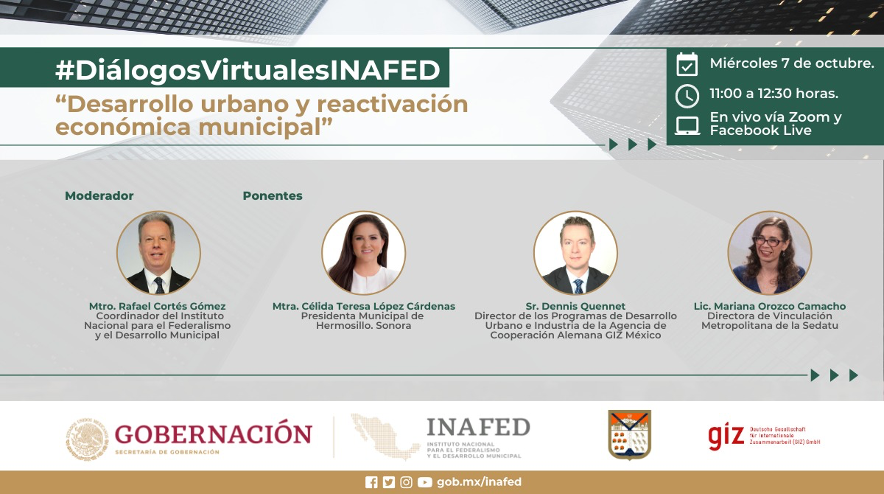
On October 7 of this year, the National Institute for Federalism and Municipal Development (Inafed) promoted a dialogue between the Deutsche Gesell­schaft für Internationale Zusammenarbeit (GIZ México) GmbH, the Ministry of Agricultural, Territorial and Urban Development (SEDATU) and the Municipality of Hermosillo, Sonora, to reflect on urban development and economic reactivation. The dialogue was attended by more than 200 public officials who connected through Zoom and Facebook Live platforms.

Dennis Quennet, talking on behalf of GIZ, stressed that the health emergency should not remove the focus from the climate emergency; he stressed that the upcoming climate plans, programmes, projects, and investments must have a sustainable and long-term vision. He proposed an acceleration of the recovery by promoting new markets and green jobs, highlighting the fields of infrastructure, mobility, and urban gardens, while addressing the challenges of climate change.

The municipal president of Hermosillo shared her vision and actions for sustainability in her municipality. They are working on Sustainable Mobility issues, promoting public space projects as triggers of economic activity, implementing green infrastructure that promotes the efficient use and management of water, and creating a circular economy centre.

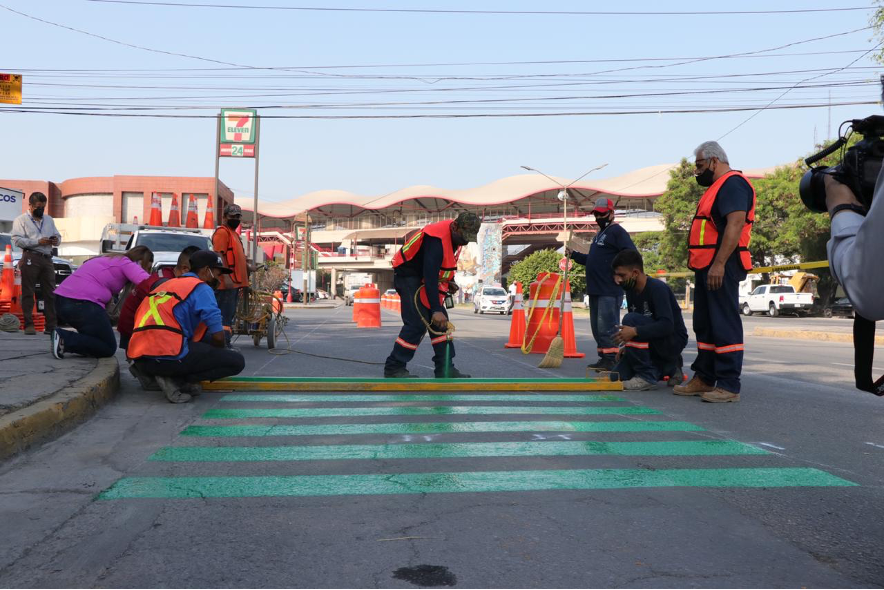
Implementation process of the emergent bike path in the municipality of San Nicolás de los Garza, September 2020. © Courtesy Municipality of San Nicolas de los Garza, N.L.

For her part, Mariana Orozco, SEDATU’s Mobility Director, shared the 4S Mobility Plan (Healthy, Safe, Sustainable and Solidary) in which four strategies and several actions are promoted, through two guides and advice for municipalities.

To close the event, Quennet pointed out four key aspects for economic reactivation: coordination between different levels of government, cooperation between different sectors, sharing good local practices, and involving citizens. Rafael Cortés thanked GIZ Mexico for its contribution and cooperation, being one of the most active in promoting actions in the country’s municipalities.

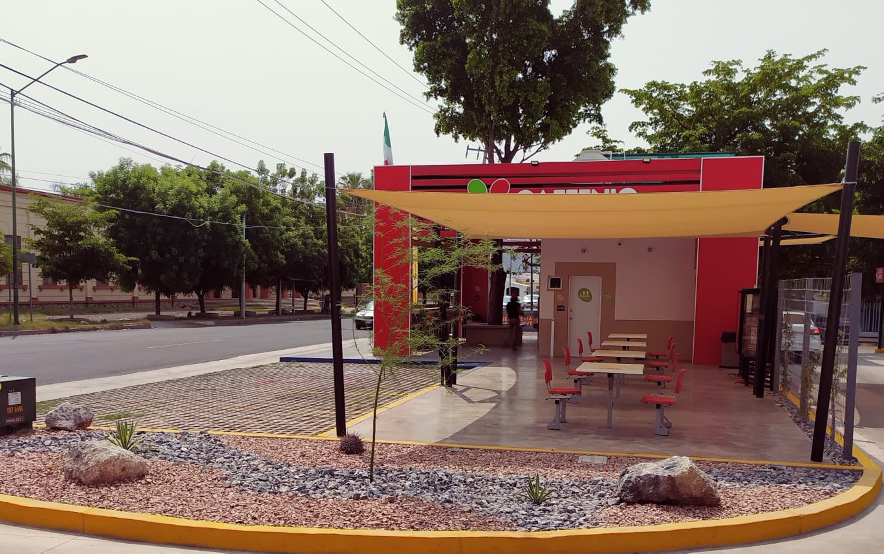
View of the winning project of the national Green Infrastructure competition in Caffenio. © Courtesy of CAFFENIO

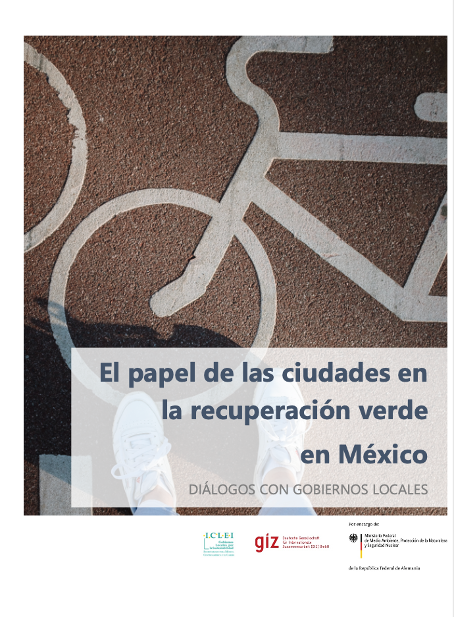
As part of the activities carried out during Urban October, on Thursday October 1st, ICLEI (Local Governments for Sustainability) and GIZ Mexico presented the progress of the publication coordinated by both organizations. It concerns the role of cities in the green recovery in Mexico. The goal is to share concrete proposals with Mexican cities, so that they can combine post-Covid-19 economic recovery agendas with environmental and climate agendas. For this to happen, both organisations have systematised various experiences at a local level and, with the support of several cities around the country, put together a series of proposals for sustainable urban management. The virtual meeting on October 1 served to share these findings and receive the perspectives of mayors, federal authorities, and civil society.

First, Dennis Quennet, Director of Sustainable Cities, Transportation and Industry of GIZ Mexico, alongside Edgar Villaseñor Franco, Regional Secretary of ICLEI (Local Governments for Sustainability), presented the context of this proposal and the main findings so far, in terms of green recovery in cities. Subsequently, on behalf of the cities that collaborated with the development of the proposals, Renán Barrera, municipal president of Mérida, and Claudia Rivera Vivanco, municipal president of Puebla, presented exemplary green recovery actions in their municipalities. Both mayors shared with the attendees the challenges they have faced due to the Covid-19 pandemic, its economic and social implications, and the environmental and climate actions that they are promoting.

Afterwards, a discussion was held with both mayors, who were joined by key actors from the federal government and civil society, with the presence of Javier Garduño Arredondo, Head of the Institutional Planning and Development Unit of SEDATU and Sergio Mendoza, General Director of Urban and Tourist Environmental Promotion of SEMARNAT, as well as Carlos Mendieta, Director of the Tláloc AC Foundation. The points of view of the participants were exposed in this online space; in summary, they highlighted the importance of a green recovery as a fundamental route for Mexican cities and the need to find appropriate ways to act in the face of the climate emergency – and with the same sense of urgency with which they faced Covid-19.

Over the next few weeks, the document’s proposals for a green recovery in cities will be updated. After this, ICLEI (Local Governments for Sustainability) and GIZ Mexico will publicly announce the launch of the publication “The Role of Cities in the Green Recovery in Mexico.”