
Author: IKI Alliance
Images of floods, beaches full of seaweed, dry landscapes, and tourist infrastructure destroyed by the last hurricane demonstrate the vulnerability of the tourism business time and again. Although the urgent must be addressed, at the same time it is a priority to prepare the business for a future with a more extreme and uncertain climate.
The Guide is the first of its kind in Mexico and offers innovative recommendations for companies to integrate climate change and adaptation approaches during the planning processes of real estate tourism investment projects.

Among the recommendations, green solutions are emphasized, providing long-term social, environmental and economic benefits –not only to businesses, but also to the tourist destination and its inhabitants.
As mentioned by Dr. Rafael del Villar, advisor to the Bank of Mexico (Banxico) at the event: “This guide will help make the tourism sector in the country more competitive; it will do so by reducing the cost of investment through actions of risk mitigation and reduction, and also by facilitating that these investments are in line with the growing demand for environmentally friendly tourism.”

The presentation took place within the framework of the ADAPTUR project on November 13, 2020, with the participation of around one hundred people with a high level of influence, including executives from 40 leading investment companies, developers and consulting firms in the sector, as well as the National Tourism Promotion Fund (FONATUR), the Resident Directorate of GIZ in Mexico, the General Directorate of Climate Change Policies (DGPCC) at SEMARNAT, the National Commission of Natural Protected Areas (CONANP), the National Institute of Ecology and Climate Change (INECC), the Bank of Mexico and representatives of the state and municipal governments of Guanajuato, Nayarit, Jalisco and Quintana Roo –among others.
The document is available for download at ADAPTUR (in spanish) and in english click here.
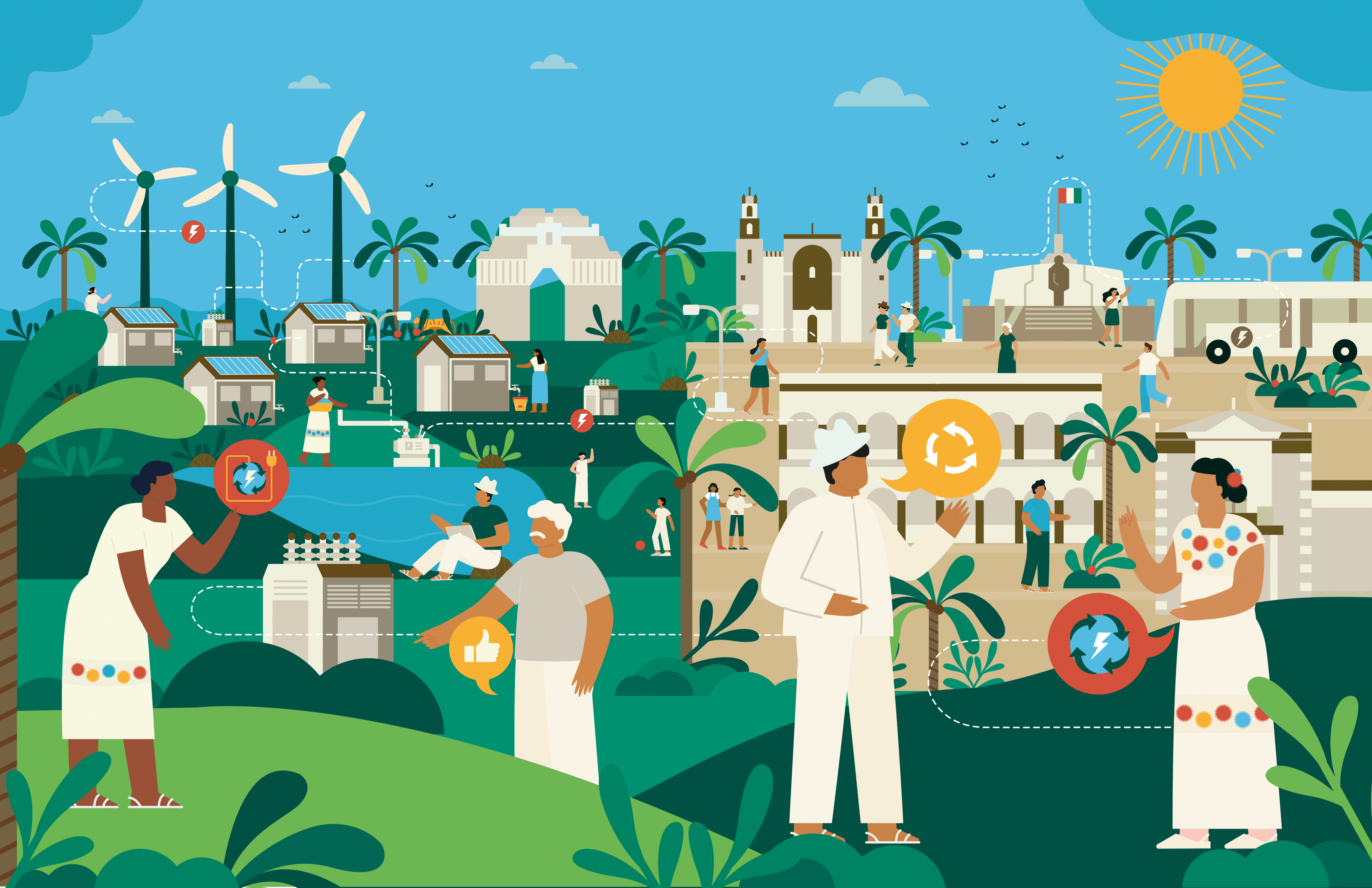
A focus on the social, economic and environmental co-benefits of sustainable energy has been positioned as a tool at a local level, in order to highlight the positive effects of sustainable energy, not only in mitigation and adaptation to climate change, but also in other benefits such as job creation, savings and increased well-being for communities.
This is why, in an alliance between the Deutsche Gesellschaft für Internationale Zusammenarbeit (GIZ) GmbH through the project Enhancing the Coherence of Climate and Energy Policies in Mexico (CONECC) together with the Yucatan Government, through the Secretariat of Economic Development and Work (SEFOET) and the Secretariat for Sustainable Development (SDS), the study “Co-benefits: Employment Opportunities and Local Benefits of Community Participation in Renewable Energy Projects in Yucatan was presented. The objective is to provide public policy makers and other relevant stakeholders with methodological tools to quantify the co-benefits of sustainable energy in the state’s social, economic and climate agendas.
At the presentation event, Marita Brömmelmeier, Resident Director of GIZ in Mexico; the Secretary of Sustainable Development, M.I.A. Sayda Rodríguez Gómez and Juan Carlos Vega Milke, SEFOET Undersecretary of Energy, shared welcome messages, acknowledging the effort put into the report, since it contains relevant information to promote compliance with the state’s climate goals, taking into account social opportunities for communities. It was mentioned that the study positions the state as a benchmark on the road to the energy transition, inviting other sectors to join the change and thus reap the benefits generated from future projects.
The director of the CONECC project, Jonas Russbild, reiterated the wish to continue working on the quantification of co-benefits to obtain inputs that trigger social narratives around the implementation of climate policies as tools for local and national development.
The study presented highlights that, under an ambitious scenario of clean energy deployment, Zero Carbon Transition, 247,000 direct, indirect and induced jobs could be created in renewable energy projects, saving 133 billion pesos under a net metering scheme in Yucatán by 2050.
Additionally, Mirelle de Fátima Segovia Martín, from the Energy and Industrial Headquarters of the Under-Secretariat of Energy in Yucatan, commented that for the state, the analysis of the multiple benefits of sustainable energy facilitates the implementation of actions that allow the reinforcement of unity and hand-in-hand work with other state governments in the region and the inclusion of other key actors in the energy transition –as well as obtaining concrete data and transmitting results to enhance the participation of all actors.
Through co-benefits, actions and alliances can be triggered to strengthen local climate action and a people-based energy transition.
To learn more about the results, we invite you to download the complete study:
The presentations used in the event can be consulted through the following links:
- Presentation: Mirelle de Fátima Segovia Martín: Climate Action from a Perspective of Social, Environmental and Economic Co-benefits of Sustainable Energy: The Yucatan Experience.
- Presentation: José Castro: Results and Methodological Elements of the Analysis of Local Co-benefits of Community Participation in Renewable Energy Projects in the State of Yucatan.
- Presentation: Jonas Russbild: Co-benefits Mexico: Contribution of the Energy Transition to the Well-being of the Population.
For the first time, these reports offer economic figures of what it would mean to lose natural capital (beaches, reefs, jungles, forests, etc.) and the services they provide (water, protection, scenic beauty, etc.) for tourism businesses in San Miguel de Allende, the Riviera Nayarit-Jalisco and the Riviera Maya.
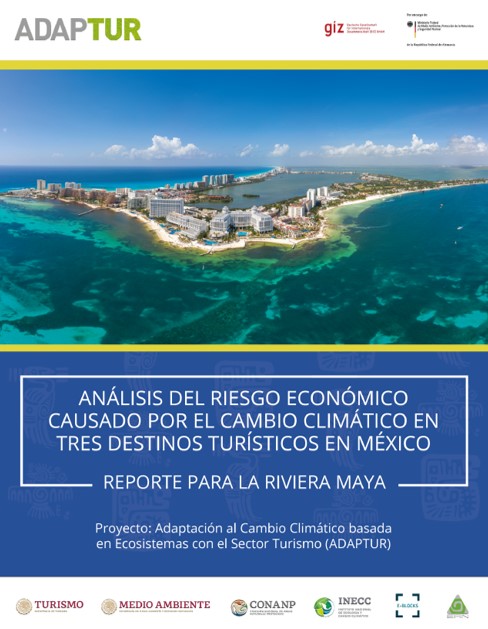
Likewise, it estimates the annual losses associated with the direct impact of climate change on buildings (hotels) and supporting infrastructure (roads, hospitals, airports, etc.).
To cite one example, if San Miguel de Allende does not carry out adaptation actions, it is estimated that by 2030 it could face an annual economic risk between $10.28 – $17.11 million dollars, considering that the scarcity of water as well as floods present the highest risks for the operation of businesses.
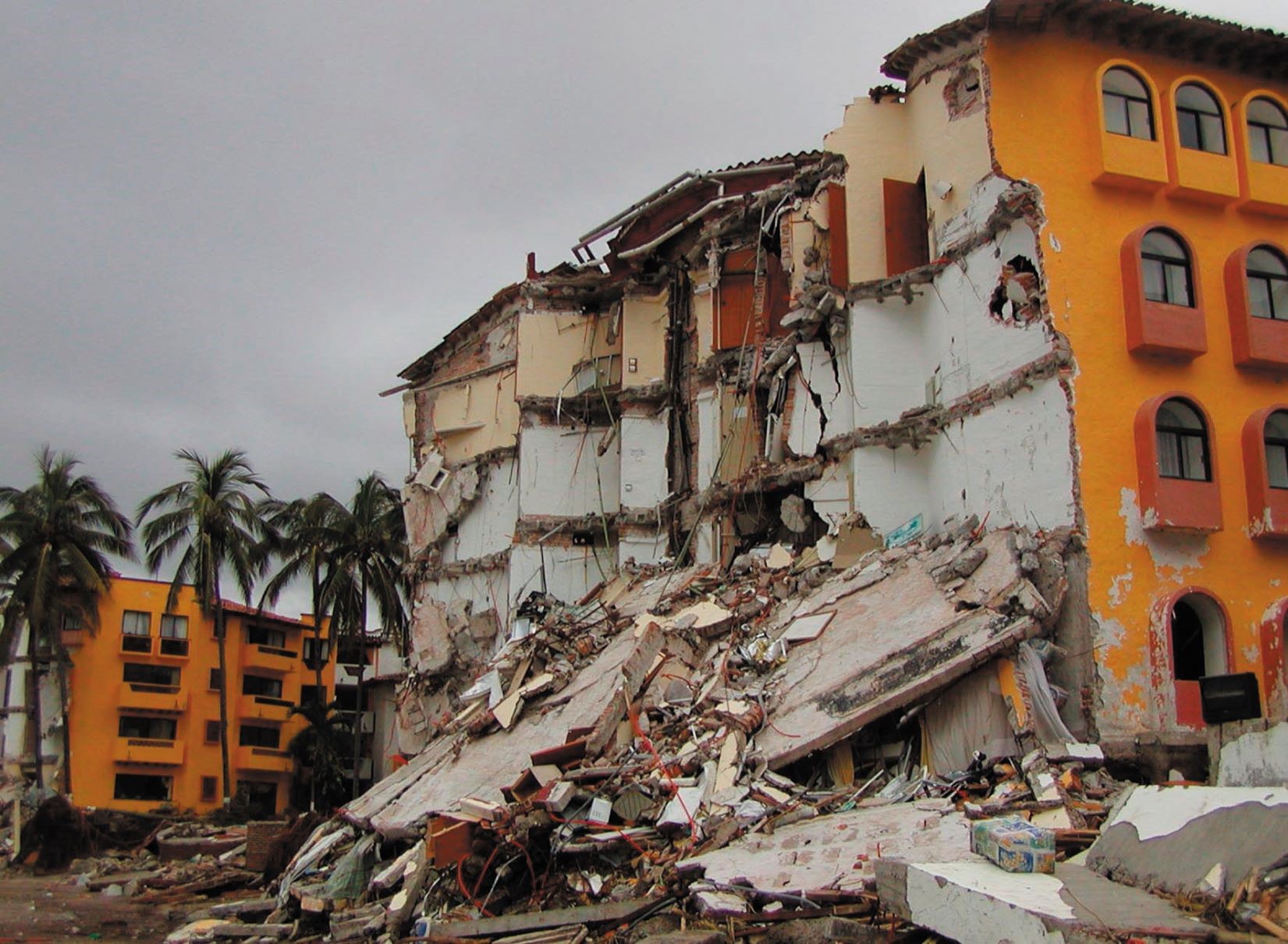
Among the recommendations for destinations, the design and implementation of a policy has been proposed, for the comprehensive management of water; the restoration of reefs, sea grasses, beaches and forests; and the creation of cooperative alliances between the public and private sectors to promote adaptation to climate change.
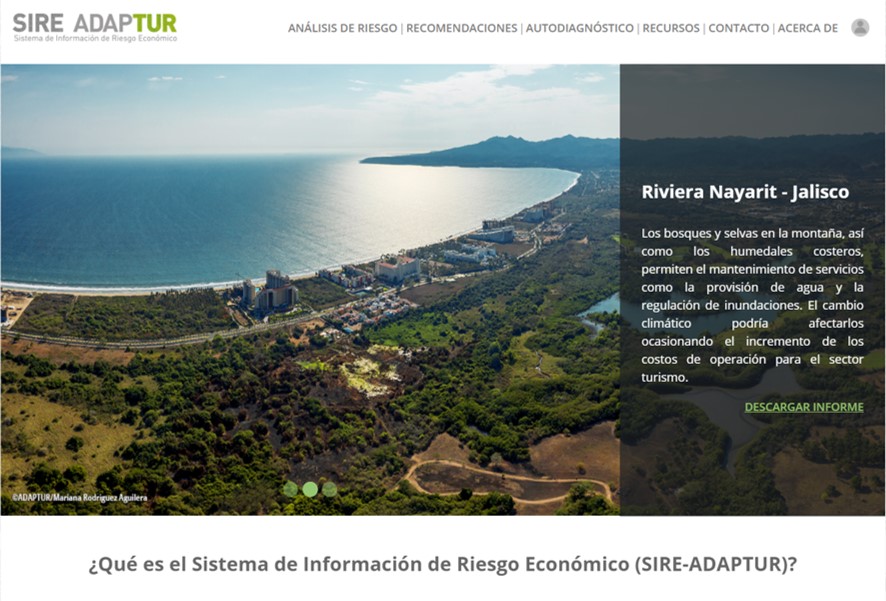
Additionally, the digital platform Economic Risk Information System (SIRE-ADAPTUR) was designed, which presents the results of the reports. The interactive tool to evaluate the cost of water production, and an extensive collection of geographic and climatic maps (location of properties, risk map, climate change scenarios, and distribution of natural assets –among others), aim at supporting decision-making for resilient tourism development.
The reports were published in October 2020 and were elaborated by the consulting companies E-blocks S.A. de C.V. and ERN Evaluación de Riesgos Naturales, in collaboration with 60 hotel companies, local environmental and tourism authorities, academic experts, civil society and members of the ADAPTUR project.
They are available for download at the following link: SIRE (eblocks.mx)
On November 30, 2020, The Official Gazette of the Federation published the Federal Expenditures Budget for the Fiscal Year 2021 (PEF 2021), which reflected that the total net expenditure of the public sector will be 6.257 trillion pesos, representing 25% of the GDP estimated by the SHCP for 2021, but with a reduction of 0.3% compared to that approved in 2020 in real terms.
According to the PEF 2021, there is an increase of 1.5% in real terms of the budget of the environmental sector with respect to 2020, which is concentrated in the increase in the budget for the programs carried out by the National Water Commission (CONAGUA), which will obtain 79.5% of the total budget of said sector and will have an allocation of more than 4.8% in real terms with respect to the budget allocated for 2020. CONAGUA resources will be destined mainly to the budgetary programs “Comprehensive and Sustainable Water Management” and “Drinking Water Infrastructure, Sewerage and Sanitation”.

With an assigned budget of 1,780 million pesos, SEMARNAT will see a real reduction in its resources: 10% compared to the amount assigned for 2020. Internally at SEMARNAT, the General Directorate of Wildlife, the General Directorate of Informatics and Telecommunications and The General Directorate for Climate Change Policies will receive cuts from their approved allocations in the PEF 2020 of -75%, -28% and -10%, respectively.
The entities supported by CONAFOR, IMTA and INECC will see a reduction in real terms of their budget compared to 2020, of -11.7%, -5.1% and -8.9%, respectively. Similarly, the decentralised bodies CONANP, PROFEPA and ASEA will see reductions in their budget for 2021 of -3.7%, -9.5% and -8.6%, respectively.

The resources assigned for activities and programs associated with the mitigation and adaptation of climate change for fiscal year 2021 amount to 70,274 million pesos, an additional 21.6% compared to that assigned for 2020. In itself, attention to climate change in the PEF 2021 represents 1.1% of the total budget, where 75.3% will be allocated to the “Natural Gas Transportation Service” program, executed by the CFE.
PEMEX, CFE, CONACYT and the Salary and Economic Provisions branch, represented 98% by FONDEN, will have real increases in resources destined to combat climate change compared to 2020. However, the program “Research on Climate Change, Sustainability and Green Growth,” executed by INECC, will receive a 10% cut in real terms compared to last year. Likewise, the allocation of amounts to the budget program for environmental trusts in the budget for fiscal year 2021 are still being awaited; in the PEF 2021 it is stated that trusts will continue to appear in public spending, but its publication is still pending.

2021 will be a year full of challenges for Mexico’s environmental and climate agenda, where cooperation between the public sector, international organizations and the private sector will be crucial to face these challenges in a post-Covid-19 context.
Co-benefits have become a tool to promote a fair energy transition, since they consider that climate mitigation and adaptation strategies can be designed to have a positive impact beyond the avoided greenhouse gas (GHG) emissions. In other words, additional results can be triggered in social, economic and environmental terms at both the national and sub-national levels.
In order to discuss the global trends that facilitate the fight against climate change at the subnational level, the second virtual dialogue “The Energy Transition and its Social, Economic and Environmental Co-benefits: A Look from the Local” was held in the framework of the “Virtual Regional Forum on Trends in the Energy Transition in the Face of Climate Change in the World: Actions at the Subnational Level,” organized by the Ministry of the Environment, Sustainable Development and Territorial Planning (SMADSOT) of the state of Puebla with the accompaniment of the Deutsche Gesellschaft für Internationale Zusammenarbeit (GIZ) GmbH.
Welcoming words were given by Beatriz Manrique, Head of SMADSOT; Gemma Santana, General Director of the 2030 Agenda in Mexico; Dr. Marco Antonio Heredia, Director General of the General Directorate of Policies for Climate Change at SEMARNAT; and Jonas Russbild, Director of the Project “Enhancing the Coherence of Climate and Energy Policies in Mexico” (CONECC) of GIZ. They underlined the importance of meeting the current needs of the population through public policy instruments that have a social justice approach and that take into consideration an environmental agenda and sustainable development.
In a second part, the discussion was oriented to a technical perspective, in which experts participated in the main co-benefits of energy transition processes at a local level.
Dr. Luis Gerardo Ruiz, General Coordinator of Pollution and Environmental Health of the National Institute of Ecology and Climate Change (INECC) specified that poverty and inequality can be addressed with a healthy environment, and emphasized the need to generate common narratives to reap these multiple benefits. Meanwhile, Héctor Rodríguez, Former Coordinator of the IKI COBENEFITS Mexico project at IASS Potsdam, explained that the narrative focused strictly on reducing emissions has fallen short, since multidisciplinary strategies explore the different scenarios that can be obtained by accelerating the energy transition.
Mirelle Segovia, Head of the Renewable and Industrial Energies Headquarters of the SEFOET in Yucatan, asserted that studying co-benefits allows valuable information to be available to direct efforts, as well as providing knowledge regarding the real potential that each state has in different lines of action –highlighting the experience of Yucatan in the quantification of co-benefits. Finally, Santiago Creuheras, SMADSOT’s Undersecretary of Environmental Management and Energy Sustainability commented that from a budgetary point of view, both the coordinated work between ministries and the search for public-private partnerships are key to promoting the investments necessary for the energy transition.
This event is part of a series of efforts by the government of the state of Puebla, providing a space for different actors to promote reflection on local climate action. Several GIZ programs are participating, including the Mexico-Germany Climate Change Alliance programs, the CONECC project, the support program for the Energy Transition in Mexico (TrEM) and the FELICITY project. This second dialogue, held on January 22, 2021, reached an audience of around 130 people.
#PorSiNoLoViste aquí dejamos algunos momentos destacados del segundo #webinar del Foro Regional presentado por @AmbienteGobPue con el acompañamiento de @GIZMexico sobre los co-beneficios sociales, económicos y ambientales de la #EnergíaSustentable, desde una mirada local
🧵👇 https://t.co/XCkVVC77a3 pic.twitter.com/zh9rnNr0Gn
— Conecc_Mx (@Conecc_Mx) February 2, 2021
Within the framework of the MGI project, the on-site assessment of the city is a key activity to acquire deeper and more specific knowledge about the performance of Saltillo in the selected work sectors: water, mobility and energy. This evaluation allows the elaboration of the roadmap with relevant projects that bet on the sustainable development of the city. Due to travel restrictions imposed by Covid-19, the on-site assessment format was adapted to be developed digitally.
Between September and November 2020, approximately 40 online interviews were conducted with local experts from the public, private and academic sectors. Online workshops were also organized, encouraging reflection and discussion on the information collected in the interviews. The planning and execution of the digital evaluation of Saltillo was possible thanks to the joint work of the University of Stuttgart and the Fraunhofer Institute in Germany, as well as key partners in Mexico such as the Municipal Planning Institute of Saltillo (IMPLAN) and the Monterrey Institute of Technology and Higher Education (ITESM).
The activities carried out during the digital evaluation made it possible to confirm hypotheses of the preliminary research stage of the project. Likewise, new and valuable knowledge was acquired about the challenges and opportunities of Saltillo in the study sectors, and fields with potential for sustainable development and possible reduction of CO2 emissions in the city were identified.
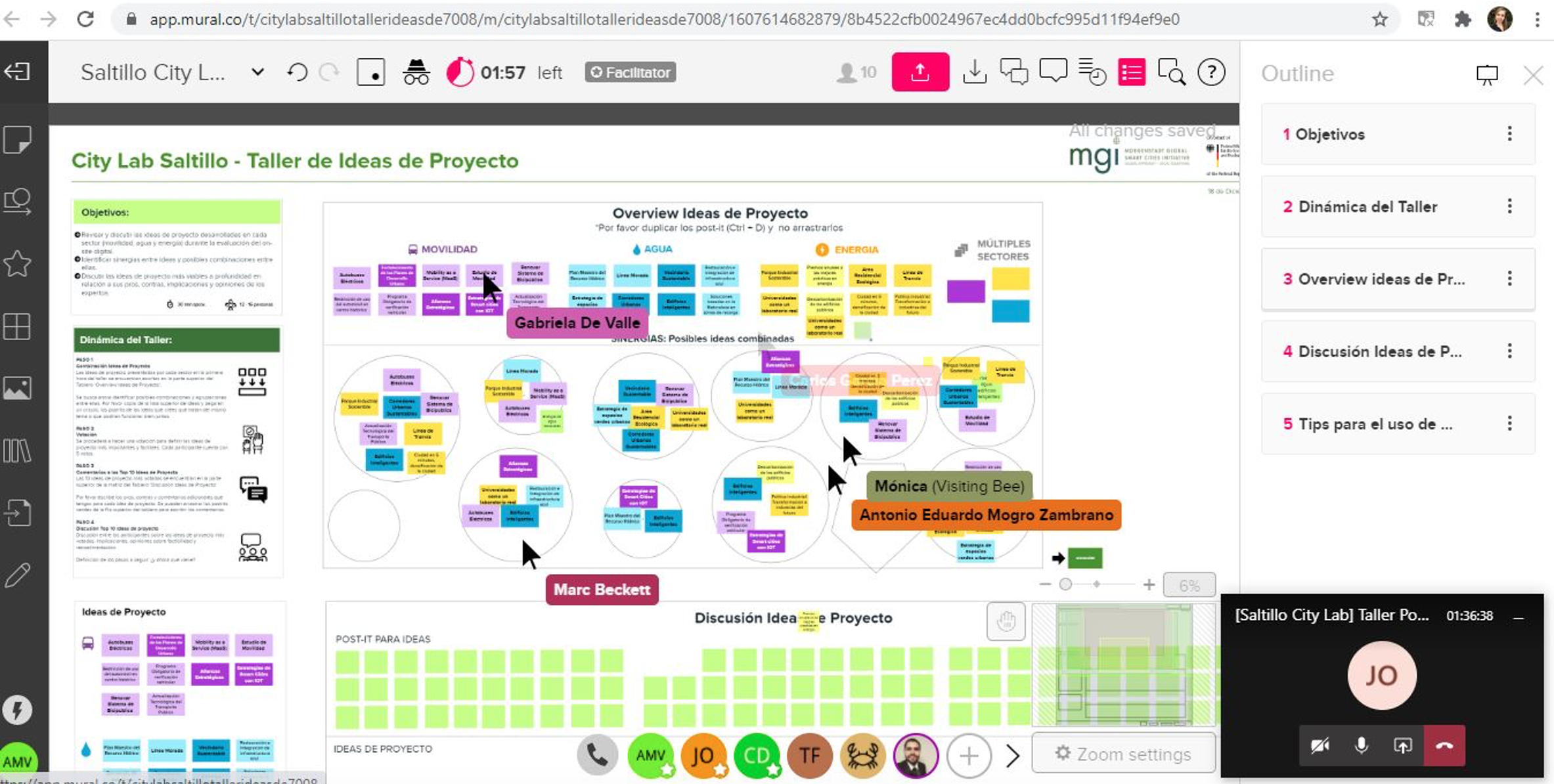
At the end of all the interviews, an inter-sectoral online workshop was held in December 2020 with the project’s team of experts in Germany and Mexico. The main objective was to review and discuss the project ideas generated in each sector and identify possible synergies and interrelationships between them. Among the next activities are the scientific assessment and development of project ideas, as well as the execution of a pilot project in Saltillo in the final stage of the MGI.
If you are interested in following the MGI project and the City Lab Saltillo more closely, we invite you to review our LinkedIn and Facebook pages where you will find relevant updates and news from the project.