La protección del capital natural es clave para el desarrollo del sector turístico en el presente y futuro, por esta razón, las alianzas intersectoriales son de gran importancia para impulsar la acción climática y reducir las vulnerabilidades ante los efectos del cambio climático.

Actualmente, ambos sectores comparten una alianza, consolidada en febrero de este año, entre la Asociación Nacional de Autoridades Ambientales (ANAAE) y la Asociación de Secretarios de Turismo de México (ASETUR), llevada a cabo con apoyo técnico de la Deutsche Gesell­schaft für Internationale Zusammenarbeit (GIZ) GmbH (Cooperación Alemana al Desarrollo Sustentable) a través del proyecto “Adaptación al cambio climático basada en ecosistemas con el sector turístico” (ADAPTUR). Este acuerdo, ha permitido que el binomio turismo y medio ambiente trabaje temas de adaptación al cambio climático basada en ecosistemas (AbE) y protección de la biodiversidad a nivel subnacional desde los destinos turísticos.

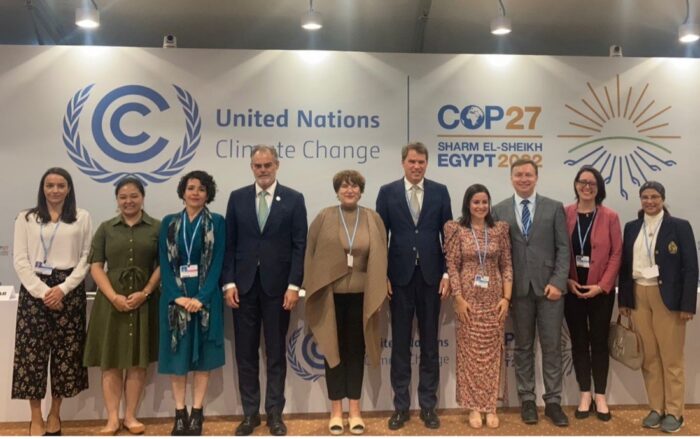
Derivado de la alianza, la Organización Mundial del Turismo (OMT) invitó al gobierno de Guanajuato a través de María Isabel Ortiz Mantilla, titular de la Secretaría de Medio Ambiente y Ordenamiento Territorial (SMAOT) y Juan José Álvarez Brunel, titular de la Secretaría de Turismo (SECTUR GTO), a presentar la alianza ASETUR-ANAAE y el Proyecto Emblema, en la conferencia más importante de cambio climático, la COP 27.

Secretario de Turismo de Guanajuato, Juan José Álvarez Brunel, y Secretaria de Medio Ambiente y Ordenamiento Territorial de Guanajuato, María Isabel Ortiz Mantilla, participando en el evento alterno de la Organización Mundial del Turismo “Scaling-Up Climate Action in Tourism – The Glasgow Declaration” / © SMAOT

El Proyecto Emblema, tiene como objetivo promover que los sectores de turismo, medio ambiente y el sector privado trabajen de manera conjunta para la implementación de medidas de adaptación basada en ecosistemas en las Áreas Naturales Protegidas (ANP) de Guanajuato con asesoría técnica de ADAPTUR y Reforestamos México A.C. Con esto,  se busca la restauración del suelo por sus servicios ecosistémicos, entre ellos la provisión del agua, básicos para el desarrollo de la actividad turística.

Esta alianza se ha convertido en un referente nacional e internacional, un nuevo paradigma que impulsa la acción climática de la mano de actividades que den pie a una recuperación económica verde e incluyente, donde se ponga en el centro el bienestar de los ecosistemas y las personas, al ser completamente dependientes el uno del otro.

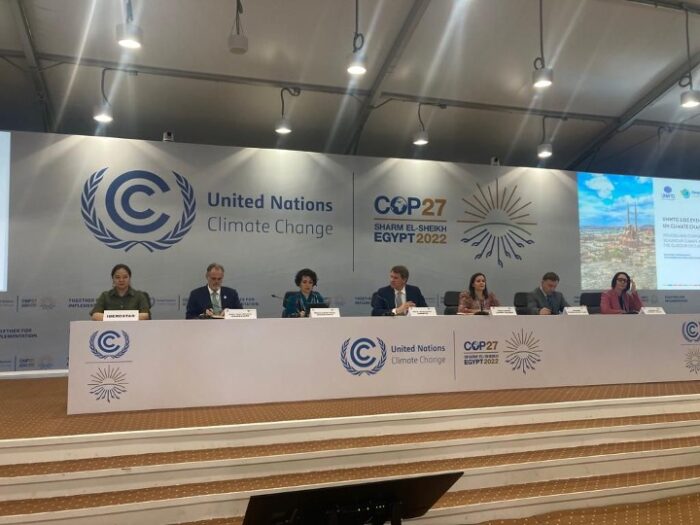
Secretario de Turismo de Guanajuato, Juan José Álvarez Brunel, y Secretaria de Medio Ambiente y Ordenamiento Territorial de Guanajuato, María Isabel Ortiz Mantilla, participando en el evento alterno de la Organización Mundial del Turismo “Scaling-Up Climate Action in Tourism – The Glasgow Declaration” / © SMAOT

The protection of natural capital is key to the development of the tourism sector in the present and future; for this reason, cross-sectoral partnerships are extremely important for promoting climate action and reducing vulnerabilities to the effects of climate change.

The National Association of Environmental Authorities (ANAAE) and the Association of Secretaries of Tourism of Mexico (ASETUR) formed an alliance in February this year. Technical support was provided from the Deutsche Gesellschaft für Internationale Zusammenarbeit (GIZ) through the project “Ecosystem-based adaptation to climate change with the tourism sector” (ADAPTUR). This agreement has enabled the tourism-environment binomial to work on ecosystem-based climate change adaptation (EbA) and biodiversity protection at the subnational level in tourism destinations.

As a result of the alliance, the World Tourism Organization (UNWTO) invited government of Guanajuato representatives María Isabel Ortiz Mantilla, head of the Ministry of Environment and Land Management (SMAOT), and Juan José Álvarez Brunel, head of the Ministry of Tourism (SECTUR GTO), to present the ASETUR-ANAAE alliance and the Emblem Project at the most important conference on climate change, COP 27.

Secretary of Tourism of Guanajuato, Juan José Álvarez Brunel, and Secretary of Environment and Territorial Planning of Guanajuato, María Isabel Ortiz Mantilla, participating in the alternative event of the World Tourism Organization “Scaling-Up Climate Action in Tourism – The Glasgow Declaration ” / © SMAOT

The Emblema Project’s goal is for the tourism, environmental and private sectors to work together to implement ecosystem-based adaptation measures in the Natural Protected Areas (NPAs) of Guanajuato with technical advice from ADAPTUR and Reforestamos México A.C. It aims to restore the soil for its ecosystem services, including the provision of water, basic for the development of tourism activities.

This alliance has become a national and international reference, a new paradigm that promotes climate action alongside activities that support a green and inclusive economic recovery, where the wellbeing of ecosystems and people is at the centre, as they are completely dependent on each other.

Secretary of Tourism of Guanajuato, Juan José Álvarez Brunel, and Secretary of Environment and Territorial Planning of Guanajuato, María Isabel Ortiz Mantilla, participating in the alternative event of the World Tourism Organization “Scaling-Up Climate Action in Tourism – The Glasgow Declaration ” / © SMAOT