

Concept
The Alvarado Lagoon System (ALS) is a mosaic of wetlands covering more than 314,000 hectares (ha), including mangroves, seasonal water bodies, and halophytic communities. The ALS is of great ecological and economic importance to the country. It contains more than 14,000 hectares of mangrove forests that provide strategic ecosystem services to the population; for example, mangroves protect communities from hurricanes, tropical storms, and the intensity of flooding.
Considering the above, NGOs, the federal government, and the National Forestry Commission (CONAFOR) have invested in restoring the mangrove ecosystem. In many cases, the results of these actions have not been satisfactory, mainly due to errors in site selection and inadequate techniques for promoting ecosystem regeneration. During the 2010–2013 period alone, Pronatura recorded the deforestation of more than 2,000 hectares, equivalent to a loss of 15% of the mangrove cover. If this trend continues, all mangroves in the area could be destroyed within 20 years. In addition, it should be noted that federal, state, and municipal governments have identified a high level of vulnerability of the population to climate change.
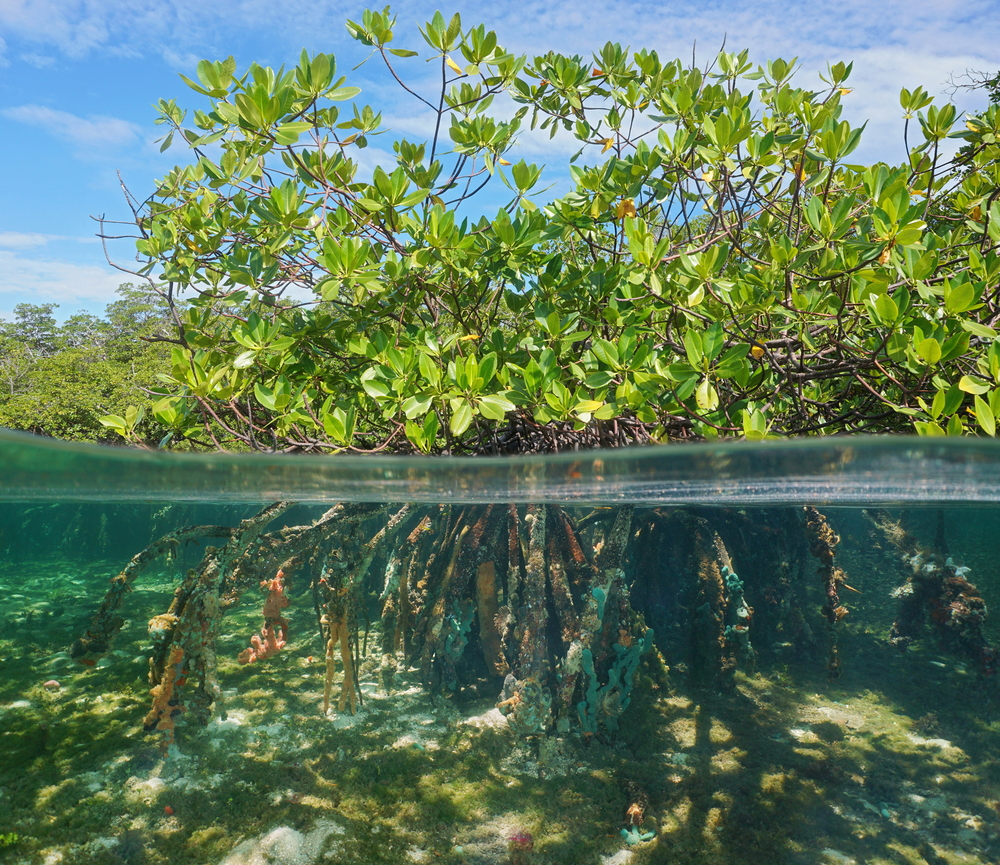
Climate change adaptation processes must generate economic alternatives for local communities. Strict national legislation protecting mangroves has certainly had positive effects on their conservation at the national level; however, in the project area, these effects have not been as expected. The population cannot use mangrove timber, which has led to the expansion of cattle ranches into mangrove areas without sustainable management. Even fishing communities have adopted small-scale livestock farming as a complement to their local economy.
Therefore, the project aims to create the technical, legal, and market foundations for a mangrove timber economy. The objective is to build a deeply rooted social base with strong self-management capacities. This can be achieved by transforming the traditional “protectionist” conservation strategy. For this reason, the project seeks to establish a regional development strategy based on the productivity and sustainable management of mangrove timber.
Project objectives and implementation progress
In order to turn the threat of illegal logging and mangrove degradation into an opportunity for sustainable forestry development in the area, the project began by characterizing mangrove forests that will be subject to legal and sustainable timber management. This characterization and assessment provide the project with the ecological and technical elements needed to determine the potential of mangroves for timber management.
This IKI project aims to have a catalytic effect in the region. To date, the following progress has been achieved:
- Restoration and forest management. Currently reaching 1,500 hectares under sustainable management, 50 hectares restored, and 1,300 m of channels rehabilitated, benefiting approximately 1,000 hectares.
- Training and exchange of experiences. More than 80 stakeholders.
- Visibility and competitiveness of mangrove timber. Next stage for 2018–2019.
- Restoration and forest management.
One of the project’s main objectives is for the communities involved to carry out landscape restoration using a mangrove forest management approach supported by technical capacities and legal frameworks. In this regard, Private Conservation Areas and forest management units are being established on agreed-upon lands (Management Units for Wildlife Conservation – UMA). The legal documentation required for certification has been compiled for one community (a 500-hectare ejido) and one private landowner (1,000 hectares). In this way, their lands will be placed under sustainable management, incorporating selected mangrove areas for forest management, conservation areas, and degraded mangrove areas for ecological restoration. A sustainable management plan is therefore being developed for the properties, including technical components such as detailed maps (1:10,000) using satellite imagery and photographs taken with unmanned aerial vehicles (drones) over several years.
In addition, sustainable forest management plans are being developed through a participatory process. Communities participate through interviews and workshops using participatory mapping, diagrams, and other methods adapted to stakeholder profiles. To date, the technical team together with local communities has restored 50 hectares using a restoration technique based on “chinampas,” which has proven to be the most successful in the area. Pronatura Veracruz Region developed this technique by recovering the ancestral Mesoamerican concept of the “chinampa,” constructing small mounds of mud with organic matter and cattail (Typha domingensis). The “chinampas” are one-square-meter islets distributed throughout the landscape, raising the soil level so that propagules can develop without being drowned by rising water levels during the rainy season. To complement restoration efforts, hydrological connectivity has been restored at key sites in the lagoon system through the clearing of 1,300 meters of channels, affecting a buffer area of approximately 1,000 hectares.
- Training and exchange of experiences.
As proposed by the project, the strategy must be supported by strengthening local capacities. Based on an assessment conducted in 2017, theoretical and practical training on technical, environmental, and economic aspects was planned for 2018 with communities, private landowners, and local government. As a result, by the first quarter of 2018, more than 50 local participants had been involved in both forestry and environmental topics.
Regarding forest management, the training will enable forest plans to be monitored and implemented and allow communities to renew their federal timber harvesting authorization each year. At the technical level, participants will be able to obtain forest inventory information and data on the structural characteristics of mangrove forests, as well as calculate regeneration rates and annual extraction rates by species. Communities have also received training in kiln construction and charcoal production using sustainable practices, making use of leftover mangrove wood and improving livelihoods and the local economy.
In addition to the work with communities in the ALS, a specialized course was held in 2017 with the objective of creating and strengthening networks in Mexico and Latin America. Through a combination of theoretical and practical activities, key stakeholders from the region were brought together to exchange experiences and improve project management, sustainable forest management, and ecological restoration. From August to December, 34 participants from different sectors—government, academia, NGOs, and the private sector—representing various regions of Mexico, Colombia, and El Salvador received training. The “Third Diploma Course in Ecological Restoration and Silvicultural Management of Mangroves” offered extensive online content with 58 lectures delivered by experts from 15 countries. In addition, an intensive practical week was held in the ALS, where participants learned about the restoration process implemented by Pronatura based on more than ten years of experience.
- Visibility and competitiveness of legal mangrove timber.
The next steps are focused on processing and adding value to mangrove timber. We will develop a marketing plan for mangrove timber at the local and national levels. This document will also examine wood quality for specific uses and durability, as well as key elements, potential buyers, points of sale, and the potential of niche markets.
Project outlook
The legalization of mangrove timber production, accompanied by sustainable forest management, will provide economic and productive opportunities for inhabitants of the project area. Fishing is currently not a profitable activity for the local population; therefore, economic pressure on mangroves is very high, including extensive logging and wildlife extraction. Even illegally, mangrove timber is transported from forests to cattle ranches and other markets. The project will transform forest management so that it becomes profitable and sustainable, supporting the long-term survival of mangroves.
It is possible to halt mangrove deforestation if their direct economic value contributes to improving the quality of life of local inhabitants. The vast majority of communities involved in the project depend on the benefits provided by mangroves; therefore, ecosystem conservation and restoration are urgently needed to reduce their vulnerability in the context of climate change.