


Initial situation
Mexico, the Dominican Republic, Guatemala, and Cuba are involved in this initiative, which aims to reduce the vulnerability of their populations to extreme climate events caused by climate change by increasing their adaptive capacity and minimizing their social and economic impacts through the development of ecosystem-based adaptation measures and innovative financial mechanisms aligned with the conditions and needs of the target populations.
Introduction
Mexico is a megadiverse country. A combination of factors within its territory has enabled the development of a wide variety of life forms, with a large number of endemic species and a forest area of temperate forests and tropical forests covering 64 million hectares.

Initial situation
Mexico, the Dominican Republic, Guatemala, and Cuba are involved in this initiative, which aims to reduce the vulnerability of their populations to extreme climate events caused by climate change by increasing their adaptive capacity and minimizing their social and economic impacts through the development of ecosystem-based adaptation measures and innovative financial mechanisms aligned with the conditions and needs of the target populations.
Introduction
Mexico is a megadiverse country. A combination of factors within its territory has enabled the development of a wide variety of life forms, with a large number of endemic species and a forest area of temperate forests and tropical forests covering 64 million hectares.
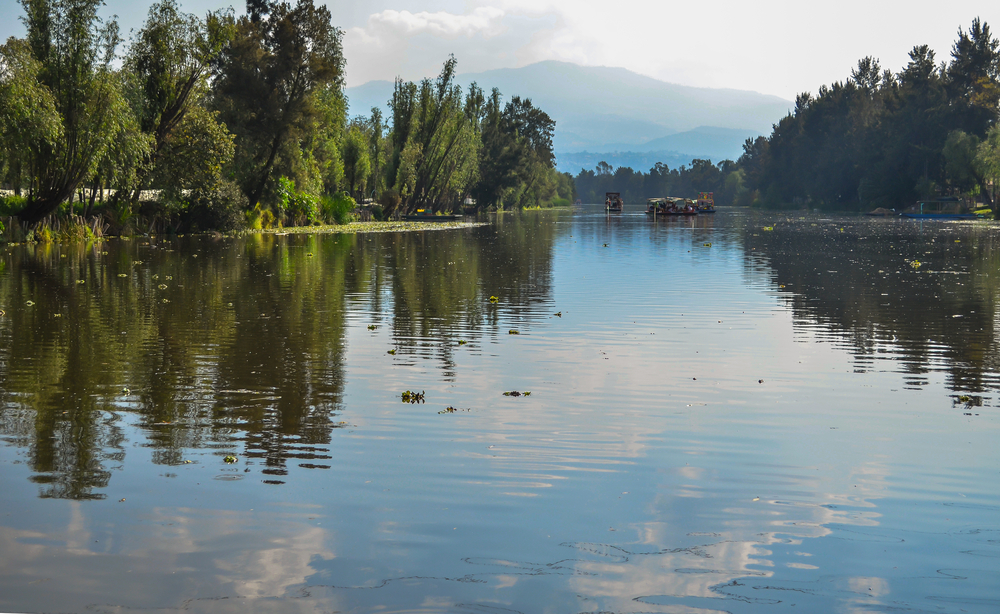
Unfortunately, deforestation and pollution are also a reality, causing biodiversity loss and environmental degradation. This makes the country highly vulnerable to the impacts of climate change, increasing the frequency and intensity of natural disasters, which in turn cause considerable social and economic damage. In contrast, well-conserved forests with high biodiversity and resilience reduce the vulnerability of populations in watersheds to extreme climate events.
In this context, in 2016 the partners Pronatura México A. C. in Mexico; Defensores de la Naturaleza, in Guatemala; Centro Naturaleza, in the Dominican Republic; and the Budgeted Unit for Environmental Services, in Cuba, submitted a proposal led by Oro Verde to the German Federal Ministry for the Environment, Nature Conservation and Nuclear Safety (BMU). Through the International Climate Initiative programme (IKI, by its German acronym), the initiative seeks to develop an integrated and multisectoral model with ecosystem-based adaptation measures and innovative financial mechanisms for watershed conservation, thereby reducing the vulnerability of inhabitants in these countries to extreme climate events caused by climate change and minimizing their social and economic impacts.
This project will be developed based on an integrated management approach for priority watersheds. This consists of implementing EbA (Ecosystem-based Adaptation) initiatives in areas that provide high-value ecosystem functions and services, encouraging their conservation and restoration together with local communities. The aim is to promote both their adaptation to climate change and the ecological resilience of forest areas and agricultural and livestock production zones, based on good practices and sustainable use.
To develop this model, actions will be implemented to make a significant contribution to the restoration and conservation of forests and their biodiversity, thereby promoting their adaptation to climate change. Activities will focus on four areas:
- Sustainable land-use plans, consisting of strategies developed through a participatory process that include actions aimed at ecosystem-based adaptation, integrating the functions and ecosystem services of forests so that ecosystems and the societies that depend on them become resilient to the negative effects of climate change.
- Innovative financial mechanisms based on the economic valuation of ecosystem services and their main beneficiaries or users, creating creative and proactive financial links among them.
- Forest ecosystem services that promote the restoration of vulnerable areas through participatory management and conservation of forest areas to improve adaptation to climate change and reduce vulnerability to disturbances of varying magnitude. This will be achieved through the implementation of agricultural, livestock, and forestry techniques within an ecosystem-based adaptation framework, with the aim of promoting the resilience of forests and productive areas in each watershed through improved fire management strategies, biodiversity conservation, and the development of sustainable production techniques.
- National regulations and public policies: based on the successful lessons learned during project implementation, the aim is to share findings and results with decision-makers at different levels in order to influence the regulatory frameworks of each partner country and promote public policies focused on climate change adaptation. This will be carried out by raising awareness of climate change adaptation and reducing population vulnerability through various consultation forums supported by an effective communication campaign and involving leaders and decision-makers.
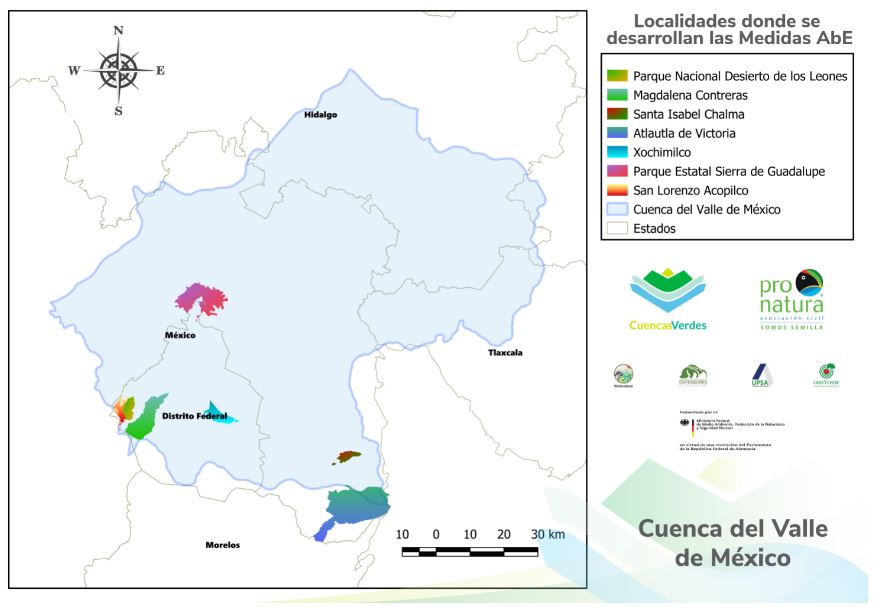
This project will last five years, during which the different activities will be implemented to strengthen resilience in the watersheds of the four partner countries. In Mexico, work will take place in the Valley of Mexico Basin, with the communities of San Gregorio Atlapulco, La Magdalena Contreras, San Lorenzo Acopilco, and Desierto de los Leones National Park in Mexico City, as well as Atlautla de Victoria, Santa Isabel Chalma, and Sierra de Guadalupe State Park in the State of Mexico.
During 2018, participatory assessments were conducted at each project site to identify climate trends and the levels of vulnerability that communities could face under these scenarios. Models for identifying and valuing ecosystem services will also be used. This information will serve as input for the preparation of Ecosystem-based Adaptation (EbA) plans aimed at increasing the resilience of natural areas and reducing vulnerability to climate impacts at the project sites.
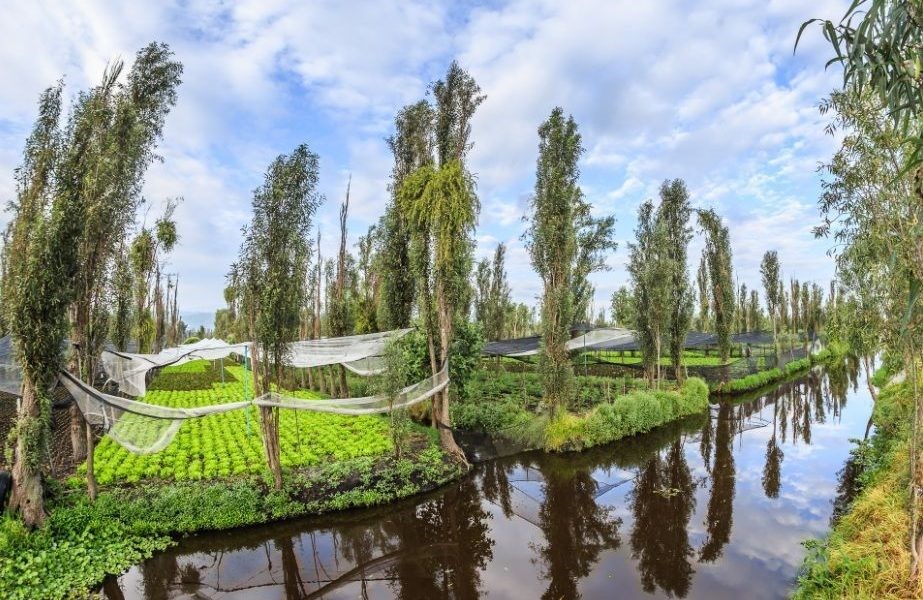

This project represents a major challenge for the communities and our organizations. We are taking it on with great enthusiasm and professionalism, knowing that along the way we will have many allies who share our goals.
These are currently the locations where the CuencasVerdes project is being implemented:
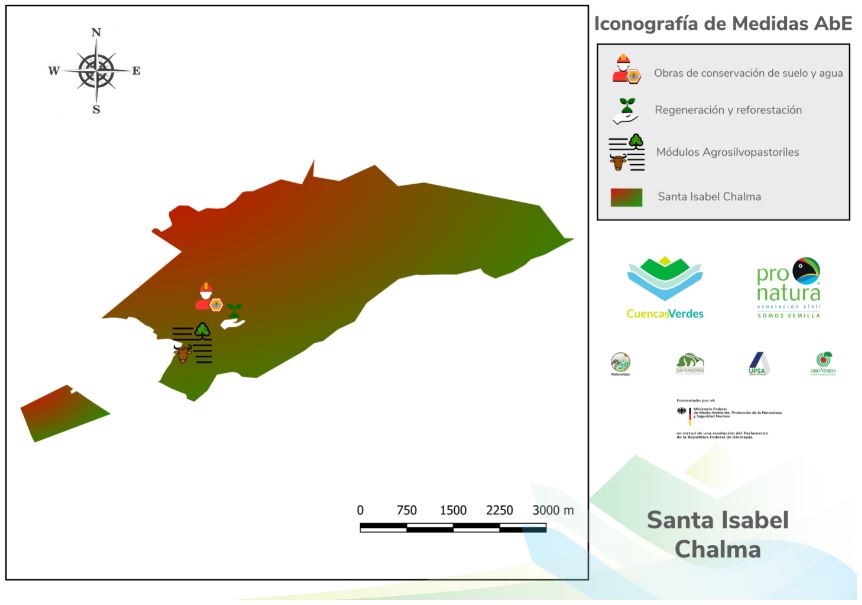
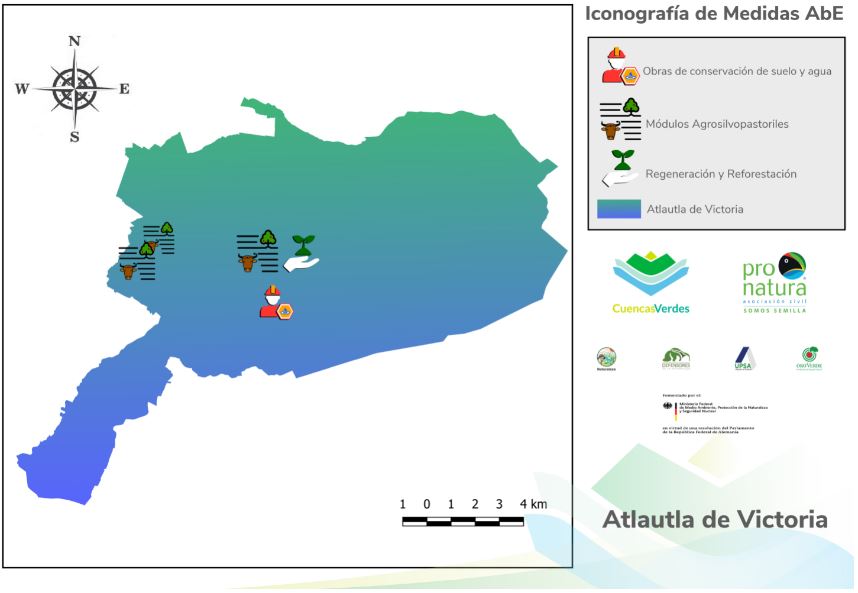

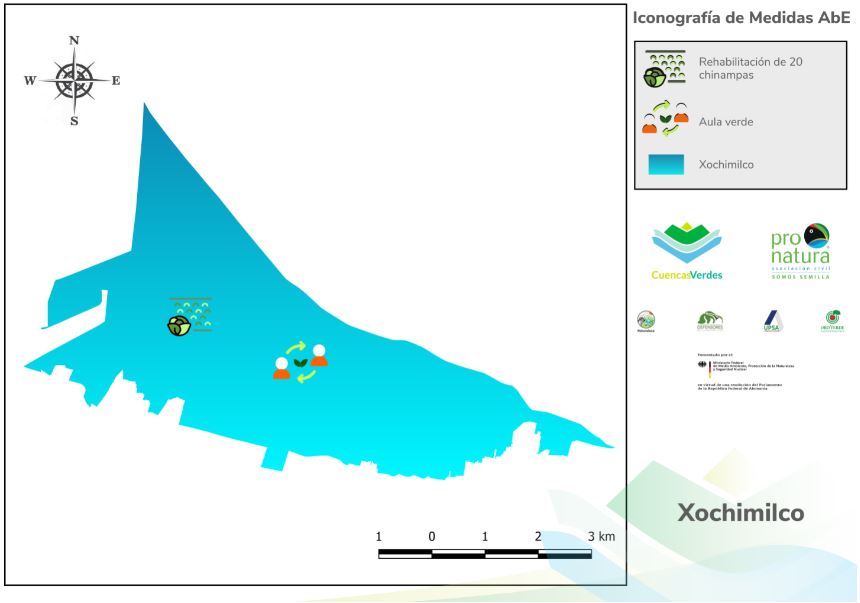

CuencasVerdes is a project that represents a major challenge for both the communities and our organizations, but we are addressing it with enthusiasm and great professionalism, confident that we will have more allies with shared objectives who will help us successfully reach our goal.
“CuencasVerdes, adapting to the future”
Contacts in Mexico:
Oswaldo Flores Armillas
Project Coordinator in Mexico
oswaldo.flores@pronatura.org.mx
Diana Sánchez
Regional Communications Coordinator
diana.sanchez@pronatura.org.mx
Torsten Klimpel
International Coordination of the Cuencas Verdes project (Oroverde die tropenwaldstiftung)
tklimpel@oroverde.de
Learn more about us
Social media
Pronatura Newsletters:
- April 2022 Newsletter
- March 2022 Newsletter: 3rd International Project Meeting
- February 2022 Newsletter
- August 2021 Newsletter
- July 2021 Newsletter
- June 2021 Newsletter
- May 2021 Newsletter
- April 2021 Newsletter
- March 2021 Newsletter
- February 2021 Newsletter
- January 2021 Newsletter
- December 2020 Newsletter
- November 2020 Newsletter
- October 2020 Newsletter